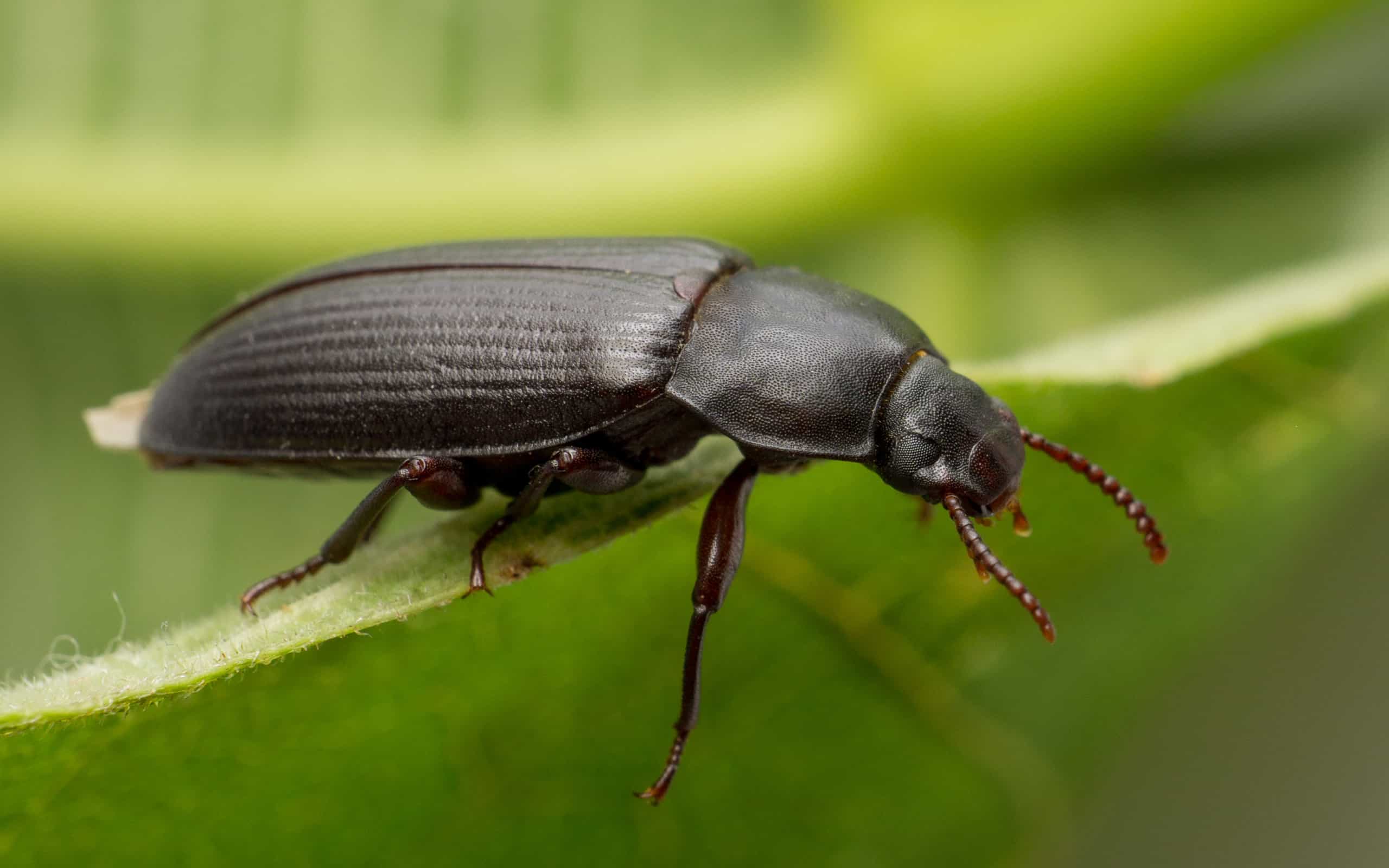
Small black beetles can be found everywhere. Whether in the house, in the apartment, in the basement, or in the garden. Read on to find out what they are when you encounter one of these little creatures. The beetles will not bite or sting you.
Small black beetles in the house or apartment
If you see a small black beetle scurrying across your floor, there is no need to worry. They are not pests that bite or sting. However, some of them are pantry pests that you should remove from your living environment. Heat and cold, organic pesticides and disinfectants, or simply disposing of infested food will help.
- House longhorn beetle: This elongated black beetle has long, light-colored antennae and white spots. There are two bulges on its neck. If you notice small piles of flour near wooden furniture, the house longhorn beetle has already eaten its way through the wood. Isopropanol, vinegar, and ammonia are suitable home remedies.
- Flour beetle: This black beetle loves anything to do with starch and flour. You can recognize this pantry pest by its deep black, curved wings. They have longitudinal grooves. The legs are reddish-brown in color.
- Grain beetles: This species of beetle is very small, elongated in shape, and has longitudinal grooves and light-colored dots on its body. It likes to stay in the kitchen because it likes grains and pasta.
- Fur beetles: They are elongated and oval in shape, with white-spotted wings. It is also very hairy. There are three light spots on its neck. The fur beetle likes to lay its larvae on textiles. Dog food and dry sausage are among its favorite foods.
- Black bacon beetle: It is also very small and barely visible to the naked eye, but twice as long as it is wide. The bacon beetle likes to destroy fur and leather, and it eats dried meat and dry food.

Small black beetles in the garden, on the balcony, or on the patio
If you see small black beetles outdoors, they are usually insects that are beneficial to nature. Gardeners don’t like some beetles in their gardens because they sit on the plants or nibble on them. However, there are usually nature-friendly solutions.
- Asian ladybug: This type of ladybug is spherical in shape with yellow dots on its wings. It likes to eat aphids and is therefore beneficial to the garden.
- Weevil: It has an elongated oval and furrowed shell with dark brown spots. Its thighs are thickened in the middle. It likes to nibble on plant leaves in a beech-like pattern.
- Timber bark beetle: This beetle is cylindrical in shape. Its orange antennae are a distinctive feature. Its black shell has a purple sheen. It likes to stay where wood has been freshly cut or sawn. It can bore up to three centimeters deep into the wood.
- Black water strider: It is elongated and narrow and likes to live in ponds or pools. Its body is black and looks scaly. It jumps across the water and eats insects.
- Rapeseed beetle: Its distinguishing features are its oval shape and metallic, shiny body. In the garden, you will mainly find it sitting on yellow flowers. It searches for food when temperatures drop.