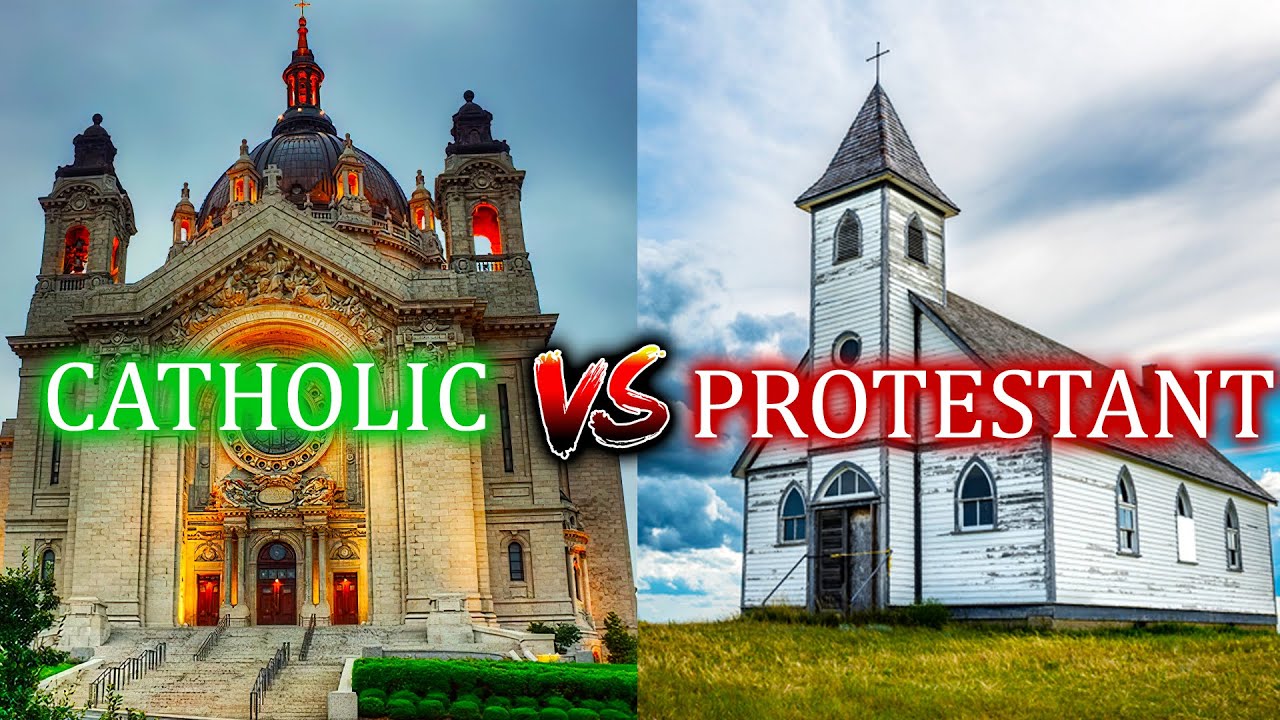
The difference between Catholic and Protestant lies primarily in tradition, understanding of the sacraments, and church structure. While the Catholic Church is more hierarchical and ritualistic, the Protestant Church places more emphasis on the Bible and personal faith experience. Both denominations enrich Christianity in different ways—and in many regions, ecumenical commonalities are also growing.
Protestant and Catholic: An overview of the most important differences
If you are wondering how Catholic and Protestant Christians differ, you are not alone. Both denominations belong to Christianity, but have developed different beliefs, rituals, and structures over the course of history. Despite many differences, Catholic and Protestant Christians share a belief in Jesus Christ as the Son of God and Savior. They celebrate common holidays such as Christmas, Easter, and Pentecost, and are guided by the Bible as their central document of faith.
- Church leadership: The Pope in Rome is considered the supreme spiritual leader of the Catholic Church. Decisions are often made centrally. For Protestants, there is no Pope. The Protestant Church is organized decentrally—with regional churches or synods that decide independently on many issues.
- Bible and tradition: For Protestants and Catholics alike, the Bible is central. Protestant Christians believe that Holy Scripture alone (“sola scriptura”) is the basis of faith. In addition to the Bible, church tradition is also important in the Catholic faith. This includes, for example, the teachings of councils or the interpretations of church fathers and the pope.
- Sacraments: In the Catholic Church, there are seven sacraments, including baptism, the Eucharist (Communion), confession, confirmation, marriage, ordination, and anointing of the sick. Worship services are strongly liturgical, with fixed procedures and rites. The Protestant Church recognizes only two sacraments: baptism and communion, as only these were directly instituted by Jesus in the Bible. Worship services are often simpler and more focused on the sermon.
- Communion: In the Catholic Church, it is believed that bread and wine are actually transformed into the body and blood of Christ (transubstantiation). In the Protestant faith, communion is understood symbolically—bread and wine commemorate Jesus’ last meal with his disciples and strengthen faith without undergoing any material change.
- Confession and forgiveness of sins: Catholic believers confess their sins to a priest, who can absolve them in confession – a central sacrament. For Protestants, confession is not mandatory. Forgiveness of sins comes directly through faith and personal prayer.
- Marriage, celibacy, and women in office: Priests are not allowed to marry in the Catholic Church (celibacy) and ordination is reserved for men only. In the Protestant Church, pastors are allowed to marry, and in many regional churches, women in the pastoral ministry are a matter of course.
- Saints and veneration of Mary: Catholics venerate Mary, the mother of Jesus, as well as many saints. They are considered intercessors with God. For Protestants, the focus is on a direct relationship with God—veneration of saints is uncommon, and Mary is respected but not worshipped.

What historical events contributed to the schism?
The following historical events contributed significantly to the schism between the Catholic and Protestant churches:
- Publication of Martin Luther’s 95 Theses in 1517: In these theses, Luther criticized abuses such as the sale of indulgences in the Catholic Church, thereby initiating the Reformation.
- Diet of Worms in 1521: At the Diet, Luther was refused permission to recant his theses. He was subsequently excommunicated, which deepened the rift with the Catholic Church.
- Peasants’ Wars 1524-1526: The Peasants’ Wars were partly social uprisings and partly religiously motivated by the Reformation. They exacerbated the confrontation between Catholics and Protestants.
- Confessio Augustana 1530: The Protestant confession of faith at the Diet of Augsburg marked the official separation from the Catholic Church.
- Schmalkaldic War 1546-1547: The war between the Catholic emperor and the Protestant princes cemented the division between the two denominations.
- Augsburg Religious Peace 1555: This regulated the legal coexistence of Catholics and Protestants in the Holy Roman Empire.