447
Cocoa with water was already popular among the Maya and Aztecs, who drank it unsweetened. The sweet version with milk only emerged later in the West.
How to prepare cocoa with water
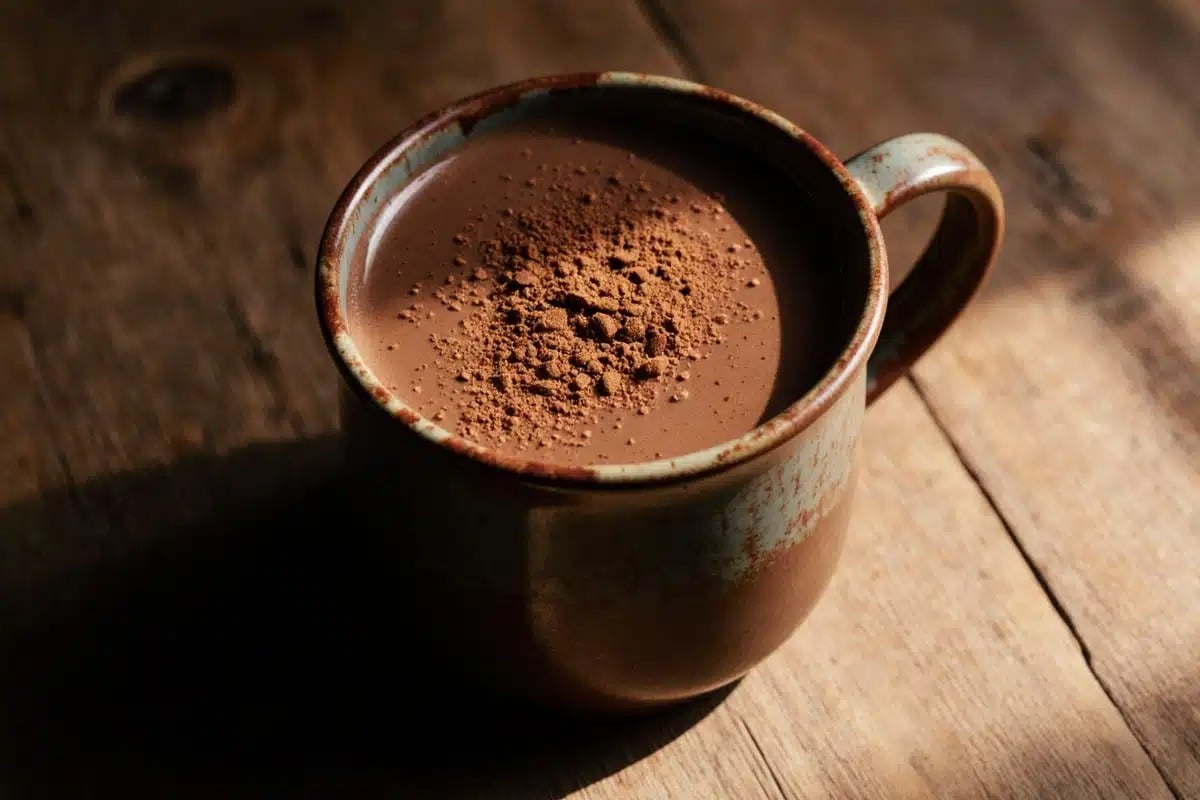
Drinking cocoa with water is a relatively simple way to prepare it. The original recipe does not require milk or sugar and is therefore generally lower in calories than classic drinking chocolate. The taste is significantly more bitter and less creamy than the sweet version with milk. A pinch of salt counteracts the bitter taste of the cocoa powder.
- For one cup of cocoa, you need one heaped teaspoon of cocoa powder, a little salt, 250 milliliters of water, and spices to taste. If you find pure cocoa too bitter, simply sweeten the drink with a little sugar, honey, or date syrup. For high-quality cocoa, it is best to use lightly defatted and unsweetened cocoa powder.
- First, put the cocoa powder and a pinch of salt in a cup and stir in a little cold water until smooth to avoid lumps.
- Boil the water and add it to the stirred cocoa powder.
- Add sweeteners and spices such as cinnamon, vanilla, or cloves to taste to further refine the cocoa.

Cocoa in history: From rituals to drinking chocolate
The cacao plant originally comes from South and Central America. The Maya and Aztecs already prepared a cacao-containing drink from the beans – albeit in a very different form than today: cold and without sugar or milk.
- The word “cocoa” comes from the Nahuatl word “cacáuatl” – the language of the Aztecs. It referred to a drink made from crushed cocoa beans mixed with water. The Maya and Aztecs refined the drink with chili, vanilla, honey, or corn flour. The drink was bitter, sometimes spicy, and was considered nutritious and important. It was consumed at ceremonies, festivals, and in everyday life.
- The cocoa bean itself was highly valued in Central America. It was not only drunk, but also served as a means of payment. In religious ceremonies, cocoa was also dedicated to the feathered serpent god Quetzalcoatl, who, according to tradition, is said to have given the cocoa plant to humans.
- With European colonization, cocoa arrived in Europe, where it soon became a sought-after luxury food. To meet the growing demand, large plantations were established in the colonies. This led to a dark chapter in the history of cocoa: for a long time, enslaved people worked on the plantations, sometimes under extreme conditions.
- Over time, the bitter ritual drink evolved into the drinking chocolate that is common today. This creamy, sweet version is particularly popular in Europe and North America. Today, the original version of cocoa with water is making a comeback—as a conscious, reduced-calorie drink with a long history.