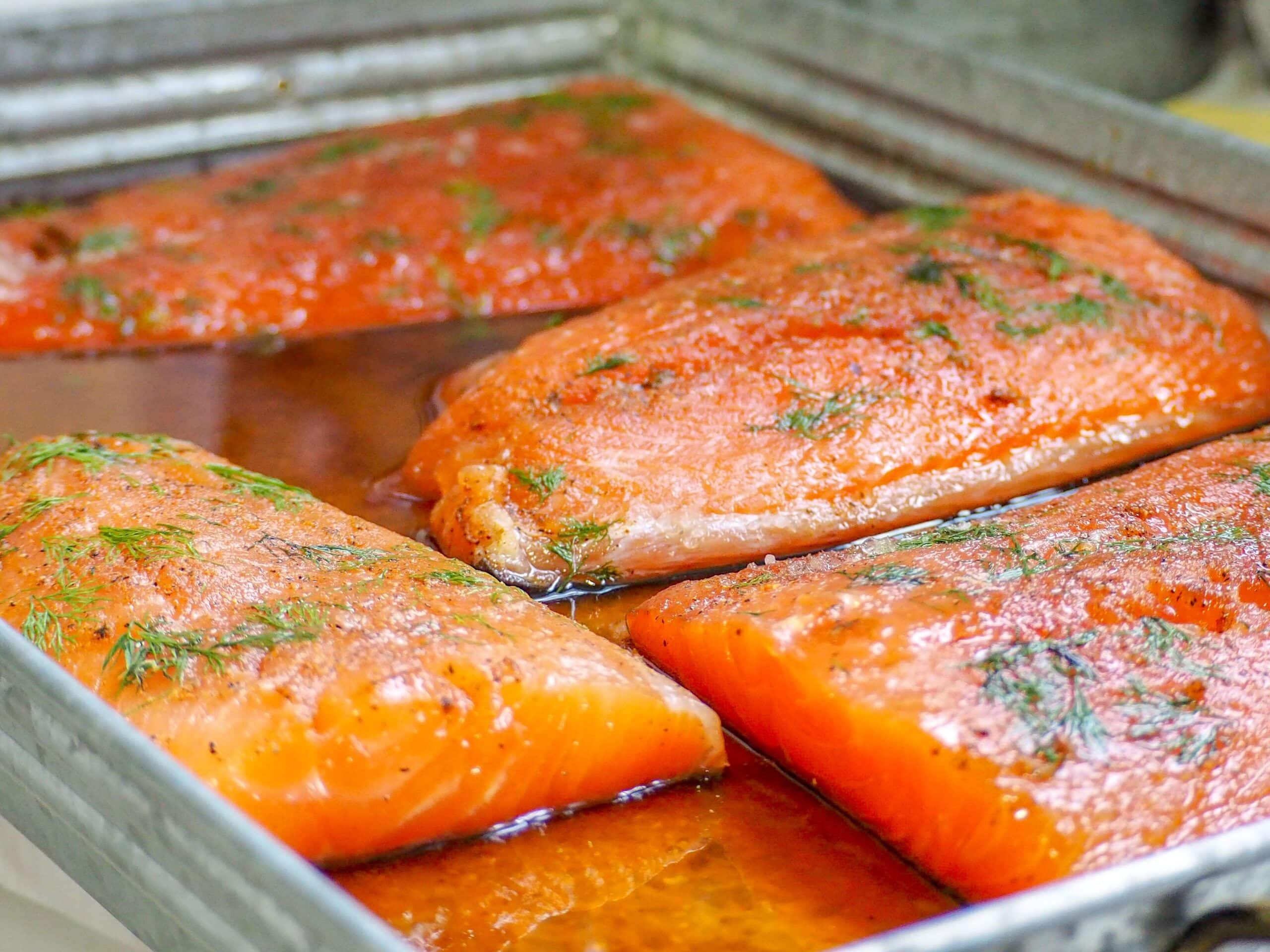
Animal-based foods are often perishable, so you should pay attention to the expiration date. Eating smoked salmon that is past its expiration date carries a risk of food poisoning.
Smoked salmon past its use-by date – what you need to know about shelf life
Food is usually still safe to eat after the best-before date has passed. However, if the food has a use-by date, you should stick to it.
- Smoked salmon also has a use-by date, and after that it can be dangerous to eat the fish. It is better to eat the salmon well before the expiry date anyway.
- You cannot necessarily tell by looking at the food that it is no longer edible. Often, you cannot taste that the smoked salmon has gone bad. A clear sign of high bacterial contamination in smoked salmon can be, for example, bloated packaging or an unpleasant smell.
- The Listeria monocytogenes bacterial content in salmon can increase dramatically the longer it is stored. Spoiled smoked salmon can cause a listeria infection, which can lead to serious health problems, such as meningitis.
- To minimize the risk of food poisoning, always keep perishable foods well chilled and ensure that the cold chain is never broken.
Proper storage of smoked salmon
Proper storage of smoked salmon requires strict adherence to the following guidelines.
- Cold chain and ideal storage temperatures: Smoked salmon should always be stored in the refrigerator, ideally in the coldest compartment at temperatures between two and six degrees Celsius. This way, it can be kept unopened for up to two weeks from the date of manufacture.
- The cold chain must not be interrupted, which means that the salmon must remain refrigerated at all times from purchase to storage in order to prevent the formation of germs and spoilage. Once a package has been opened, smoked salmon should be consumed quickly, preferably on the same day or the next day at the latest.
- Freezing smoked salmon:Smoked salmon can be frozen, but only if it is fresh and well before its use-by date. It is best to freeze the salmon in its unopened original packaging. If it has been opened, you should pack the salmon in an airtight freezer bag with a zip closure, pressing out as much air as possible to prevent freezer burn.
- The optimal temperature for freezing is -18 degrees Celsius; at -30 to -40 degrees Celsius, the quality is preserved even longer. Smoked salmon can be stored in the freezer for about three to four months.
- Defrosting smoked salmon: Defrosting should be done as slowly and gently as possible, preferably by leaving the frozen smoked salmon to defrost overnight in the refrigerator. Alternatively, you can defrost it quickly in cold water if you need it sooner; it is possible to defrost it in the microwave, but this should be done on the lowest setting and with caution, as otherwise the quality may be impaired.
- After thawing, smoked salmon should be consumed immediately and never refrozen, as this greatly reduces its quality and poses a health risk.
- Quality check before consumption: Before consumption, check the smoked salmon for unpleasant odors, a greasy surface, or gray spots. Such signs indicate spoilage, and the salmon must be discarded.

Possible illnesses caused by spoiled smoked salmon
Spoiled smoked salmon can cause infections with the bacterium Listeria monocytogenes, which triggers a disease called listeriosis. This infection is particularly dangerous for high-risk groups such as pregnant women, the elderly, and people with weakened immune systems.
Other possible health risks include parasites such as nematodes (e.g., Anisakis), which can be found in fish that has not been heated sufficiently.
- Symptoms of listeriosis can include flu-like symptoms such as fever, muscle and joint pain, and gastrointestinal complaints. In severe cases, it can lead to meningitis, blood poisoning (sepsis), and miscarriage or premature birth in pregnant women.
- Parasitic infections with Anisakis usually manifest themselves through gastrointestinal symptoms such as nausea, vomiting, and severe abdominal pain.
- Precautions when handling smoked salmon: Only buy smoked salmon from trustworthy sources and make sure that it has always been refrigerated below 4 degrees Celsius. Strictly observe the use-by date, as the germ content increases with longer storage times. Spoiled salmon can be dangerous even if it does not have a noticeable odor.
- Only open the packaging shortly before consumption and eat the salmon quickly afterwards. Risk groups (pregnant women, immunocompromised individuals, elderly people) should ideally avoid smoked salmon or only eat it when it is thoroughly cooked. Ensure an unbroken cold chain to prevent the growth of pathogens.
- In addition, smoked salmon from wild or contaminated waters carries the risk of contamination with environmental toxins such as dioxins and PCBs, which can be harmful to health.
- If you experience symptoms such as fever, severe abdominal pain, nausea, vomiting, or confusion after eating smoked salmon, you should seek medical advice immediately.