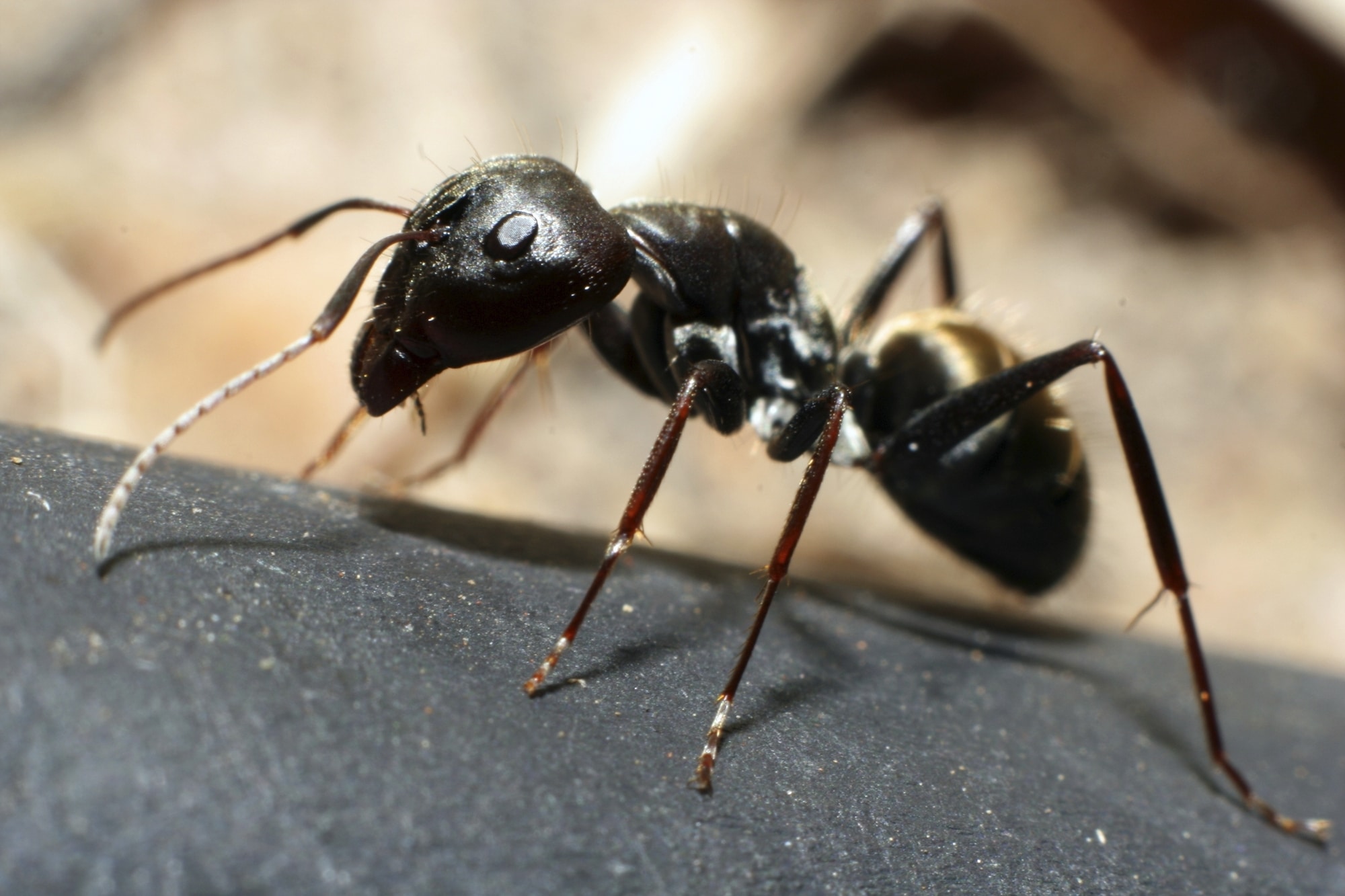
If you notice ants in your masonry, you should act quickly. An ant infestation can cause significant damage to your walls and masonry.
Ants in masonry: What you can do
Ants are harmless and even useful animals that pose no danger to humans. However, if they get into your masonry, they can cause immense damage. Not only can they attack insulation materials and polystyrene, they can also damage wooden components to such an extent that the load-bearing capacity of the building is compromised. That’s why it’s essential to act quickly and thoroughly in the event of an infestation.
- Ants avoid many scents. They particularly dislike strong-smelling herbs such as marjoram, chervil, juniper, lavender, cinnamon, tea tree oil, and citrus scents. Wherever you detect or suspect an infestation, you can use the appropriate scents to encourage the insects to leave. Special scented sprays are also available for this purpose in specialist stores.
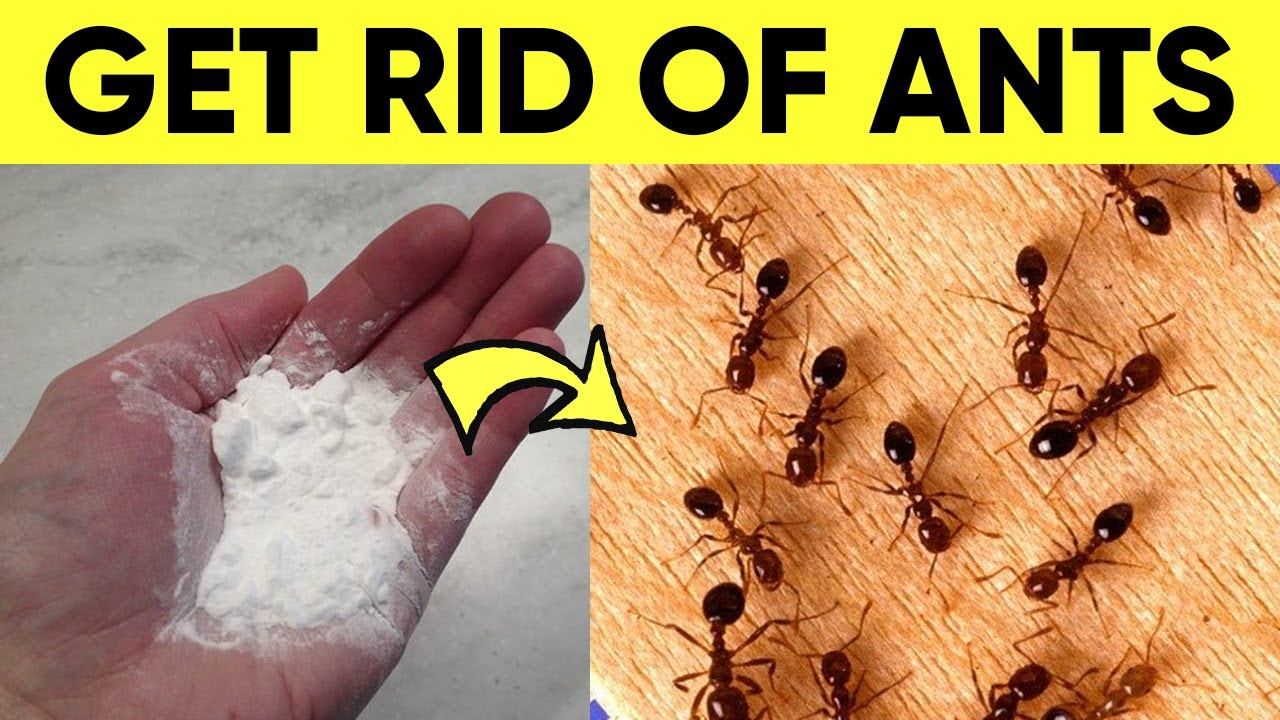
- Baking powder is considered the ultimate weapon against ants. However, the insects are reluctant to eat the powder even when mixed with powdered sugar. Instead, they ingest it through their tracheae, which leads to the slow and painful poisoning of individual insects. The nest itself usually remains unaffected, and the problem therefore persists.
- You should avoid using poison if possible. In the event of a severe infestation that you cannot control with the above-mentioned methods, you should contact a pest control expert. They can identify the ant species and take appropriate action.
How to prevent ant infestation in masonry
The best way to prevent ant infestation is to keep the insects at bay. Simple methods are often enough to keep ants away from your home. You don’t have to completely drive the insects off your property to do this.
- Ants always enter buildings from the outside. So keep an eye out for damaged areas and openings. Seal these and replace any brittle materials. This also applies to seals on windows and doors. Leaks in the house are the main reason for ant infestations.
- Ant colonies that have settled right next to the building should definitely be relocated to a more distant location on the property, or have them relocated. The animals usually shy away from long distances and will then stay away from the masonry.
- Interrupt existing ant trails by sprinkling them with cinnamon. Ants cannot stand the smell of this spice. Anything that might attract ants should be stored in airtight containers, and food should never be left out in the open in the house. This is because these food sources attract the animals like magic.
- Ants love moisture and sandy soil. So make sure your walls are dry and take countermeasures if necessary. When building paths and terraces, use gravel instead of sand if possible.
- Ants are often considered pests. However, these completely harmless insects are a valuable part of the ecosystem and are considered nature’s health police. Therefore, you should only repel the animals where they really become a problem, using animal-friendly and gentle methods.