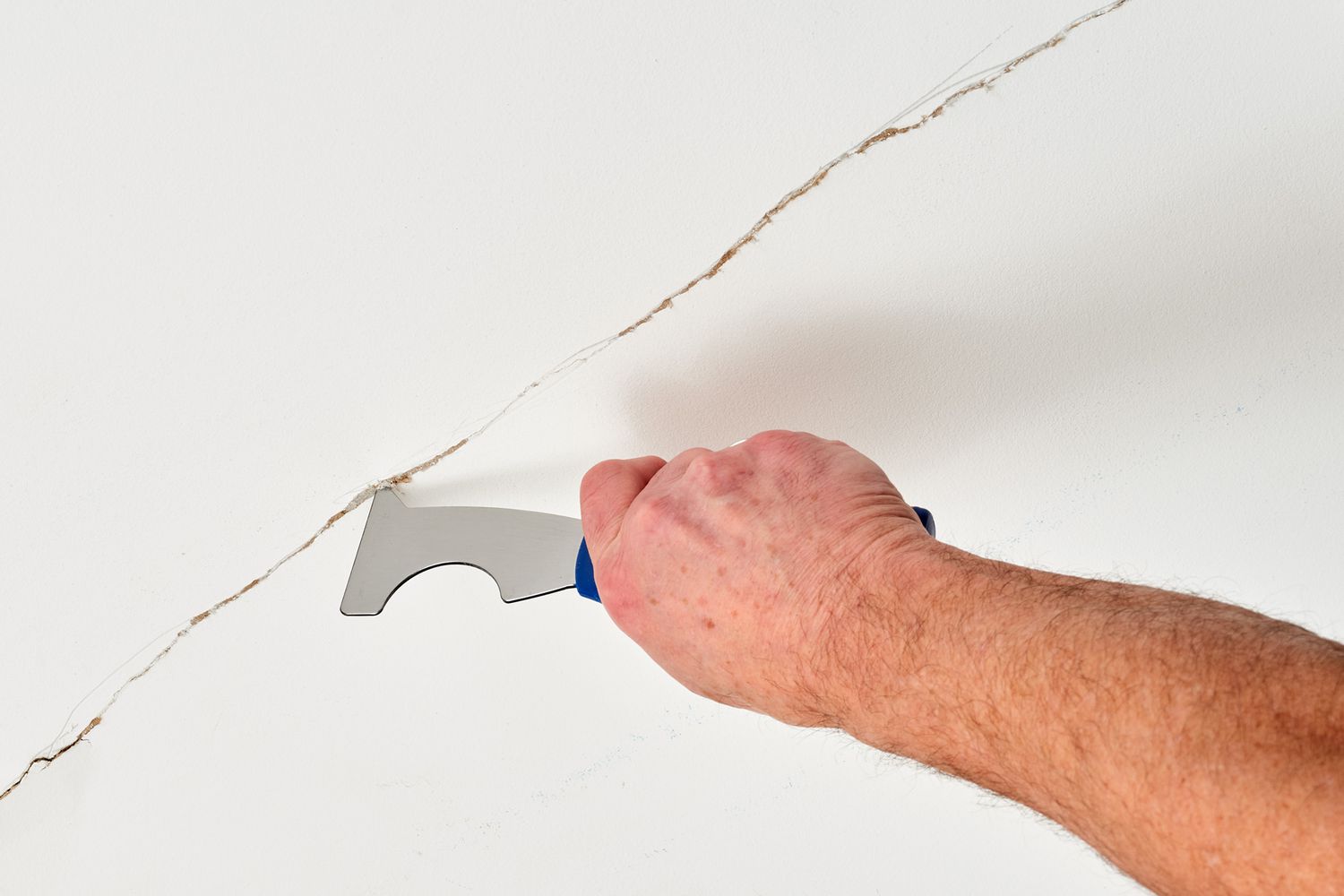
A crack in the ceiling is not only an eyesore – in some cases, it can also indicate deeper structural problems. Whether it is a harmless hairline crack or more serious structural damage depends on several factors.
Cracks in the ceiling: Assessing the type of crack correctly
Before you start repairing, you should determine the type of crack. A rough classification helps with the assessment:
- Hairline cracks (< 0.2 mm): fine, superficial cracks, usually harmless
- Wider cracks (> 0.5 mm): should be monitored or assessed by a professional
- Changing cracks (e.g., increasing in width): potentially dangerous—a structural engineer should be consulted in this case.
How to repair small cracks in the ceiling
Smaller, superficial cracks can usually be easily repaired yourself:
- Clean the crack: Remove dust, loose particles, and old paint from the crack.
- Apply a bonding bridge: For porous surfaces, an epoxy resin bonding bridge can be used to effectively fill the cracks and create an adhesive surface for subsequent filling.
- Fill the crack: Use a suitable filler or putty (e.g., plaster or acrylic) to close the crack.
- Smoothing and painting: Once dry, sand the area smooth with some sandpaper and paint over it.
Cracks between the ceiling and wall: Flexible solutions
Cracks in the transition between the ceiling and wall are often caused by differences in tension between materials. These can also be treated:
- Use flexible sealants such as epoxy resin, acrylic, or silicone, which stretch with movement.
- Subsequent sealing with joint tape can help to prevent cracks from forming permanently.
When you should call in a professional
Not every crack in the ceiling is a cause for alarm—many can be easily repaired yourself. It is important to correctly assess the type and cause. If you are unsure, it is advisable to consult an expert, especially if load-bearing structures are affected. A specialist company or structural engineer should be called in if:
- Cracks quickly become larger or visibly change.
- They are load-bearing ceilings or components.
- Cracks are accompanied by other problems such as moisture, mold, or plaster flaking.
- The cause is unclear or settling in the house is suspected.
Causes of cracks in the ceiling: These types of cracks exist
Cracks in the ceiling, like cracks in the wall, can have various causes. In addition, a distinction is made between different types of cracks.
- A common type of crack in the ceiling is known as a stress crack. These cracks are caused when the building material used for the wall is not designed to withstand the stress exerted on it. These cracks occur, for example, when wood expands and contracts again in the heat.
- Shrinkage cracks occur when the concrete or plaster contracts during the drying process. This type of crack is completely harmless and occurs quite frequently.
- Cracks in the ceiling can also occur after minor earthquakes or major renovation work.
- So-called settlement cracks are among the more dangerous types of cracks. These occur due to settlement, which normally happens a few months after construction is completed. Depending on the condition of the ground, however, this settlement can also occur years after construction is completed.
- This means that the finished house “settles” into the ground because water is pressed out of the ground. During settlement, the house sinks approximately 10 to 15 mm into the ground. If this does not happen evenly, the building will be crooked and cracks may appear in the walls.
- Construction defects such as insufficient reinforcement, faulty planning, or poor workmanship can also lead to ceiling cracks.