312
For many people, the thought of sharks doesn’t really fit in with the white beaches of Crete, the bright sun, and the clear blue sea. Nevertheless, sharks do live in the Mediterranean Sea—and therefore also off the coast of Crete. The good news first: the danger to swimmers is extremely low.
Sharks off Crete – basic knowledge and biodiversity
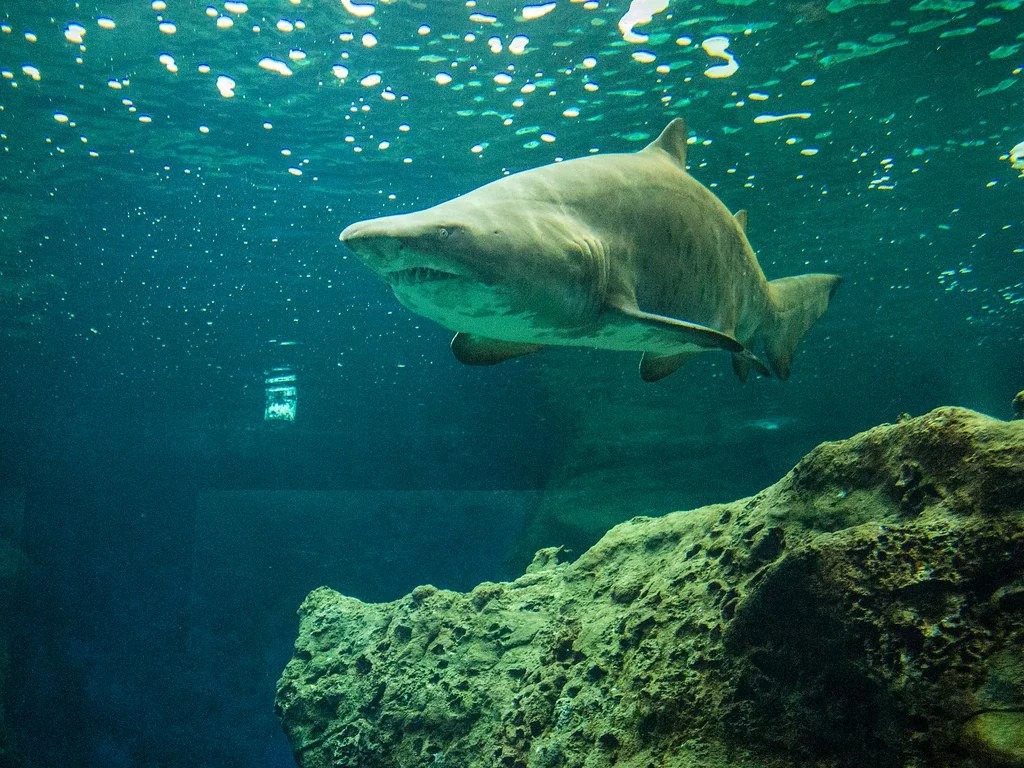
Crete is located in the middle of the Mediterranean Sea, which is currently home to around 47 different species of sharks.
- Around 15 of these are theoretically considered potentially dangerous to humans, primarily due to their size and prey spectrum – however, attacks are extremely rare.
- Off the coast of Crete, mainly harmless species such as the small cat shark (up to approx. 1 m) or the basking shark (up to over 8 m, a pure plankton eater, i.e., plant-based food) have been observed.
- The blue shark or occasionally the shortfin mako shark can also be found in deeper waters off Crete. nbsp;The great white shark is extremely rare throughout the Mediterranean; there is no reliable evidence of its presence on the Greek island.
- In short: sharks live in the Mediterranean and therefore also off Crete. However, the risk of a shark attack is not particularly high, although there have been a few minor incidents from time to time. Apart from that, the shark population is shrinking significantly, so sharks have more to fear from humans than vice versa.
Way of life and reasons for rare encounters with sharks
Most sharks in the Mediterranean live pelagically, i.e., in the open sea, and prefer deep water.
- Coastal, heavily frequented beaches such as those on Crete offer neither sufficient food nor the necessary peace and quiet for the fish.
- In addition, the populations of many shark species have declined sharply due to overfishing, bycatch, and environmental pollution.
- The prey of sharks found in the region consists primarily of fish, cephalopods, or plankton—humans are not part of their diet.
- Sharks usually react shyly to encounters with swimmers or divers.

Safety tips for swimmers and divers
Even though the risk of an encounter is extremely low, a few simple rules can provide safety:
- Only swim in supervised swimming areas.
- Do not go into the open sea at dusk or at night.
- Do not feed or harass marine animals.
- If you see a shark, stay calm and slowly increase the distance between you and it.
- Since records began, there have only been around 15 documented shark attacks in Greece over the last 180 years – the last one was recorded in 1981. There are no known confirmed incidents in Crete itself.
Sharks: Research, Protection, and Ecological Importance
Sharks are an important part of the marine ecosystem: they regulate stocks, keep populations healthy, and ensure balance in the food web.
- Numerous shark species in the Mediterranean—including the endangered angel shark—are strictly protected.
- Scientists and marine conservation organizations are working on projects to monitor and reintroduce endangered species.
- Sightings, even of harmless sharks, are therefore often a sign of a healthy marine environment.