124
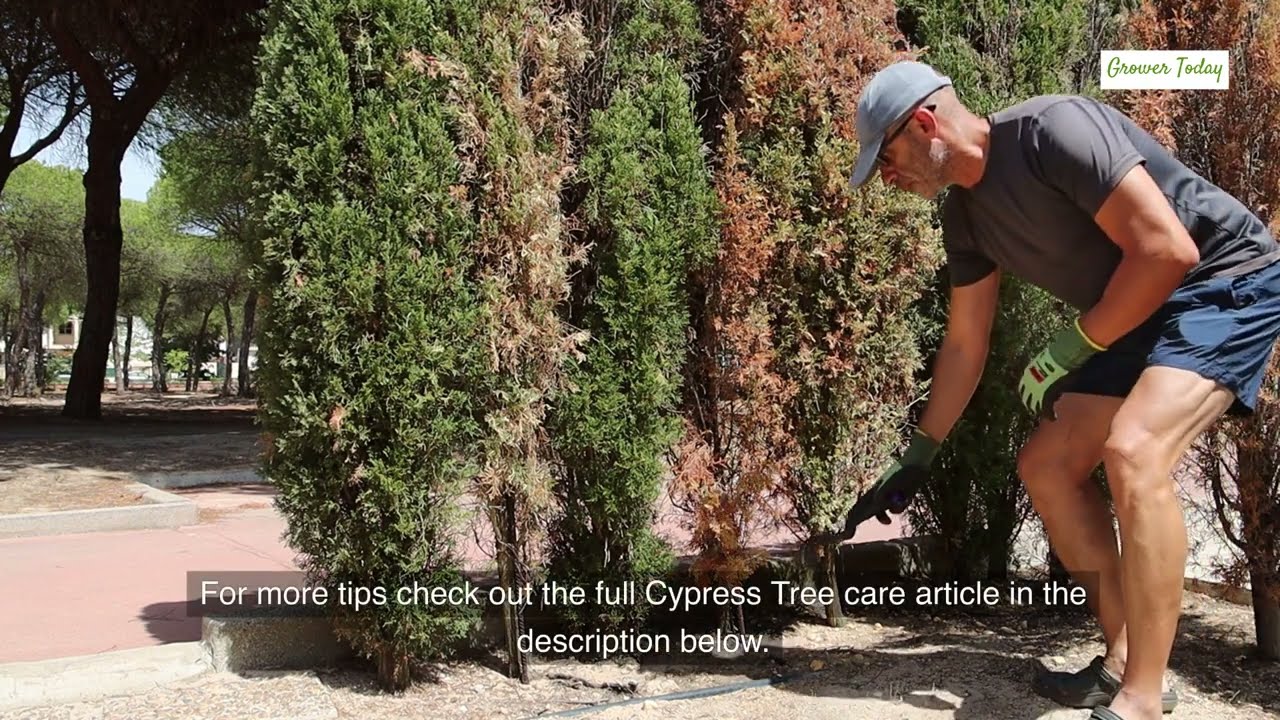
If cypress trees are turning brown, it depends on where the brown spots are located. Brown discoloration is normal inside the plant. If outer branches are affected, this indicates disease or an unsuitable location.
Cypress trees are turning brown – this could be why
Cypress trees turn brown when their water balance, biology, and location are not in harmony; each of the following causes has its own specific damage pattern.
- Drought stress and heat: Prolonged dry spells draw water from the scale leaves, causing the needles to turn dull green and then rust brown. Drive a screwdriver 10 cm deep into the soil – if hardly any soil sticks to it, water immediately. A drip hose with a capacity of 2.2 liters supplies 18 liters per plant location per week in a 1.8-meter-high hedge. Cover the root area with 7 cm of wood chips; the layer reduces evaporation and keeps the soil active.
- Phytophthora root rot: Permanently wet soil blocks oxygen, allowing Phytophthora to enter through the fine root tips. Typical symptoms include yellowish crown areas at the bottom, sparse growth, and black-brown vascular bundles. Check the drainage: a 30 × 30 cm hole filled with water must drain in ≤ 30 minutes. If water remains, lay a 40 cm deep gravel channel with a 5% slope and mix sand into the top layer of soil.
- Kabatina shoot dieback: Kabatina thujae attacks young tips after wet weather. Sharply defined brown shoot sections and tiny black fruiting bodies on the bark reveal the fungus. Cut back affected areas 20 cm into healthy wood, burn the cuttings, and immediately spray potassium phosphonate as a tonic on the remaining crown to stimulate the tree’s own defenses.
- Seiridium bark canker (Cypress canker): Seiridium cardinale penetrates through cuts, forming resin-moist, oval bark lesions and interrupting the sap flow there. Remove entire branches down to the base of the trunk, disinfect every tool with 70% ethanol after cutting, and avoid rough hedge trimming during rainy periods.
- Cypress aphid (Cinara cupressi) and bark beetles: The aphid sucks in early summer, later leaving gray molting remains and sooty coatings; brown spots usually start 1.5 m above the ground. Bark beetles leave boring dust at the base of the trunk. Use predatory bugs or rapeseed oil preparations against aphids and attract woodpeckers and parasitic wasps by creating deadwood habitats to reduce beetles in advance.
- Planting errors (too deep, compacted soil, too close together): A planting hole 1.5 times the width of the root ball ensures air pockets, and the edge of the root ball should be level with the surrounding soil surface. Allow 30 to 35 cm spacing in hedges; closely planted rows develop a lack of light in the center, causing needles to fall off on their own. Loosen compacted areas with a digging fork in a star shape without tearing off roots.
Sustainable care and prevention
A stable water, nutrient, and light balance strengthens cypress trees against extreme weather conditions and pathogens.
- Watering as needed: Install a multi-strand drip system and start watering as soon as the soil reaches less than 30% of its field capacity at a depth of 15 cm. At a height of 1.5 m, 15 l once a week is sufficient; in hot weather, it is better to water more frequently, but with the same amount.
- Mulch for water and soil protection: From May onwards, spread 7 cm of semi-mature bark compost or wood chips around the tree trunk. The layer retains soil moisture, moderates temperature peaks, and feeds soil organisms – earthworms loosen the subsoil for free.
- Variety selection and mixed planting: Combine drought-resistant cultivars such as “Murray” or the compact “Shorty” with slow-growing individual yew shrubs. The mixture breaks up monocultures, reduces wind pressure on the hedge, and lowers disease pressure.
- Soil analysis and targeted fertilization: Have the pH value and nutrient status checked every three years. If magnesium is below 50 mg, spread Epsom salts according to soil type. If nitrate exceeds 80 mg, refrain from applying nitrogen for one year and instead promote mycorrhiza with compost tea.
- Regenerative pruning and tool hygiene: Prune only one side wall per year to allow light to reach the inside of the crown. Dip the blades of your shears in ethanol after each branch so that no fungal spores migrate to the next plant.