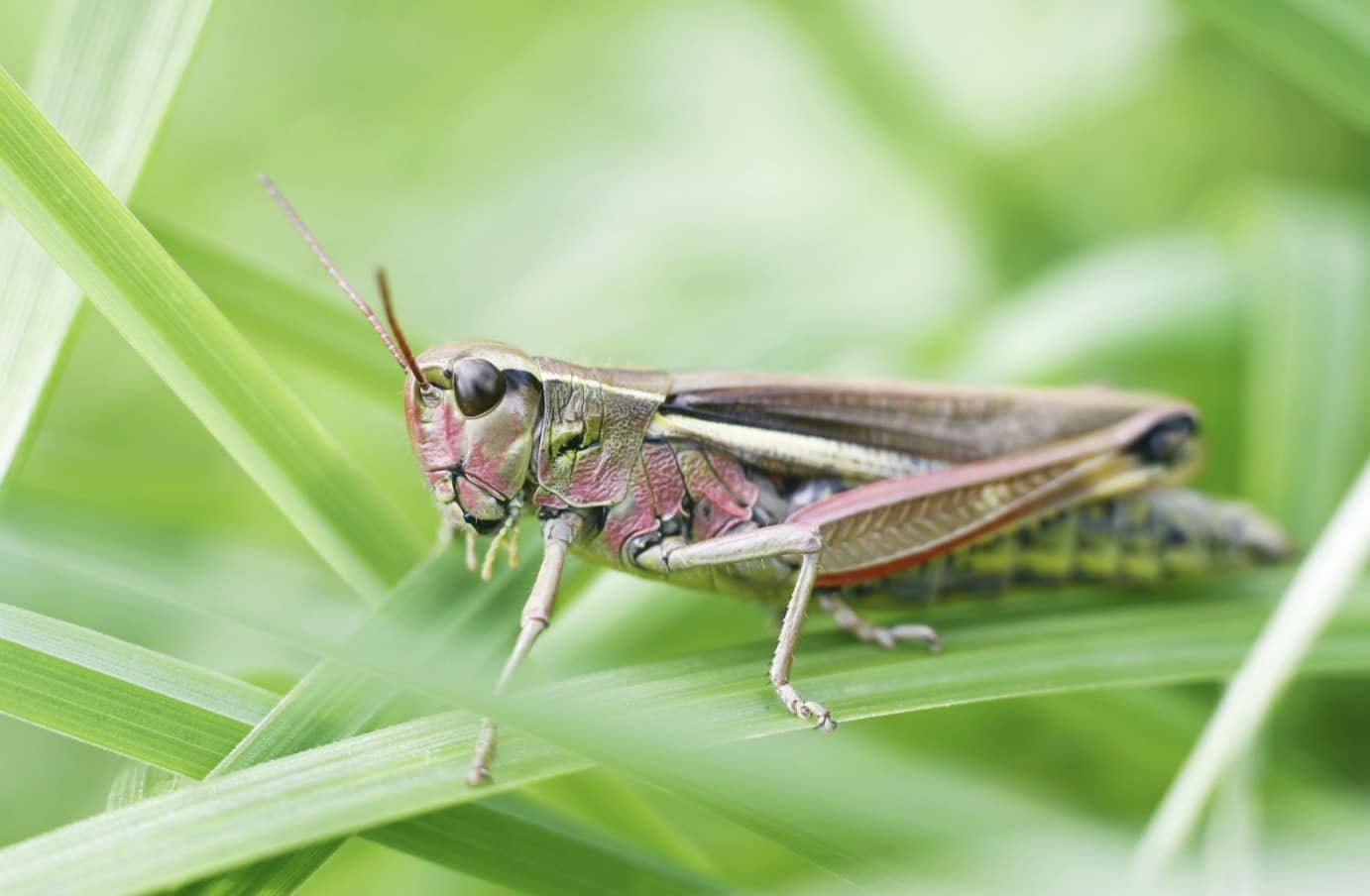
The common grasshopper belongs to the locust family and has a very varied diet. This often depends simply on what is available in the regional habitat.
The food of grasshoppers
In addition to the common grasshopper, the locust family comprises more than 26,000 species. The diet of these insects depends both on the species of locust and on the regional food supply.
Grasshoppers have an astonishingly varied diet, which differs greatly depending on their stage of development, species, and habitat. While young grasshoppers prefer mainly tender, protein-rich plants such as young grass, clover, or herbs, adult animals expand their diet to include coarser grasses and crops such as corn, wheat, barley, or alfalfa.
This adaptation allows them to survive successfully in very different habitats – from poor meadows and agricultural land to steppes and dunes.
Grasshoppers usually meet their water needs indirectly by absorbing dewdrops or rainwater on plants or drinking small amounts from moist soil and the edges of bodies of water.
Although most species are herbivorous, there are also omnivorous or predatory grasshoppers that occasionally eat small insects, larvae, caterpillars, or even carrion to obtain additional nutrients.
This flexible diet is an important survival advantage: it enables grasshoppers to adapt quickly to changing environmental conditions, such as drought, plant scarcity, or agricultural use, and to thrive in a wide variety of regions.
Grasshoppers play a central ecological role in many habitats, as they act as both important herbivores and indispensable prey in food webs. By grazing on grasses and herbs, they contribute to the regulation of plant populations and promote the growth of new shoots, but when they occur in large numbers, they can cause considerable damage to agricultural crops such as grain, corn, alfalfa, and vegetables.
At the same time, grasshoppers are a key food source for numerous animals, including birds, reptiles, amphibians, spiders, and small mammals, thus ensuring the flow of energy between the plant and animal levels in the ecosystem.
Their presence is also considered an indicator of biodiversity and environmental quality, as many species are sensitive to changes in vegetation, humidity, or pesticide use – a decline in grasshopper populations therefore often indicates an ecological disturbance or habitat impoverishment.
General information about grasshoppers
Grasshoppers are not only flexible in their diet. Their habitat requirements are also variable.
These insects are found almost everywhere in Europe.
They live mainly in open grasslands or at the edges of forests.
To reproduce, the males try to attract the females with their song.
Regardless of whether they have been fertilized during mating or not, the females lay a packet of eggs in the ground about every three days. The eggs overwinter there and hatch as larvae in the spring of the following year.