423
You may have heard of the esoteric concept of Reiki. In this article, we explain how Reiki works and what the term actually means.
Reiki – how does it work?
Reiki originated in Japan. It was founded at the beginning of the 20th century by the Japanese Mikao Usui.
- The word is composed of the two Japanese words “rei” for “spirit” or “soul” and ‘ki’ for “life energy.”
- The goal of Reiki is to achieve physical and mental health. In its country of origin, Japan, the view of Reiki differs from that in Western countries, which has a cultural background. In Japan, health is considered merely an intermediate goal; the ultimate goal is enlightenment.
- There are different schools and traditions within Reiki, such as traditional Usui Reiki or modern Reiki based on Western teachings. These can differ in terms of practice, symbols, or number of degrees.
- Someone who practices Reiki sees themselves as a channel for energy. This channel is opened during the so-called initiation, allowing energy to flow and be passed on.
- The effectiveness of Reiki has not been scientifically proven. It is particularly important to us in the esoteric field. Nevertheless, many people report positive experiences with Reiki, which contributes to the popularity of the method.
An overview of the Reiki degrees
Anyone who wants to train in Reiki completes several levels, referred to here as degrees:
- 1st degree: Here, students learn basic techniques such as laying on of hands.
- 2nd degree: This degree teaches working with symbols and sending Reiki over distance.
- 3rd degree (master degree): Practitioners deepen their skills and reach the “master” level.
- 4th degree (teacher degree): This entitles the practitioner to initiate other people into Reiki.

How Reiki is performed
Reiki is energy work.
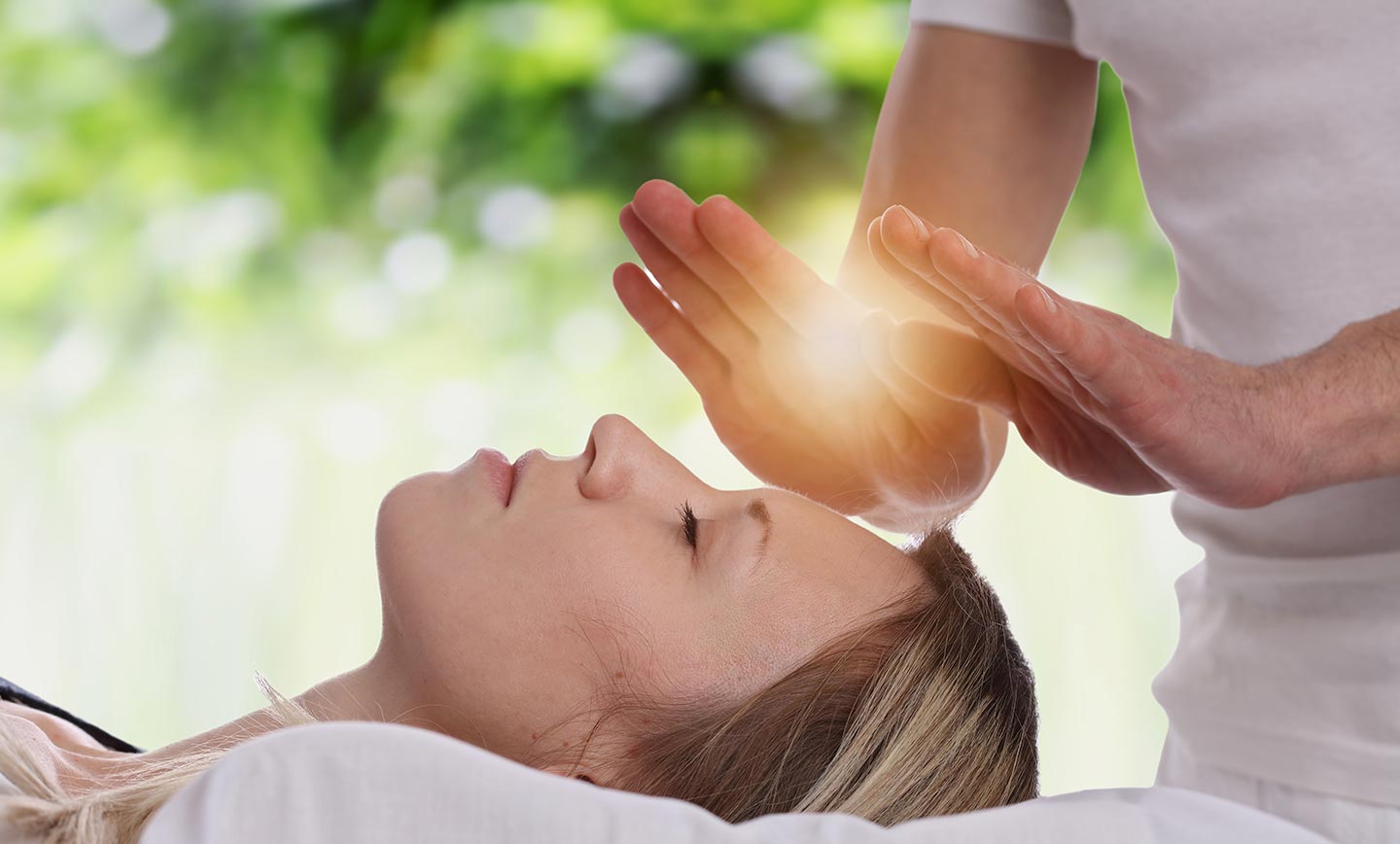
- A Reiki treatment usually consists of placing the hands on or above parts of the body that are affected by illness. This can be done directly on the body, but sometimes the hands are only placed a few centimeters above the body, i.e., without direct physical contact. There are different positions in which the hands are held.
- According to practitioners, life energy flows during the treatment. However, the energy does not come from the practitioner, who is merely a channel for universal life energy.
- Reiki teachings also state that life energy always flows to where it is needed. Although the hands are placed on the affected area, the energy itself seeks out the place where it is needed. This is why a diagnosis is not necessary with Reiki.
- Reiki is said to not only promote mental and physical health, but also emotional and social health, as well as strengthening the body’s self-healing powers.
- Nevertheless, a Reiki treatment should never replace a visit to the doctor. Anyone with complaints should always seek medical advice.
- Although the effects of Reiki have not been scientifically proven, there are no known serious side effects. In rare cases, as with other energy-based therapies, there may be an initial worsening of symptoms. People with mental illness or trauma should only use Reiki after consulting a medical professional.