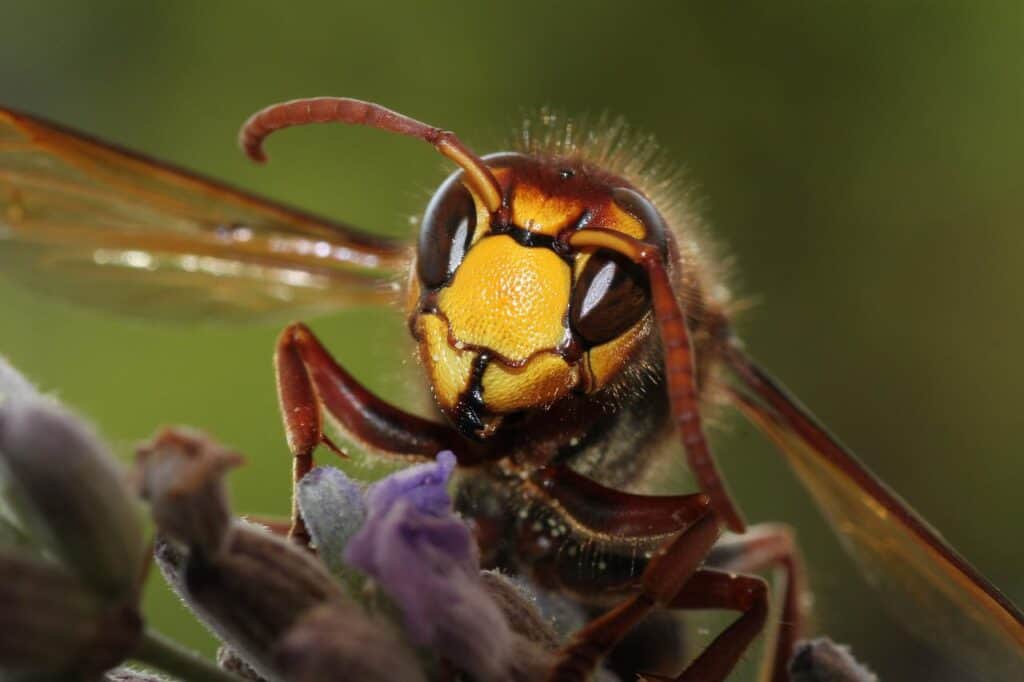
Recognizing a wasp queen is not that easy. After all, the queen hardly differs from her wasp colony. Only in winter can even laymen easily identify a wasp queen. You can find out why this is the case in this article.
How to recognize a queen wasp
Just like bees, there are many different species of wasps. As a rule, the queen wasp hardly differs from the rest of the wasp colony. The so-called German queen wasp can be recognized primarily by its body size. But even that is not always easy.
- The difference in size between the queen wasp and a worker or drone is usually marginal. If the queen wasp is particularly petite and the drone is very strong, the insects are about the same size.
- The size of wasp queens ranges from approximately 17 to 20 millimeters. Drones, on the other hand, grow to about 13 to 17 millimeters, and a worker wasp reaches a size of around 12 to 16 millimeters.
- It is easier to distinguish between a wasp queen and a bee queen. This starts with the colors. While the yellow of a honeybee is slightly darker, the yellow of a wasp is bright and vivid.
- In addition, bees are hairy, while wasps are hairless. Above all, however, the figure of a wasp queen differs from that of a queen bee – it is not for nothing that we talk about a wasp waist. In contrast to the queen bee, which has a slightly rounded physique, the queen wasp has a long, slender body.
- But apart from their external characteristics, there is another crucial difference between bees and wasps: while the late-born worker bees also hibernate, this is not the case with wasps. Only the wasp queen survives the winter. For this reason, you can be sure that if you see a wasp during the cold season, it must be a wasp queen.

Queen wasps and queen bees – what the insect rulers have in common
Bees and wasps have a lot in common. Even though honey bees are usually welcome, wasps also have their raison d’être. Although German wasps can sometimes be very intrusive at the coffee table, this is by no means true of all wasp species. Above all, they rid our gardens of annoying pests.
- Just like bees, wasps also live together in nests. However, wasp nests are often built underground, for example in abandoned mouse tunnels, mole burrows, or even hollow tree trunks.
- The queen wasp, who is initially alone in the spring, searches for a suitable nest for her wasp colony and prepares it accordingly. She then lays the eggs she produced before hibernation and raises the first offspring herself.
- After that, the workers take over this job, just like with bees. The queen wasp now only takes care of laying eggs. Basically, the structure of a bee colony is not significantly different from that of a wasp colony.