10
The speed a horse can reach depends on numerous factors. Not only does the breed play a role, but also the gait and the training the animal receives.
Speed depending on gait: How fast a horse runs
Horse lovers have known this for a long time: these four-legged creatures are truly impressive, not only because of their elegance, but also because of their speed. Depending on their gait, breed, and training, horses can reach very different speeds.
- At a walk, a horse covers about four to seven kilometers per hour with a steady, calm four-beat gait. This gait is particularly suitable for relaxed rides.
- At a trot, a two-beat gait, a horse can cover between ten and 15 kilometers per hour, depending on whether it is trotting at a relaxed or faster pace. This makes it an ideal basis for training.
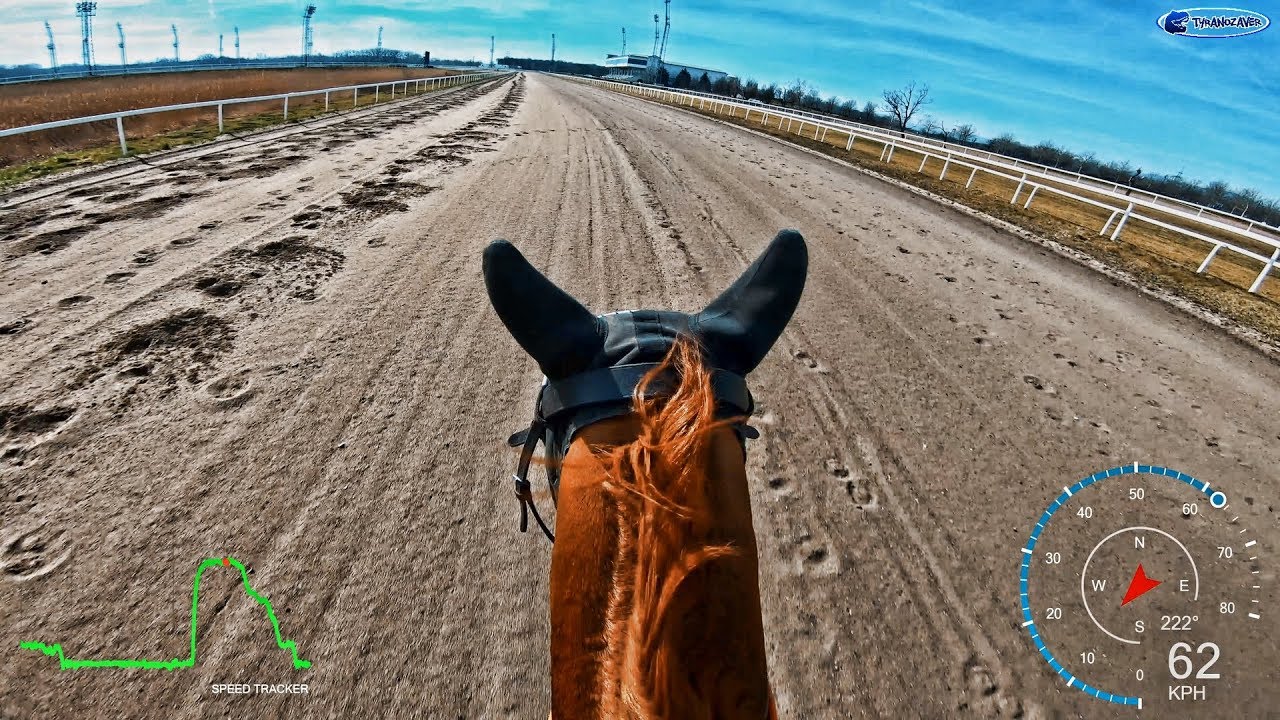
- Things get significantly faster in the canter, the natural three-beat gait, in which a horse can reach speeds of between 20 and 65 kilometers per hour. However, the animals cannot maintain this speed for long.
- Some special breeds, such as the Icelandic horse, also have the racing pace, a spectacular two-beat gait that allows speeds of up to 50 kilometers per hour, but only over short distances.
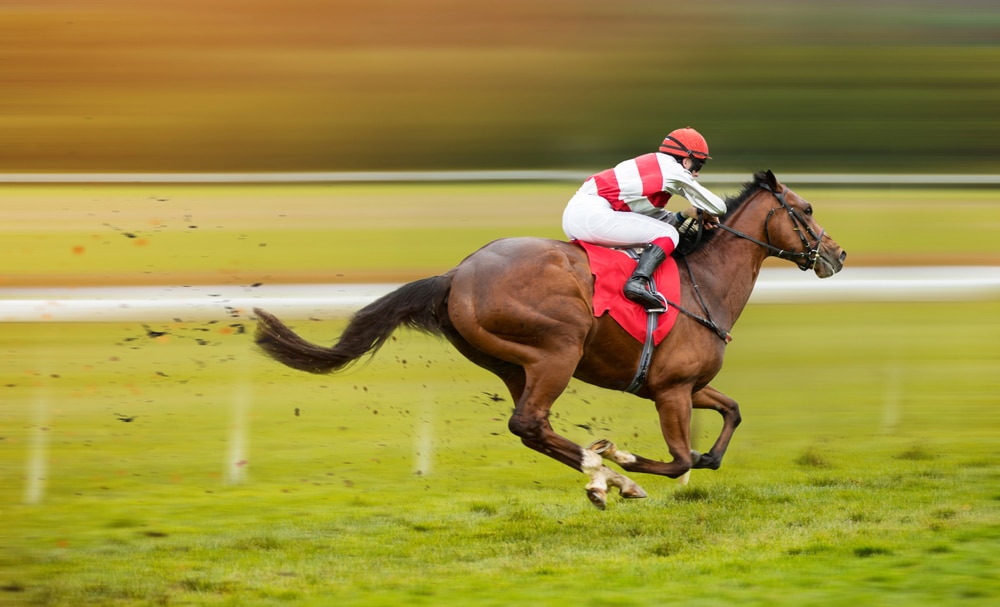
- Racehorses have even been measured at speeds of more than 70 kilometers per hour, usually at a full gallop.
Other factors that influence a horse’s speed
How fast a horse actually is depends on several factors. Breed, for example, plays a decisive role.
- Because one thing is clear: Light horses such as English thoroughbreds reach significantly higher speeds than heavy cold-blooded horses.
- English thoroughbreds and American quarter horses are particularly well known for their speed. Thoroughbreds can reach top speeds of up to 70 kilometers per hour when galloping, while quarter horses can be even faster over short distances.
- Age also influences speed: young animals are usually faster and more powerful, while older horses lose momentum.
- In addition, training determines whether a horse can maintain its speed over a longer period of time.
An animal with good musculature and strong conditioning not only runs faster, but also maintains its speed over a greater distance. - Records in equestrian sports impressively demonstrate this. The highest speed ever measured for a racehorse is around 80 kilometers per hour, set by a thoroughbred in a short-distance race.
- In classic horse racing, top speeds of 60 to 65 kilometers per hour over longer distances are not uncommon.
- It is important to distinguish between maximum speed and endurance. A horse can only maintain its maximum speed for a few seconds to minutes. In contrast, many horses can trot for several hours at a time, covering distances of 30 to 40 kilometers.
- In endurance riding, trained horses can even cover more than a hundred kilometers in a day, maintaining an average speed of 12 to 18 kilometers per hour.
Fast and safe riding: What you need
If you want to experience the speed of a horse, you should not neglect safety.
- A well-trained and healthy horse is the basic prerequisite for being able to ride it fast.
- Equally important is suitable equipment that allows the animal freedom of movement while also offering protection. This includes a suitable saddle as well as a well-fitting bridle and, if necessary, leg protection.
- The rider should also have experience: high speeds require a secure seat, stable balance, and quick reactions.