115
Pumped breast milk is a great way to feed your baby when you’re on the go. Hygiene plays an important role when pumping, transporting, and warming milk. Here are the best tips to ensure your baby is well fed when you’re out and about.
Traveling with expressed breast milk – how it works
Freshly expressed breast milk has the highest nutrient content. If possible, this milk should therefore be fed immediately after expression. The following points should be noted:
- Hygiene: To ensure that the milk can be transported safely and kept for several hours, it must be pumped under the best possible hygienic conditions. Therefore, all relevant parts of the breast pump should be thoroughly cleaned or sterilized before use and then dried. Disinfect your hands before pumping and clean your breasts with a damp cloth. This also has the advantage of helping the breast pump’s suction device adhere better to the breast.
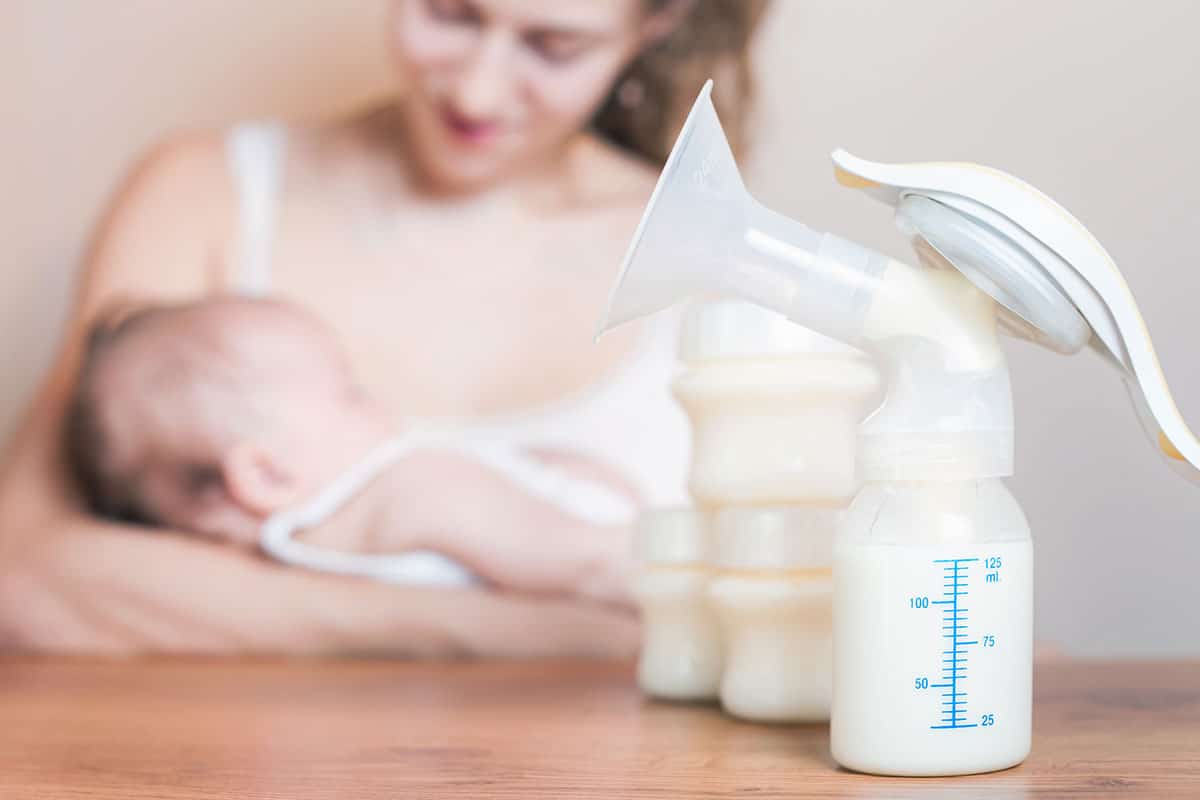
- Pumping: Most breast pumps can be connected directly to a bottle, which can then be used for feeding. Use this type of bottle, otherwise you will have to transfer the milk to another bottle after pumping. This poses an additional risk of contamination.
- Shelf life: Pumped breast milk can be stored at room temperature (16 to 29 degrees Celsius) for up to four hours. If the milk has been collected under particularly hygienic conditions, it can even be stored for six to eight hours. This gives you valuable time for an outing, a family celebration, a trip, or a longer journey.
- Storage: Immediately after pumping, seal the bottle airtight with the appropriate lid or teat. To keep the milk at drinking temperature, you can store it in special insulated bags. These can often be conveniently integrated into the diaper bag or attached to the stroller. Classic insulated bags are also suitable.
- Feeding: To feed the milk, remove the bottle from the insulated container. Swirl the bottle gently to distribute the temperature evenly. Screw on the teat attachment if necessary. Now you can feed the milk to your baby.
- Portion size: If your baby drinks several smaller portions instead of one large one, you should adjust the amount of milk in the bottle accordingly. This is because once a baby has drunk from a bottle of breast milk, their bacteria will already have entered the liquid. It is recommended that you feed the milk within a maximum of two hours. Therefore, it is better to pour the milk from a hygienic second bottle if your baby wants another portion.
- Tip: If you have breast milk left over that can no longer be fed for hygienic reasons, you don’t need to throw it away. It is ideal as a skin-friendly bath additive or as a remedy for sore bottoms.

Tips for feeding refrigerated breast milk
Breast milk can be stored in the refrigerator for up to four days and in the freezer for at least six months without any problems. You can also feed this milk to your baby when you are out and about. These tips will help:
- Frozen milk: The gentlest way to thaw frozen breast milk is in the refrigerator. It should be stored there for no longer than 24 hours. Thawed breast milk can be kept at room temperature for a maximum of two hours. When you are out and about, it must therefore be fed quickly. If the milk is stored in a bag with ice packs while on the go, for example, the shelf life can be extended by up to several hours, depending on the cooling capacity.
- Milk from the refrigerator: Fresh breast milk can be stored in the refrigerator for at least four days. An insulated container is therefore recommended for storage on the go. Pay attention to the manufacturer’s instructions for the duration of the cooling capacity. If necessary, you can add ice packs. This will keep the milk fresh for several hours.
- Warming at room temperature: Breast milk can be fed at room temperature. If your baby accepts this temperature, you do not need to warm the milk additionally. You can simply take it out of the insulated container and let it reach room temperature. However, this is not recommended for hungry children, as the process takes too long.
- Warming with water: Take an insulated container with water at a temperature of around 40 degrees Celsius with you. You can use this to warm the milk bottle to the recommended drinking temperature of maximum 37 degrees Celsius in around 20 minutes. Gently swirl the milk bottle before feeding to ensure that the temperature, fats, and nutrients are evenly distributed.
- Bottle warmer: A bottle warmer gently brings breast milk to the desired drinking temperature within a few minutes. The models are suitable for use on the go. There are devices with power cables, adapters for the cigarette lighter in the car, USB ports, or even rechargeable batteries.