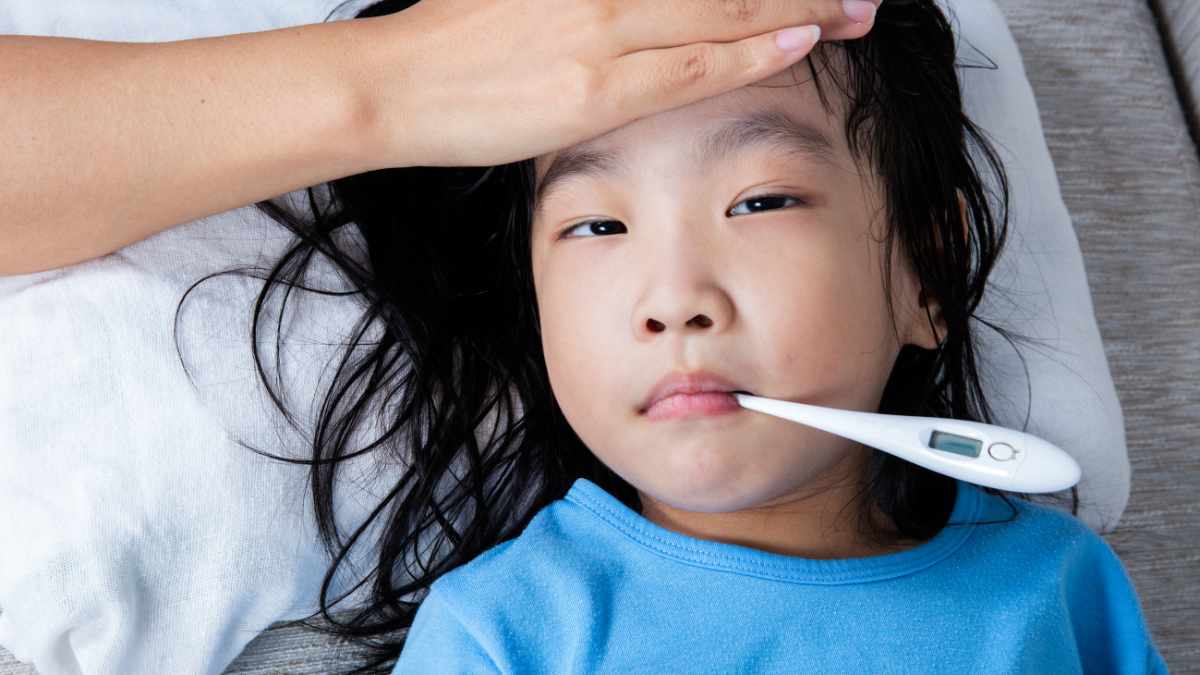
It may be that your child’s whole body is hot, but there is no fever. There can be several reasons behind a perceived high body temperature.
Whole body is hot but no fever: causes
If your child’s body feels hot, but no fever is displayed on the clinical thermometer for us adults, there may be various reasons for this.
- In general, it is important to know that babies and toddlers often still do not have a constant body temperature . The body is not yet able to regulate its own temperature so well and therefore reacts particularly sensitively to environmental influences or other factors.
- If your child is still a baby and feels hot, you should check whether they are dressed too warmly. If this is the case, you should remove at least one layer of clothing or blankets.
- Other causes of a very warm body can include exertion among other things. This can happen when breastfeeding, for example, if the baby sucks fervently. Babies and toddlers can also “cry themselves hot”. If the little ones don’t want to calm down at all, this is very exhausting for the body. They start to sweat and their head gets warm and hot.
- As a parent, you should also not underestimate heavy frolicking with toddlers. When running around, climbing and whooping loudly, it can quickly happen that the child feels feverish. The reason: Younger children do not sweat as quickly as adults – and sweating regulates the body temperature by cooling the sweat on the skin
- High temperatures also play a major role when it comes to sweating. In the summer heat, children can quickly feel very warm, precisely because they cannot sweat as much as adults. You should therefore always make sure that children are not exposed to high temperatures for too long. The younger the children are, the faster heat and direct sunlight can become dangerous;
- Children also often feel very warm when teething.
Sometimes you can also measure a real fever here. This varies from child to child. - In addition, there are children who are simply warmer than others. These children’s heads, in particular, often feel hot without the clinical thermometer showing a high temperature.
- Hormonal fluctuations and stress reactions can play a role in older children. In addition, measurement inaccuracies can occur, for example due to external influences such as thick clothing or blankets;
- Note: In children, it can happen that the whole body feels hot and the cheeks glow, even though there is no fever.
Glowing, very red cheeks are a possible accompanying symptom without an actual increase in body temperature. This phenomenon can be caused by various harmless causes such as physical activity, emotions or heat exposure, but also by illnesses or skin reactions. - Caution is particularly important when exposed to heat, as young children and babies can overheat much more quickly due to their immature temperature regulation and lower sweat production. They are therefore particularly at risk of suffering heat stress or even heat stroke.

A child is then said to have a fever
“No fever” means that the body temperature is below the limits defined for fever.
Specifically, a rectally measured temperature below 38.0 °C is not considered a fever. Values between around 37.5 °C and 38.0 °C are referred to as an elevated temperature or subfebrile temperature, but not yet as a fever in the narrower sense. The normal core body temperature is typically between 36.5 °C and 37.4 °C. It is perfectly normal for the body temperature to fluctuate by up to one degree during the course of the day. Individual normal temperatures can also vary.
- The normal temperature (measured rectally) is around 36.5 to 37.4 °C. An elevated temperature (subfebrile) is 37.5 to 38.0 °C. A body temperature from 38.0 °C (rectal) is considered a fever and temperatures from approx. 39.0 °C are described as high fever. Anything above 40.5 degrees is referred to as a very high fever.
- In general, children cope well with fevers – even high ones. In this case, make sure that your child drinks enough and rests. In addition, according to the current standards for 0 to 2-year-olds, a rectal body temperature of up to 38°C is classified as normal.
- You should consult a doctor immediately if your baby has a fever of over 38.5 degrees or if your child – regardless of age and measured temperature – appears listless, is very weak, does not want to drink or has other severe symptoms such as abdominal pain, headaches or vomiting.
- Call the emergency services if the child loses consciousness and/or convulses. This is a febrile convulsion.