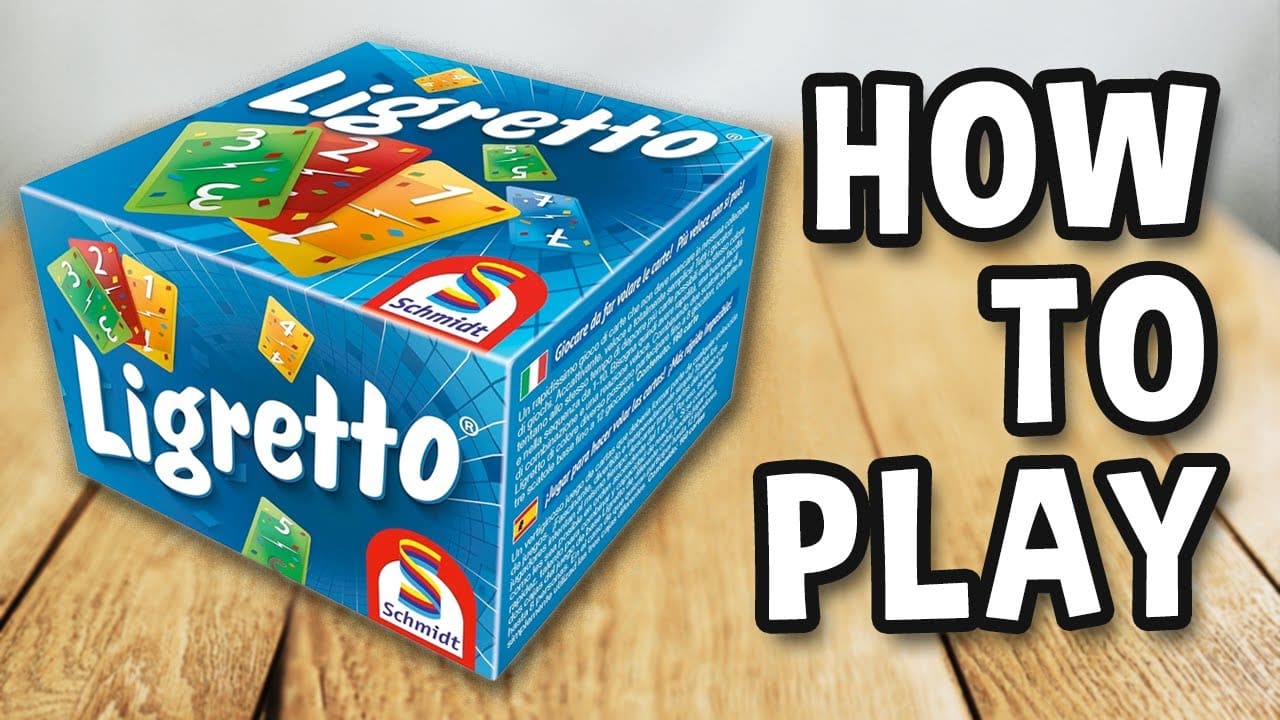
To master the fast-paced card game Ligretto, you need to know all the rules. When playing, quick reactions are just as important as strategic thinking.
Mastering the rules of Ligretto: The right preparation
To enjoy playing Ligretto, you need to be quick and able to grasp numbers quickly. The aim is to reduce your own Ligretto stack of cards as quickly as possible, while all players simultaneously place cards in the middle of the table. You can play Ligretto with two to four players.
If you use several Ligretto sets with different colors on the back of the cards, up to twelve players can play – a must for game nights with lots of people.
Ligretto: How the game is played
Now the actual game can begin. Once everyone is ready, one player gives the starting signal by saying “Ligretto, go!” From this moment on, everyone plays at the same time. There is no order—speed is of the essence. Each player plays when they can.
- Your goal is to place cards from your Ligretto stack, the open row, or your hand on the shared discard pile in the middle of the table. There, you may only place cards in the correct color order from 1 to 10. Each new pile begins with a “1” of the corresponding color.
- This means that players must first place the cards numbered 1 in the center, and then a card numbered 2 of the same color can be placed on top of a card numbered 1. There can be several piles of the same color at the same time.
- Players may use cards from the Ligretto pile (the 10 on top of the discard pile) or the face-up cards for this purpose.
- If you cannot discard a matching card from your face-up row or the Ligretto pile, you may reveal three cards from your hand at once. It is important to note that You may only use the top card of the three. If you can discard this card, you may reveal the next three – otherwise, turn the pack over again.
- Once the pile has been played through, you may reshuffle it and use it again. This gives you a second chance to find matching cards.
- In rare cases, it may happen that no player can discard a card—neither from their hand, nor from the Ligretto pile, nor from the open row. In the event of a so-called blockage, the official Ligretto rule stipulates that the round is ended prematurely.
Even if no one has completely gotten rid of their Ligretto pile, each player now counts all cards played up to that point for scoring.
- A common misconception is that the round ends as soon as one player has discarded and replaced all cards in the open row. This is not correct. The round ends only when one player has been able to discard all ten cards from their Ligretto pile. Only then do all players call “Stop” and the points are counted.
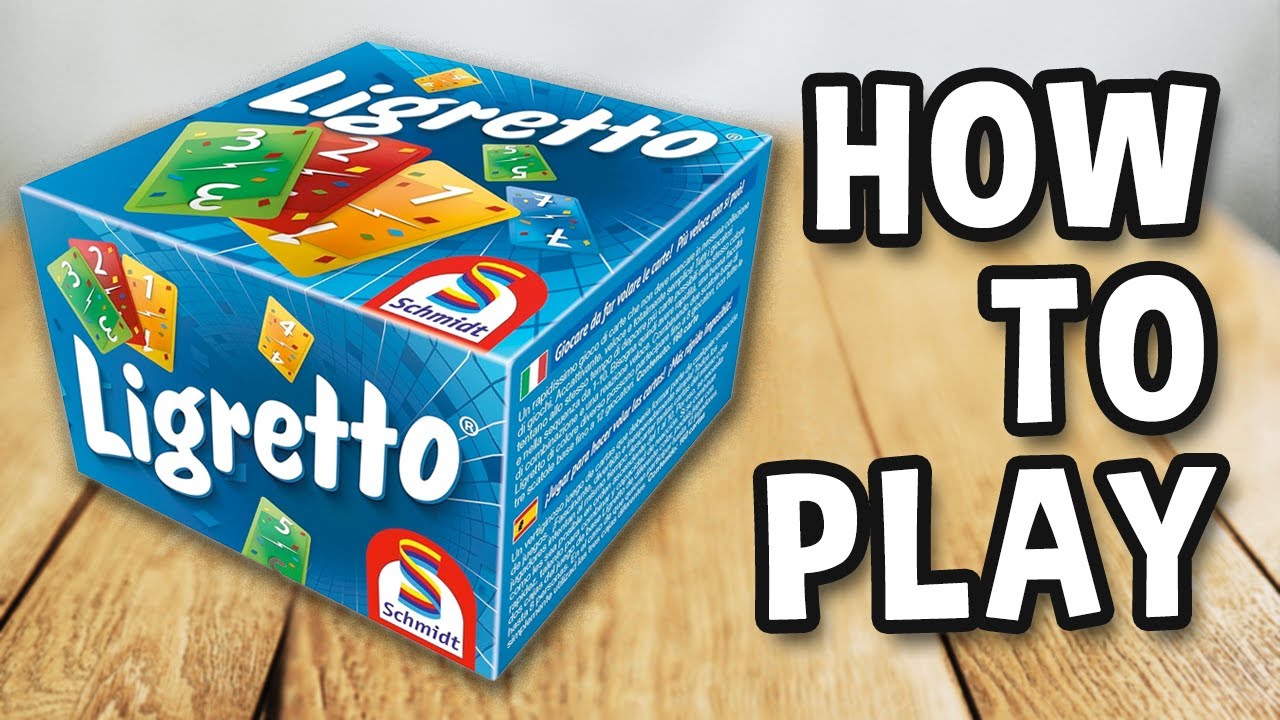
How the scoring works
After each round, add up the points. Play several rounds in a row and add up the points until one player has reached a predetermined total number of points, for example, 100 points. Alternatively, you can agree on a fixed number of rounds and determine the winner at the end.
- At the end of a round, count all the cards you have placed in the middle of the table. Each of these cards is worth one point.
- Then count how many cards are left in your Ligretto deck. For each of these cards, you deduct two points.
- Cards from your hand or the open row are not included in the scoring.
- An example: You have placed 18 cards in the middle and have 4 cards left in your Ligretto stack. Then you receive the following points: 18 - (4×2) = 10 points.
- The player with the most points wins the round. At the end of the game, add up your points from the rounds to determine the overall winner.