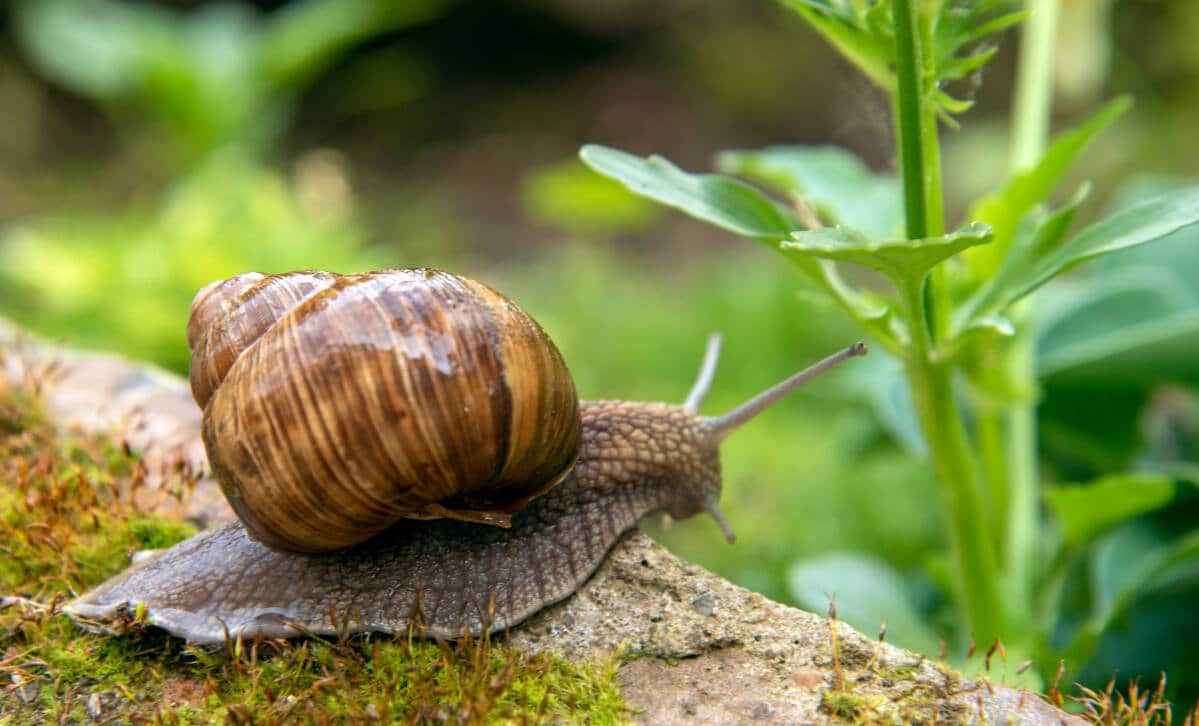
Want to fight snails using home remedies? Discover the best home remedies for effectively and environmentally friendly removing snails from your garden. From natural barriers to biological solutions, we offer comprehensive guidance on how to keep your garden snail-free.
Controlling slugs with home remedies: Why is this a good idea?
Many garden owners are familiar with the problem: as soon as the first tender plants sprout in the flower bed, slugs are not far behind. But native slugs, and especially slugs, can cause great damage and destroy entire plant populations. But before you resort to chemical pesticides, there are numerous home remedies you can use to repel snails in a sustainable way. In this article, we present tried and tested methods for keeping snails at bay in a natural way.
- The use of home remedies to combat snails has several advantages. One of the most important points is environmental protection. Chemical agents can harm not only snails, but also other beneficial insects and soil life. With natural methods, you protect the ecosystem of your garden and promote a healthy balance.
- Another advantage of home remedies is their cost-effectiveness. Many of the ingredients needed can be found in an average household or can be purchased inexpensively. This makes these methods particularly attractive for hobby gardeners who want to watch their budget.
- Home remedies for repelling snails are often easy to use and do not require any special knowledge or equipment. This makes them ideal for gardeners of all experience levels. Whether you are tending a small balcony or a large garden, with the right tips you can be successful anywhere.
- Last but not least, home remedies offer a flexible and creative approach to the problem. You can combine and adapt different methods to ensure the best protection for your plants. This individuality is lacking in standardized chemical products.
Natural barriers as protection against snails
Natural barriers are one of the most effective methods of keeping snails away. These barriers have a physical and psychological effect on snails, preventing them from approaching your plants. Below, you can find out which materials are particularly suitable and how to use them correctly.
- Coffee grounds are a popular way to deter snails. This is because caffeine is toxic to snails. Sprinkle dry coffee grounds around your plants in the garden to create an impenetrable barrier. Coffee grounds also improve the soil as they act as a fertilizer.
- Eggshells are another helpful remedy. Crush the shells and scatter them around the plants. The sharp edges deter snails, as they could injure their sensitive bodies. Eggshells also provide calcium, which is beneficial for many plants.
- Copper tape and copper netting are a long-term investment that can pay off. Install this tape around flower beds or plant pots. Upon contact, copper generates a small electrical charge that deters slugs. Make sure that the copper tape has no breaks that slugs could slip through.
- Wood ash is a natural enemy of slugs. The ash draws moisture from the animals, creating an unpleasant environment for them. However, you should make sure to apply new ash regularly, especially after rainfall, as otherwise the effect will diminish.

Plant-based repellents against snails
There are also a number of plant-based remedies you can use to keep snails out of your garden. These natural alternatives are not only environmentally friendly, but also safe for pets and children. We have compiled some of these plant-based solutions for you below.
- Garlic is ideal for use against slugs in any garden. It is best known for its intense smell, which deters slugs. To use it, prepare a garlic broth by boiling several cloves in water. Once cooled, pour this broth over the beds. Repeat this regularly to maintain the deterrent effect.
- Wormwood is a plant that also repels snails. The bitter scent of the plant keeps snails away. Plant wormwood around the edges of your garden or prepare a broth that you can spray on your beds with a spray bottle.
- Lavender is not only decorative, but also functional. The intense scent of lavender plants deters slugs. Combine lavender with other herbs to create a natural protective barrier that also attracts insects that are natural enemies of slugs.
- Rosemary is another fragrant plant that snails avoid. Use rosemary sprigs to border your beds or grow young rosemary plants among your vegetable plants. In addition to deterring snails, rosemary also promotes the health of your plants.
Biological methods of slug control
In addition to physical and plant-based methods, there are also biological approaches to slug control. These rely on the slugs’ natural enemies and help to maintain the ecological balance in your garden. Find out which animals and microorganisms can help control slug populations.
- Nematodes are tiny threadworms that live in the soil and attack specific species of snails. They penetrate the snails and infect them, reducing the population. This method is particularly effective on young snails and should be used in the spring.
- Hedgehogs are natural enemies of snails. Support hedgehogs in your garden by creating shelters and hiding places. Piles of leaves or special hedgehog houses offer protection and attract these beneficial animals to your garden.
- Ducklings are efficient snail hunters. They enjoy eating snails and can be used in larger gardens. However, ducklings need sufficient space and care, which is why they are more suitable for rural areas.
- Birds such as blackbirds and thrushes also feed on snails. Encourage bird diversity in your garden with feeding stations and weatherproof nesting boxes. This allows you to control the snail population in a natural way while strengthening the biological balance.