3
A refrigerator that runs too cold at the lowest setting turns vegetable compartments into ice floes and causes milk to freeze. The causes range from simple setting errors to hidden defects—but with precise checks and practical solutions, you can get the cold back under control.
Refrigerator too cold at lowest setting: causes and sources of error
If the refrigerator is too cold even at the lowest setting, this is often due to technical malfunctions or unrecognized usage errors. These details help to narrow down the problem:
- Defective thermostat: The thermostat is the heart of the temperature control system. An incorrectly calibrated or faulty sensor continuously sends a “cooling requirement” signal to the compressor. Test whether the appliance switches off within 30 minutes after turning the control (e.g., to level 3 of 5). If it remains cold, replacement is necessary.
- Iced-up ventilation ducts: Behind the interior paneling of modern appliances are air vents that distribute the cold unevenly when iced up. Carefully open the cover—even a 1 cm thick layer of ice disrupts circulation. This is often caused by defective defrost heaters or opening the door too often when humidity is high.
- Damaged door seals: Cracks or deformations in the rubber seal allow warm air to seep in. The refrigerator compensates for this by running continuously. Check the seal monthly: When closing, press a banknote between the door and the frame. If it can be pulled out without resistance, the seal is leaking.
- Faulty control board: The electronics control the compressor and temperature sensor. Defective capacitors or broken solder joints on the board can cause the refrigerator to cool continuously. One indication of this is that The display shows error codes (depending on the model) or does not respond to inputs.
- Incorrect installation: A refrigerator that is not level (more than a 5° tilt) will not allow the door to close properly. Use a spirit level to check that the appliance is level. Proximity to heaters or direct sunlight also causes the compressor to overwork.
- Overloading or blocked air vents: Too many supplies in front of the ventilation grilles cause cold air to accumulate. Keep a distance of at least 5 cm from the openings – especially in sensitive areas such as the vegetable drawer.

Step-by-step solutions: How to fix overcooling
Once the source of the error has been identified, you can take these detailed measures to counteract it – often without the need for an expensive technician:
- Check and replace the thermostat: Unscrew the cover of the thermostat (usually at the top right inside). Disconnect the cables and replace the component with a suitable model (the model number is on the old thermostat). Caution: Disconnect the power supply first! Take this opportunity to clean the temperature sensor with a damp cloth to remove any dust.
- Defrost the ventilation ducts: Turn off the refrigerator for 12–24 hours. Carefully remove any ice residue from the air vents with a plastic spatula – never use sharp objects! Lay down absorbent cloths to catch any condensation.
- Check the control board: Open the housing at the back (on some models, this is under the bottom cover). Inspect the board for visible damage such as swollen capacitors or discolored areas. If you suspect a defect: Replacement boards cost between $50 and $150, depending on the manufacturer. Tip: Many manufacturers offer online fault databases – use the device serial number for a targeted search.
- Clean and repair door seals: Wipe the seals every two months with lukewarm water and dish soap—grease deposits make the rubber porous. For small cracks, apply silicone adhesive and press the areas together for 24 hours. In an emergency: Stick insulating tape over leaky areas until replacement seals are delivered.
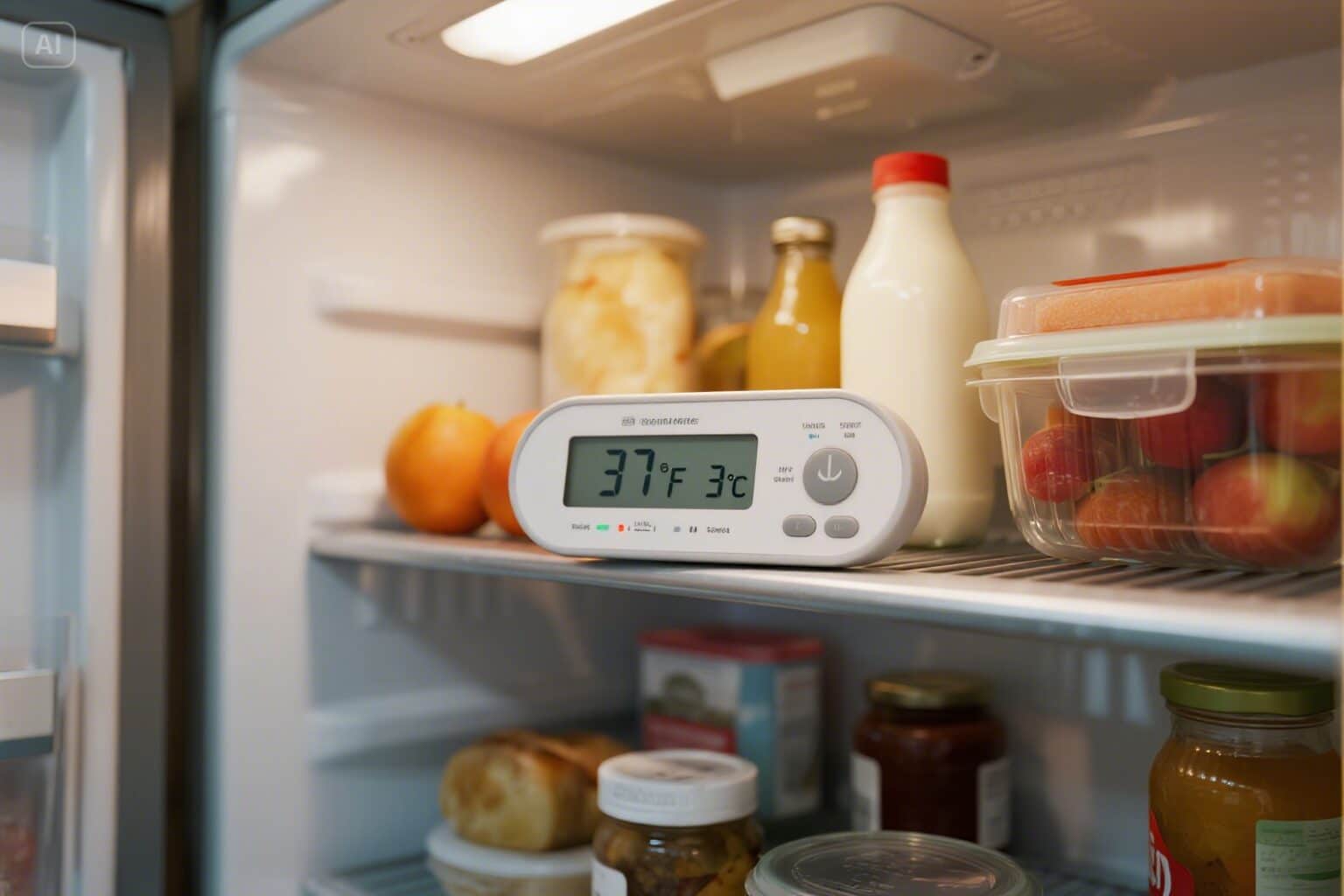
- Set the temperature correctly: Place a glass of water and a separate thermometer in the middle compartment. The ideal refrigerator temperature is 2–6 °C. If the thermometer shows below 2 °C after 12 hours, gradually adjust the thermostat higher—even if the scale is already set to “Min.” For digital devices: Press and hold the temperature button for 3 seconds to manually add 1–2 °C.
- Optimize location: Move the refrigerator at least 10 cm away from the wall so that the back (condenser) does not overheat. Use adjustable feet to align the appliance exactly horizontally. Avoid locations next to ovens or under windows with direct sunlight.