398
Different bird species can often be identified by their eggs. This is particularly helpful if, for example, you have found eggs in a nest.
Identifying bird eggs: How to proceed
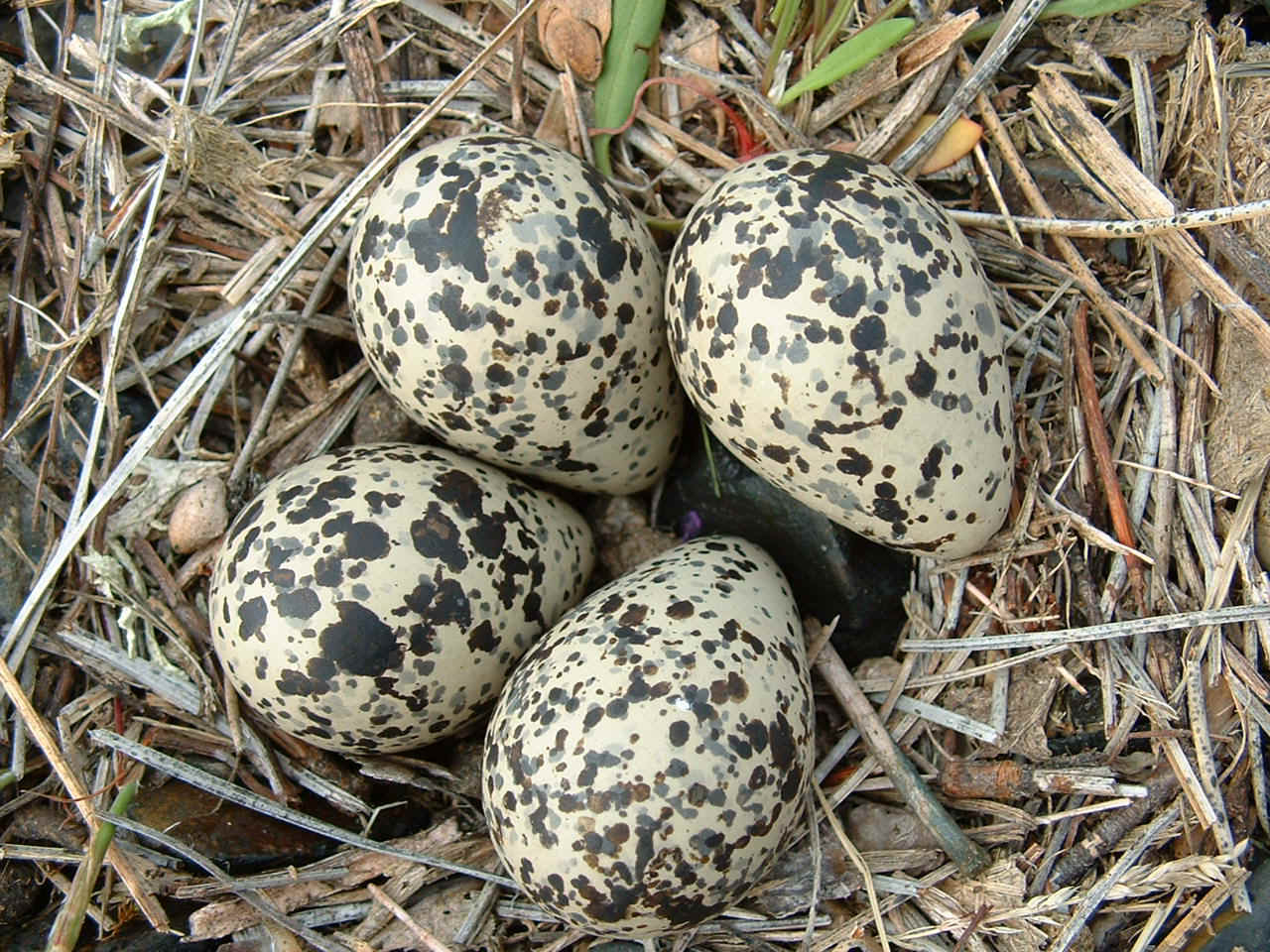
Birds can be identified by their eggs. If you want to identify different eggs, proceed as follows:
- Identifying bird eggs is not that difficult in itself, but sometimes you have to look very closely because some bird eggs look deceptively similar.
- To avoid guessing blindly, you can use certain characteristics to reliably distinguish between different bird eggs.
- First, look at the base color of the bird egg. Most bird eggs have a white, brown, blue, or green base color.
- Another important feature is the pattern on the eggs. They can be spotted, speckled, or even clouded, for example.
- The size of bird eggs can also vary and is therefore a good distinguishing feature if, for example, you want to distinguish between eggs of very similar color but very different sizes.
- Depending on where you found the egg or its shell, you can also use other characteristics to identify bird eggs. These include the clutch size, i.e., how many eggs are in the nest, the location of the nesting site, and the breeding season.
- In the next chapter, you will find a list of different eggs from the most common bird species in Germany, as well as their characteristics, which will help you to identify them accurately.

Identifying bird eggs: The most important species
By looking closely at various characteristics, you can identify a bird’s egg.
- Blackbird: Blackbird eggs are turquoise blue to green in color, have a slightly shiny surface and brown speckles. They are about 29 mm long and 21 mm wide. There are four to five eggs in the nest. Blackbirds often use trees or bushes as nesting sites, sometimes close to the ground. The incubation period is about 10 to 19 days. The birds breed several times between March and June.
- Blue tit: The eggs of the blue tit have a white base color, are slightly shiny, and have reddish-brown spots, which are mainly centered on the flattened side. Blue tit eggs are quite small, measuring 16 mm in length and 12 mm in width. The clutch size is between four and 16 eggs, which are often incubated in tree cavities for 13 to 15 days. The usual breeding season is between March and August.
- Chaffinch: The eggs of the chaffinch are similar to those of the blue tit. The base color is white to bluish and is decorated with reddish to dark brown spots; occasionally, fine stripes may also appear. Due to their size, the spots can overshadow the base color. Four to six eggs are found in nests made of roots, stalks, and moss, which are located at a height of 2 meters in hedges and trees. Between April and August, the 19 x 15 mm eggs are incubated for 12 to 14 days.
- House sparrow: The house sparrow is also known as the sparrow. Its eggs are bluish in color and covered with brown or gray spots that can obscure the base color. The clutch size is between four and six, and the eggs are approximately 22 x 16 mm in size. House sparrows nest between March and September in gardens, trees, settlements, and parks. They incubate for about two weeks.
- Great tit: Between March and August, great tits incubate their eggs, usually for between 13 and 15 days. In the nest, which is often located in tree hollows or nesting boxes, you will find six to 12 eggs with a white base color, covered with brick-red or reddish-brown spots or speckles. The eggs of the great tit measure 18 mm in length and 13 mm in width.
- Robin: Robin eggs are white, beige, or yellowish with a brown pattern that looks like a frame. There are 4 to 6 eggs in a nest, measuring approximately 20 x 15 mm. Robins incubate their eggs for 14 days between April and August in holes in the ground, in the undergrowth or even in the grass.
- Starling: Starling eggs are easy to distinguish from many other eggs due to their blue color without patterning and their size of 30 x 21 mm. They incubate their eggs for around 12 to 13 days between March and July. Starlings mainly nest in tree hollows and nesting boxes. The clutch size is between four and seven eggs.
- Wren: Wren eggs have a white base color with brown, sometimes pinkish-brown markings. They lay between five and seven eggs, which they incubate for 15 to 16 days between April and August. The bird is a ground nester, usually laying its 17 x 12 mm eggs in forests with dense vegetation.