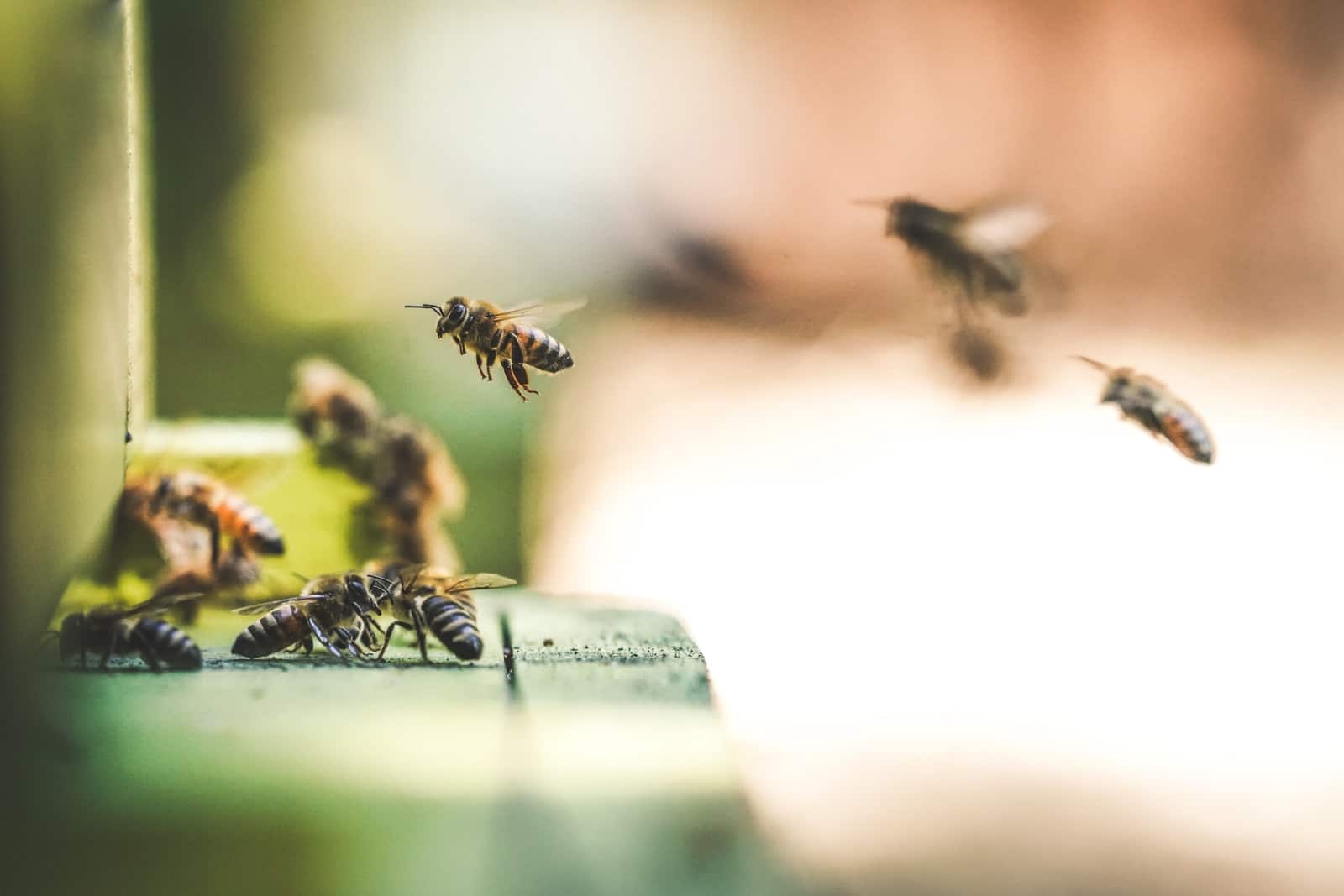
Repelling bees, or at least keeping them at a distance, is usually quite easy. Under no circumstances should you kill the insects.
Repel bees with these measures
Bees are not only important as pollinators of plants, they are also indispensable for nature. Anyone who has their own garden with fruit and vegetables should actually welcome these insects for this purpose. Nevertheless, many people are afraid of these creatures because their stings are painful and can even be life-threatening for people with allergies. If you want to make sure that bees don’t come too close to you, you can try a few simple home remedies.
- Don’t panic: Bees rarely come into close contact with humans. In most cases, you should be safe from bees even when eating and drinking outdoors. Unlike wasps, bees are not interested in human food, but rather seek out plant nectar and pollen.
- Exceptions include foods that are very high in sugar, such as frosting and honey. In addition, bees only sting in absolute emergencies, i.e., when they feel threatened, as they die when they sting. If you remain calm and do not provoke the creatures, nothing should happen.
- Avoid flowers: The best way to keep bees away is to avoid planting flowering plants near your seating and reclining areas. As a precaution, do not place flowers on your dining table to avoid attracting bees. You can also cover or seal sweet foods and sugary drinks as a precaution.
- Use fragrant plants: Bees avoid certain plants, such as tomatoes, basil, and lemon balm. You can strategically place these in your garden or on your balcony.
- No fragrances: Bees rely heavily on smell. Perfumes, scented creams, and hairsprays are particularly attractive to bees.
- Essential oils as a gentle deterrent: Some scents deter bees without harming them: citronella, clove, tea tree oil, or eucalyptus. You can apply these in diluted form to your tablecloth or clothing, for example.
- Color psychology for insects: Bees are attracted to bright colors such as blue, purple, and yellow—these colors resemble flowers. Wear light, neutral colors such as white, beige, or light gray. Avoid floral patterns or colorful tablecloths.
- Waving and swatting are a bad idea: Waving or swatting at bees to scare them away is usually not a good idea. This quickly makes the insects aggressive and more likely to sting. If a bee strays into your immediate vicinity, the best tactic is to remain calm. It will usually disappear again after a short time.
Protective regulations for bees and wasps
Stricter protective regulations have been in force in Germany since 2023. According to § 39 of the Federal Nature Conservation Act, bees are classified as a specially protected species. This means that killing, injuring, or disturbing them is prohibited. Violations can be punished with heavy fines of up to €50,000.
- If the troublemakers in your environment are not bees at all, but wasps, you can try various methods to repel wasps. You can tell the difference between bees and wasps by their appearance and behavior.
- Bees are round and hairy, while wasps are slender with smooth bodies. Wasps are omnivores and are attracted to fruit or sweet drinks. Wasps are generally more aggressive, while bees only sting once and then die.
- Bees, wasps, and hornets are all protected species. Killing, injuring, or removing nests is prohibited. Nests must be relocated professionally.
- Contact a beekeeper or nature conservation authorities—only professionals are allowed to carry out relocations.
- If nest locations are dangerous, for example in children’s playgrounds, they may be removed with official permission – but only professionally and under safe conditions.

Further tips for dealing with bees
As mentioned at the beginning, unlike wasps, which look similar, bees are focused on fruit nectar and usually only come close to humans when there are flowers in the vicinity or because they have lost their way. Here are a few more tips on how to deal with bees if they come too close to you:
- Insect hotel for wild bees: You can recognize wild bees by the fact that they cover your garden furniture with a clay-like substance. Instead of chasing the bees away, you should do them a favor and set up an insect hotel if possible.
- Plant flowers at a distance: If you are really afraid of bees, you can try planting suitable flowers in your own garden in a place far away from where you spend time. This will help the bees and keep them away from you.
- Bee nest on your house: If you have discovered a bee nest in your apartment or house, contact your local beekeeping association so that the nest can be relocated. Only a trained beekeeper is allowed to catch and relocate bees. In rented apartments, the landlord usually covers the costs.
- Keeping bees out of your home: If you are concerned that bees will fly into your home, you can install insect screens on windows and doors.
- Bees make an invaluable contribution to biodiversity. They pollinate a large proportion of crops and wild plants, thereby securing yields in fruit and vegetable cultivation. A bee-friendly approach therefore not only protects the animals, but also our environment and food supply.