8
You can report sightings of the blue wood bee to the Nature and Biodiversity Conservation Union. The peace-loving bee species is harmless and comes from warmer regions.
How to report the blue wood bee
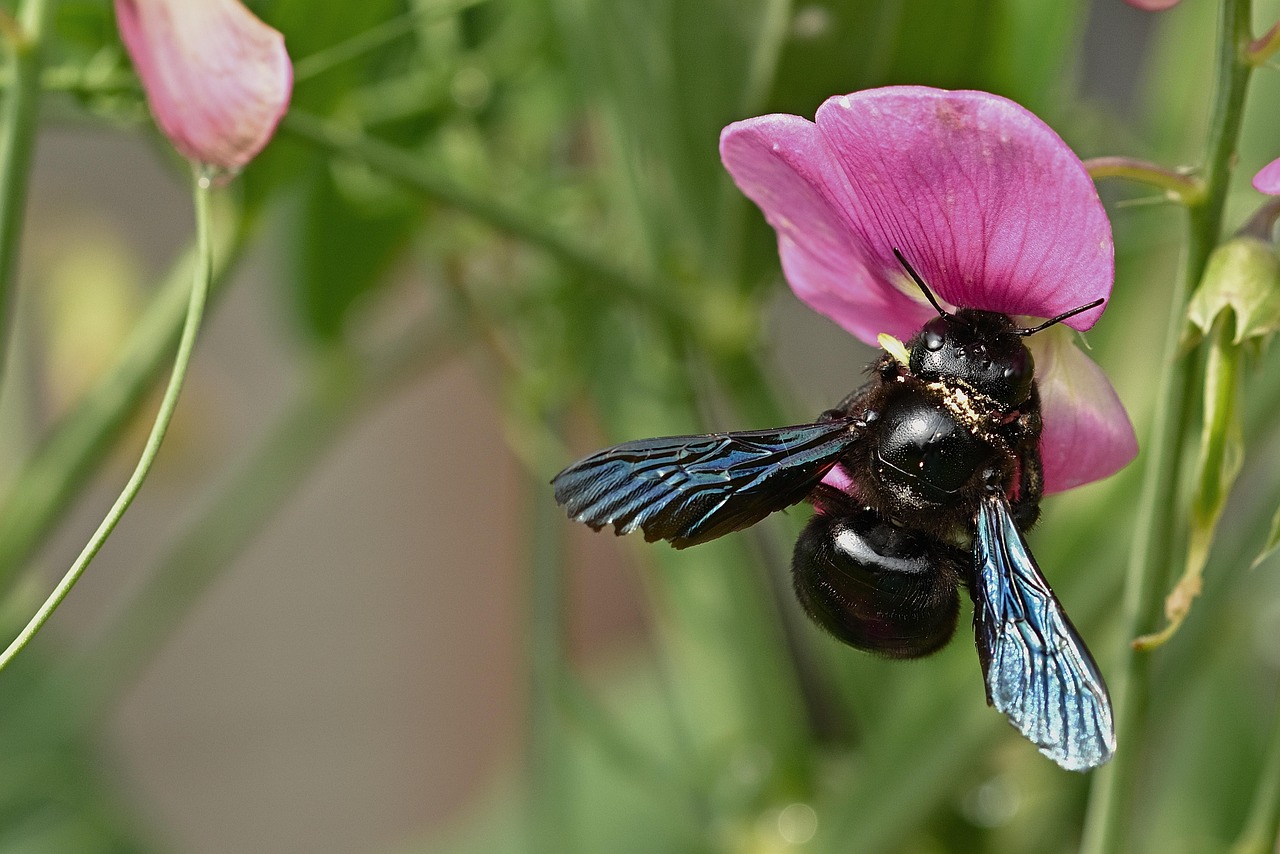
If you see the blue wood bee (Xylocopa violacea) in your area, you can report it to the Naturgucker portal of the German Nature and Biodiversity Conservation Union (NABU). You can recognize the bee species by the following characteristics:
- The blue wood bee has hardly anything in common with our native bees – except that it can also sting . But it only does this when its own life is in danger or it feels threatened.
- The blue wood bee grows up to three centimetres in size and its silhouette most closely resembles that of a bumblebee. The animal’s body is shiny black and hairy at the back, which is why the insect is often called the “black wood bee”. Its wings shimmer in shades of blue and purple.
- When the wood bee flies, you can hear it buzzing loudly and clearly. This is why it is often described as a “black bumblebee with blue wings”.
- The insect is called a wood bee because it lays its eggs in dead wood. This bee species, which is actually native to Central and Southern Europe, does not form a colony. The animals live alone and only meet to mate in spring. Both the males and the females can hibernate.
- The Xylocopa violacea is not a pest, as it only uses dead wood for its brood. Furthermore, it poses no danger to other insects. The sting of the blue wood bee is similar to that of our native bees.
- Thanks to climate change, this bee species has also been spreading towards northern Europe for several decades. It feels at home in sunny meadows, flowering gardens and sparse forest edges and settles in places where it can find sufficient food, nesting material and dead wood.
- Good to know: The blue wood bee bears the title Wild Bee of the Year 2024. By reporting sightings of the insect to the Nature and Biodiversity Conservation Union, you can help to collect data on the occurrence and spread of the blue wood bee.