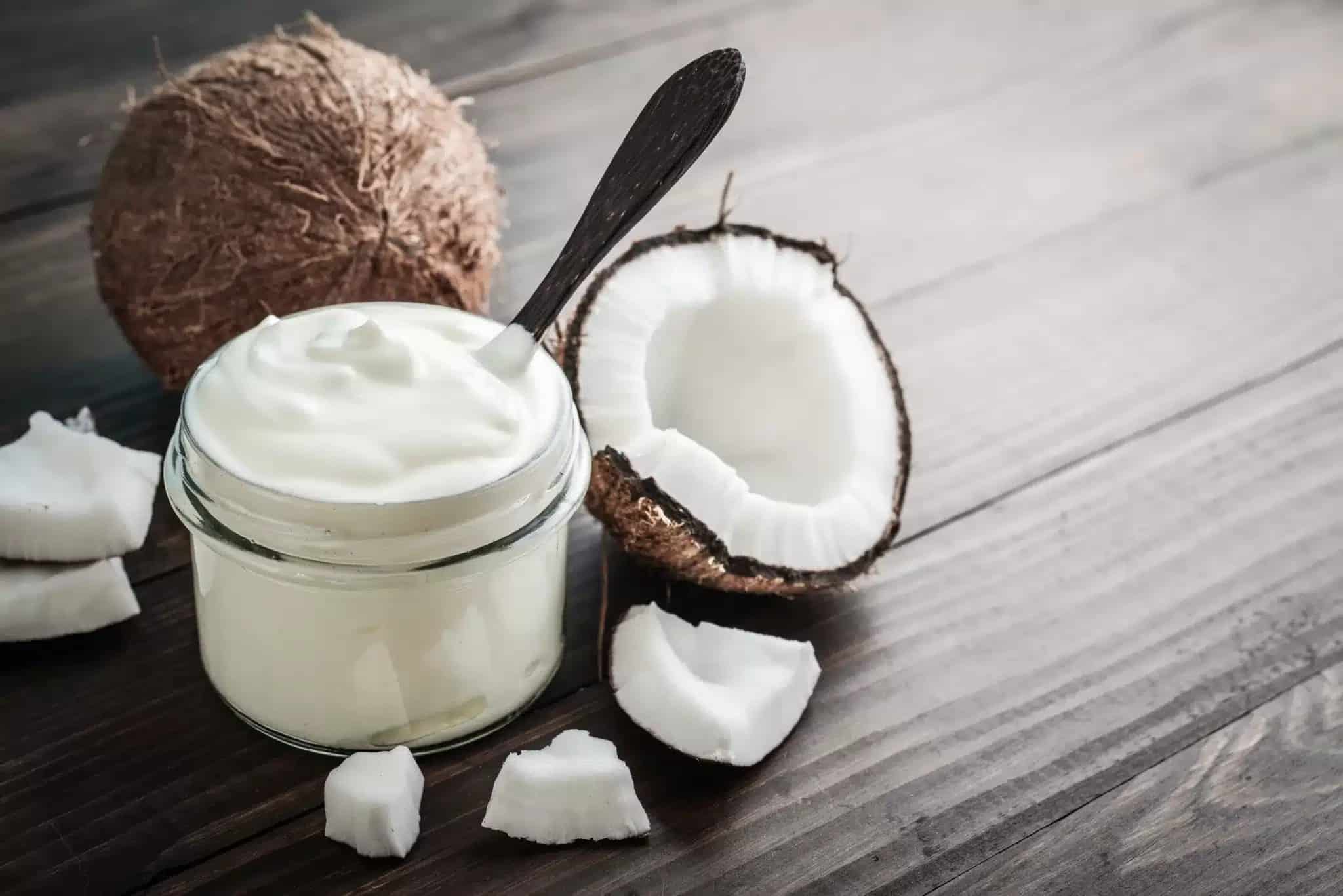
The shelf life of coconut milk depends on various factors. These include the type of packaging. In general, however, plant-based milk has a relatively long shelf life.
Shelf life of coconut milk – what you need to know
When determining whether unopened coconut milk is still good to drink, the best-before date on the packaging can be helpful. However, this is by no means the date after which the plant-based milk is no longer edible – on the contrary. If you don’t make coconut milk yourself, you can buy it in either a Tetra Pak or a can. It is important to note that the shelf life varies depending on the type of packaging.
- Homemade coconut milk: Homemade coconut milk has the shortest shelf life. It must be kept refrigerated and used within two to three days.
- Freezing: Alternatively, you can freeze the coconut milk, for example in ice cube trays. This way, the milk will keep for about three months and you will always have some on hand to create cool long drinks or fancy Asian dishes, for example.
- Type of packaging: Unopened coconut milk in a can can be used for the longest time after the best-before date has expired. Coconut milk in this form usually has a shelf life of around six to seven months. However, if the plant-based milk is in an unopened Tetra Pak, you should consume it within the next one to two months.
- Temperature: As a general rule, coconut milk should be stored in a cool place, such as a pantry. Even unopened coconut milk should not be exposed to high temperatures.
- Open packaging: Once you have opened the packaging, place the coconut milk in the refrigerator. As a general rule, once the packaging has been opened, you should consume the coconut milk as quickly as possible or freeze it, as described above.
- You can tell that coconut milk is no longer edible by its appearance: it is no longer bright white, but has taken on an unappetizing grayish color. Coconut milk also gives off a strong odor when it has gone bad. If you’re still not convinced, you’ll know for sure that the coconut milk has definitely expired after the first unpleasant sip.
Proper storage of coconut milk
After opening the coconut milk, you should transfer it to a sealable container and store it in the refrigerator. A non-metallic, airtight container, such as glass or plastic with a lid, is ideal, as the can is not ideal for storage after opening and the metal can affect the taste or shelf life.
- Once opened, coconut milk can be stored in the refrigerator for about four to six days in a can and about seven to ten days in a Tetra Pak. Coconut milk does not like to be too cold, so it is best to store it in a slightly warmer compartment of the refrigerator, for example, in the upper section.
- Unopened coconut milk (can or carton) should be stored in a cool, dry place, protected from extreme temperature fluctuations and direct heat—usually a pantry or cool basement room is sufficient.
- If you want to store coconut milk for longer, it can also be frozen, ideally in freezer-safe containers. The consistency may change slightly when thawed, but this does not affect the taste or quality.

Shelf life and storage of homemade coconut milk
Homemade coconut milk usually keeps in the refrigerator for two to four days if stored in a clean, airtight container. It is important to keep the refrigerator temperature between two and five degrees Celsius to slow down the growth of microorganisms.
- Homemade coconut milk is very suitable for freezing: it can be frozen for up to approx. three months. Freezing it in ice cube trays is a practical way to portion it. After thawing, the consistency may change (fat separates from water), but this can be remedied by stirring thoroughly and heating briefly.
- Compared to industrial coconut milk, which is sold in cans or Tetra Paks, homemade coconut milk has a significantly shorter shelf life. Unopened cans often keep for six to twelve months at room temperature, and opened cans can be used in the refrigerator for three to five days, depending on the packaging.
- Industrial coconut milk often contains stabilizers that extend its shelf life, while homemade coconut milk contains no additives and therefore spoils more quickly.