582
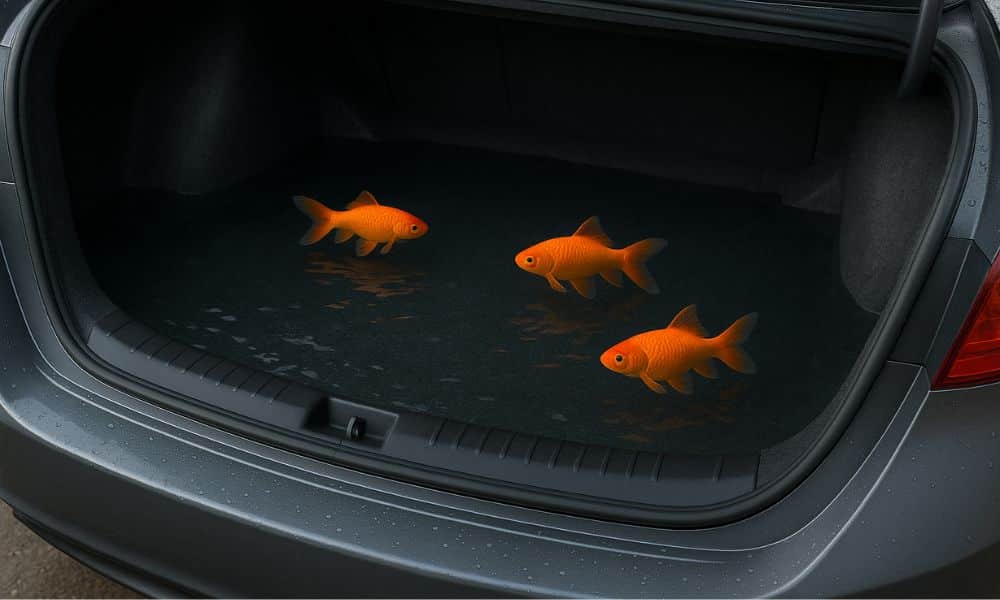
Water in the trunk is a common problem. The causes range from simple sealing defects to structural weaknesses in the bodywork.
Water in the trunk: possible causes
There are several possible causes for water entering the trunk.
- Leaky seals: The rubber seals around the trunk lid protect against rain, splashing water, and moisture. If they are porous, damaged, or loose, water can easily penetrate—especially during heavy rain or when washing the car.
- Leaky antenna: There are also seals on your vehicle’s antenna that can leak and allow water to penetrate.
- Defective rear lights: Cracks or damaged seals on the rear lights can be an often overlooked source of water ingress, especially as the vehicle ages.
- Damaged bodywork: Accidents or external influences can cause hairline cracks or gaps in the bodywork. These areas allow water to enter the trunk unhindered—often through spot-welded panels or rust-weakened material.
- Clogged drainage channels: The drainage channels around the trunk lid can become blocked by dirt, leaves, or other debris, preventing water from draining properly.
- Defective windshield washer system: A leaky hose or damaged rear washer reservoir can also allow water to enter the trunk.
- Missing or damaged blind plugs: There are so-called blind plugs in various places in the bodywork – small plastic or rubber parts that close openings. If they are missing or loose, water can enter unhindered.
- Porous sheet metal: Over time, the sheet metal—especially in the wheel wells or under the vehicle—can become permeable due to corrosion. Water can also penetrate through spot-welded areas if rust forms there.
How to solve the problem
Once the possible causes have been identified, it is important to find effective solutions to ensure a dry and protected trunk.
- Search for the entry point: Place paper towels in various corners of the dry trunk.
After a rain shower or targeted watering (e.g., with a watering can), the damp spots will show where the water is entering. This method is particularly effective if a second person is in the vehicle to look for moisture. - Repair or replacement of rear lights: Repair or replace defective rear lights to prevent water ingress and ensure vehicle safety.
- Body repairs: If there is visible rust or deformation on the bodywork, it is advisable to have it repaired by a specialist. A workshop inspection is particularly advisable in the case of structural damage, as water ingress is difficult to locate here.
- Cleaning the drainage channels: Regularly clear the drainage channels of dirt and debris so that water can drain away effectively.
- Checking the wheel well: The spare wheel well is one of the most common places for water to collect. Check it regularly—including under the cover—as standing water can quickly cause rust.
- Check blind plugs: Make sure that all openings in the bodywork are closed with suitable plugs or rubber seals. If they are missing, replacement parts can be reordered at low cost.

Checking and sealing the trunk seal correctly
To check the watertightness of trunk seals, you can perform the following steps:
- Visual inspection: Carefully examine the seals for visible damage, cracks, or signs of wear.
- Pressure test: Close the trunk and apply light pressure to various points on the seal from the outside. A leak may be indicated by a give or a whistling sound.
- Light test: Perform this test in a dark environment. Shine a powerful flashlight along the seals from the outside while someone in the trunk looks for light coming in.
- Sealing with sealant: If it is not possible to replace the seal immediately, a permanently elastic body sealant such as Sika-Flex can be used to reliably seal minor leaks.