664
If the horn in your car isn’t working, there could be various reasons for this. These range from simple technical problems to major defects.
The car horn isn’t working – where is it actually?
A blown fuse may be the reason why the horn is not working. To find out exactly what the problem is, it is worth taking a look at the horn.
- First, look for the horn in the engine compartment. It is a round component, sometimes with a visible opening.
- The horn is about the size of a hand and is often located near the radiator grille. If you cannot find the horn, check your vehicle’s manual.
- Alternatively, you can find help online for many models. Simply search for your car model and the keyword “horn.”
Common cause: defective fuse
The fuse protects your car’s electrical system from overload. A defective fuse can cause the horn’s circuit to be interrupted.
- Once you have found the horn, check the two connected cables. You can carefully remove the cables using a specific mechanism or cable clamps.
- If the contacts on the horn and cable are rusted, this may be the cause. Spray some WD-40 on the metal contacts and then check whether the horn is working again.
- You should also check your vehicle’s fuse box. This is usually located in the engine compartment or in the interior under the dashboard. You can find the exact location and assignment of the fuses in your vehicle’s manual.
- If the horn fuse is defective, it can be replaced relatively easily. Always use a fuse with the same amperage to avoid overloading the electrical system. If the new fuse also blows, there may be a deeper problem, such as a short circuit.
- Sometimes a loose connection in the fuse box can also cause the horn to fail. In this case, it helps to clean or tighten the contacts. However, this work should only be carried out by people who are familiar with the electrical system of their vehicle.
Problems with the horn button
If the fuse is intact, the problem could be with the horn button itself.
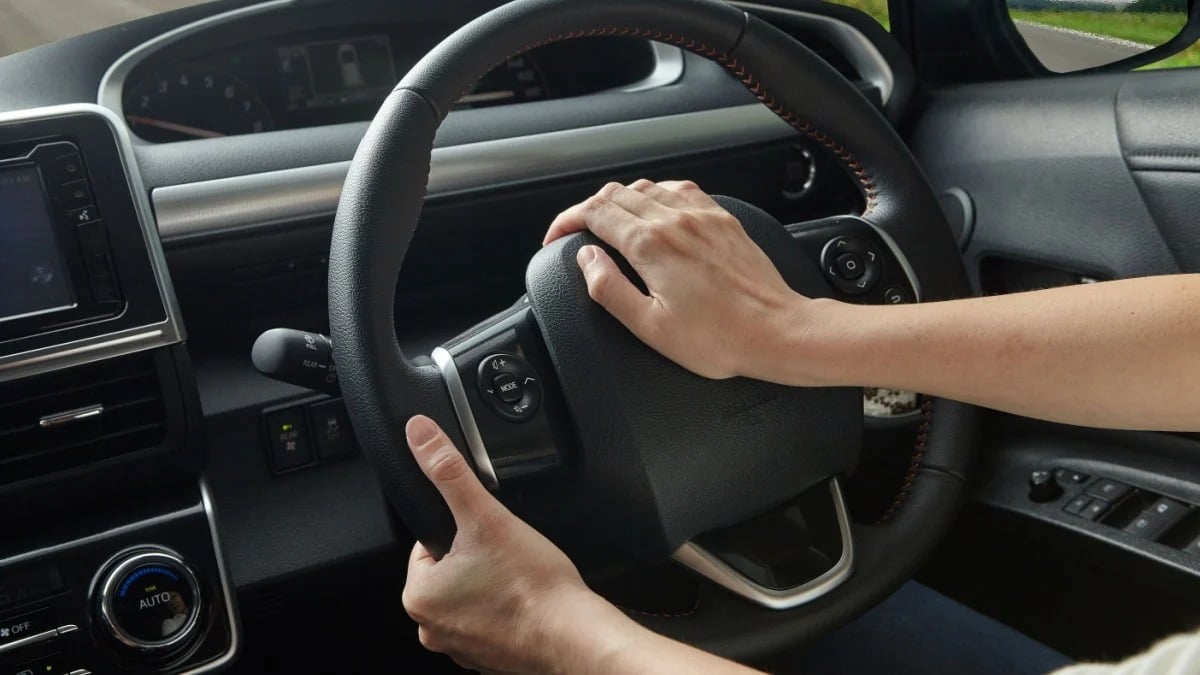
- This button is integrated into the steering wheel and controls the electrical contact to the horn. Faults can occur here due to heavy use or wear and tear.
- There are several possible causes affecting the horn button. A common problem is a worn or loose contact inside the steering wheel.
- If the contact can no longer be made properly, the horn will no longer work. In some cases, the steering wheel lock may also block the horn button. You can check this by moving the steering wheel slightly back and forth while pressing the horn.
- If the horn button is mechanically damaged, it may be necessary to replace the component. This should be done by a repair shop, as the steering wheel and possibly the airbag will need to be removed. However, minor malfunctions can also be remedied by cleaning the button and contacts if they are dirty or dusty.

Airbag and car horn not working
If the airbag and horn are not working at the same time, this often indicates a major problem with the vehicle’s electrical system.
- If a warning light in the car indicates a problem with the airbag, this can also cause the horn to fail. If the airbag expands inside, the horn mechanism is blocked.
- In this case, you should have the repair carried out as quickly as possible at a repair shop. A defect in the airbag, as well as work on the airbag, is extremely dangerous and can only be carried out by qualified personnel.
Defective horn speaker or cable
If neither the fuse nor the horn button is the cause, the problem could be with the horn speaker or the cables that connect it to the electrical circuit.
- The horn speaker is usually located in the engine compartment and can be damaged by weather conditions such as moisture or dirt.
- Check the horn speaker for visible damage or corrosion on the connecting cables. If moisture gets into the speaker, it can cause a short circuit that will disable the horn. Loose or torn cable connections will also prevent electricity from flowing. In such cases, the affected cables and connections must be replaced or repaired.
- In some cases, it may help to clean and reattach the cable connections. Make sure that the connections are secure and that there is no corrosion. If the horn speaker itself is defective, it can be replaced with a new component, which can usually be easily installed in the engine compartment. Here, too, you should pay attention to the exact installation location and wiring so as not to interfere with the electrical system.
- Use a contact cleaner for car electrical systems to keep the horn button and fuse box clean.