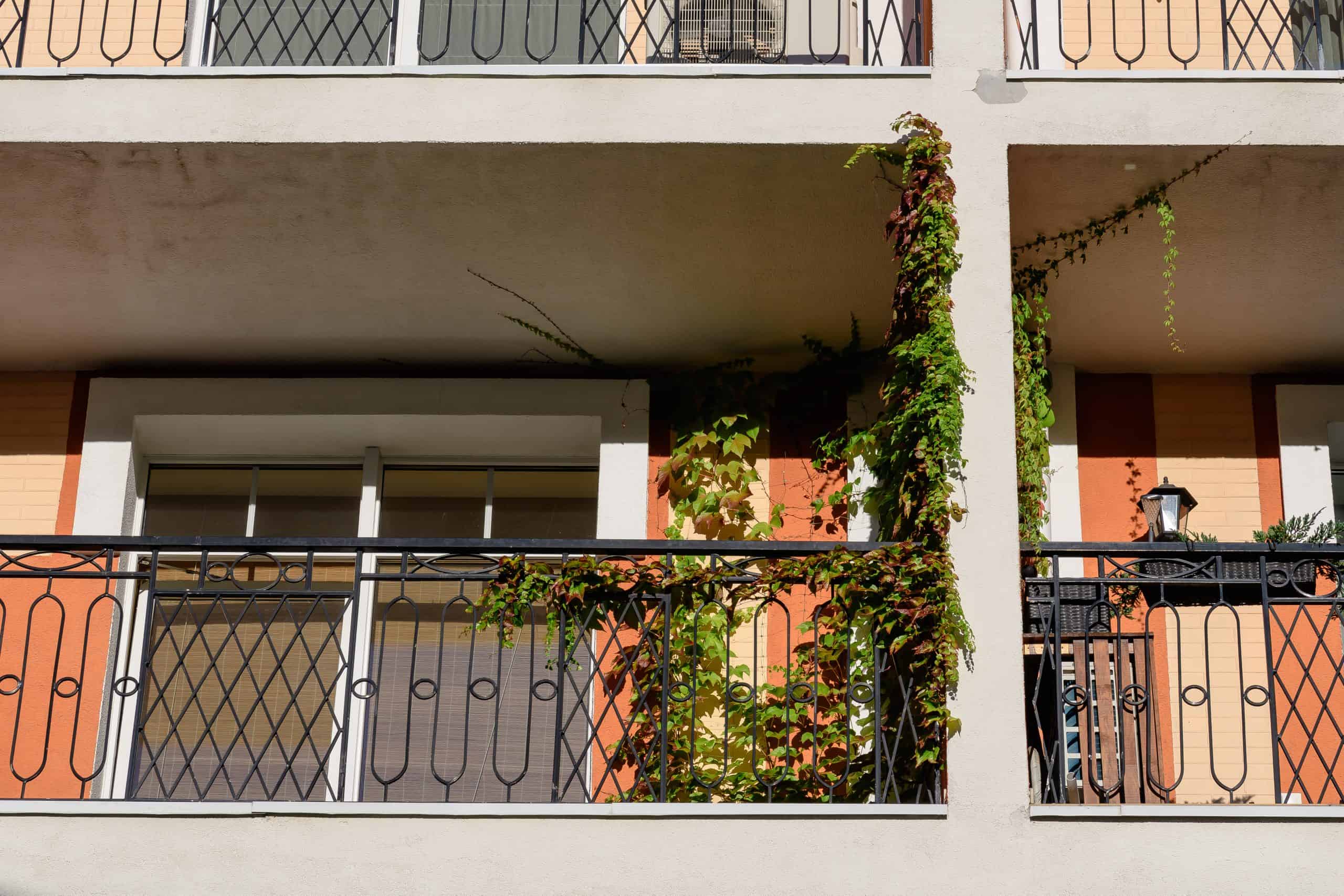
Ivy on the balcony: Location & care
Ivy is a very well-known and popular climbing plant and ground cover in our latitudes.
With good care, this easy-to-care-for green plant can live to a ripe old age. It is particularly well suited for greening semi-shaded areas. To help your ivy thrive on your balcony, we have summarized a few care tips for you below.
- Depending on the purpose for which you want to plant ivy on your balcony (hanging plant, privacy screen, house wall greening), you need to choose the right type of ivy and the appropriate container. Choose a pot or window box depending on your needs.
- If you plan to plant ivy for the long term, you should choose a pot or window box that is slightly deeper so that the roots have enough space. However, if you want to keep the ivy small, it is better to buy a smaller pot.
- The planter should also have a drainage hole so that rain or watering does not cause waterlogging and the roots rot. A good way to prevent waterlogging is to create a drainage layer at the bottom of the pot.
- To help your climbing plant grow easily, you should provide it with support (e.g., trellis, bamboo sticks, or steel cables) as it grows.
- Ivy generally does not tolerate direct sunlight. North-facing balconies are therefore particularly suitable for planting ivy. Otherwise, you should choose a slightly shadier spot on your balcony for your green plant.
- Ivy is very undemanding. It grows particularly well in calcareous, moist soil. If the top of the pot becomes dry, you should water it. It is important to water it just the right amount. Make sure that no waterlogging occurs in the pot.
- As a perennial and hardy climbing plant, you do not need to move your ivy to winter quarters in winter. However, in a very cold winter with heavy frost, you can wrap the plant pot in a fleece to prevent the plant from freezing.
- Fertilizer is not absolutely necessary for ivy to grow well. However, if you want to treat your ivy from time to time, you can pamper it with a little fertilizer.
Additional care tips for ivy
Since ivy usually grows very quickly and profusely, problems can arise when planting this climbing plant on a balcony. Especially if you live in a rented apartment, you should not let your ivy grow unchecked.
- If you want to let your ivy climb up the wall of your house, you should be aware that the adhesive roots can leave marks on the wall. The ivy can also grow into cracks and joints in the wall and damage the facade. One trick is to protect the wall of the house with a wooden wall or a trellis. This will make it easier to remove your ivy when you move.
- To prevent your balcony from turning into a green jungle after a while or the plant from growing into the rain gutter, you should prune your ivy regularly. April and August are the best months for pruning.
- However, you should always wear gardening gloves when pruning your ivy, as ivy is poisonous.
Especially in the airy heights of a balcony, your ivy may develop purple berries after a few years. These look beautiful, but they are poisonous. You should keep this in mind when planting ivy if you have pets or small children.