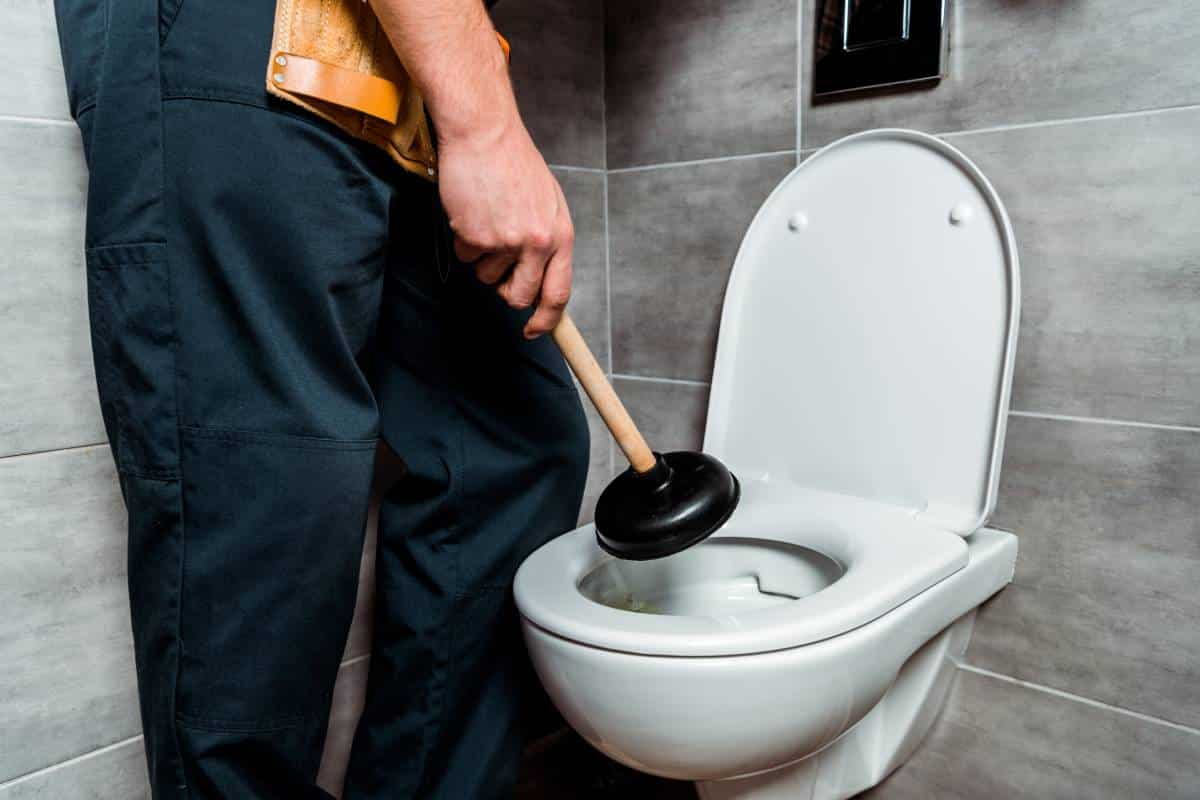
Using a plunger: How it works
A plunger is easy to use and can be found in most households. Instead of the term “plunger,” the terms “suction cup” and “drain rammer” are also used. But there are several types of plungers. The most common is the classic plunger, which consists of a wooden handle approximately 33 centimeters long and a dark red rubber cup. This plunger works best when the surface around the drain is very smooth so that the rim of the plunger fits perfectly. To use the plunger correctly, we recommend the following steps:
- Before you can use the classic plunger, you must completely seal the overflow, i.e., the opening for draining excess water, in sinks and bathtubs. The best way to do this is to use rolled-up wet toilet paper or a wet washcloth or damp sponge.
- Then place the plunger over the drain so that the rubber lips completely seal the drain. Next, run hot water into the sink, shower, or bathtub until the water is about 10 centimeters deep.
- Finally, lift the plunger briefly until the drain is completely filled with hot water. Quickly lower the plunger again so that as little air as possible remains in the plunger.
- Now start pumping vigorously, creating alternating positive and negative pressure by grasping the plunger by the handle and pressing down hard, then quickly pulling it back up again. This pumping action usually loosens the objects blocking the drain pipes. As a rule of thumb, you should pump ten times first. If you encounter problems, repeat this process several times.
- Each time you press down on the plunger, you create strong positive pressure and, ideally, push individual objects causing the blockage into the relatively thick drain pipes. Each time you pull the plunger out, you create a large negative pressure, which can sometimes suck out objects stuck in the drain pipe, such as hair.
- If the drain is still clogged, you need to check whether the plunger is working properly. To do this, you should check whether the overflow has been completely sealed and whether the rubber lips of the plunger are perfectly sealing the drain.
- For clogged toilets, you should insert the plunger deep into the drain pipe filled with water. Ideally, you can seal the drain pipe with the plunger and remove the blockage by pumping frequently. If the classic plunger does not work, the much more powerful universal turbo plunger, which is better suited for toilets, offers a more effective solution to the problem.
- If neither plunger can clear the blockage, you should use a pipe cleaning snake or hire a (usually expensive) pipe cleaning company.
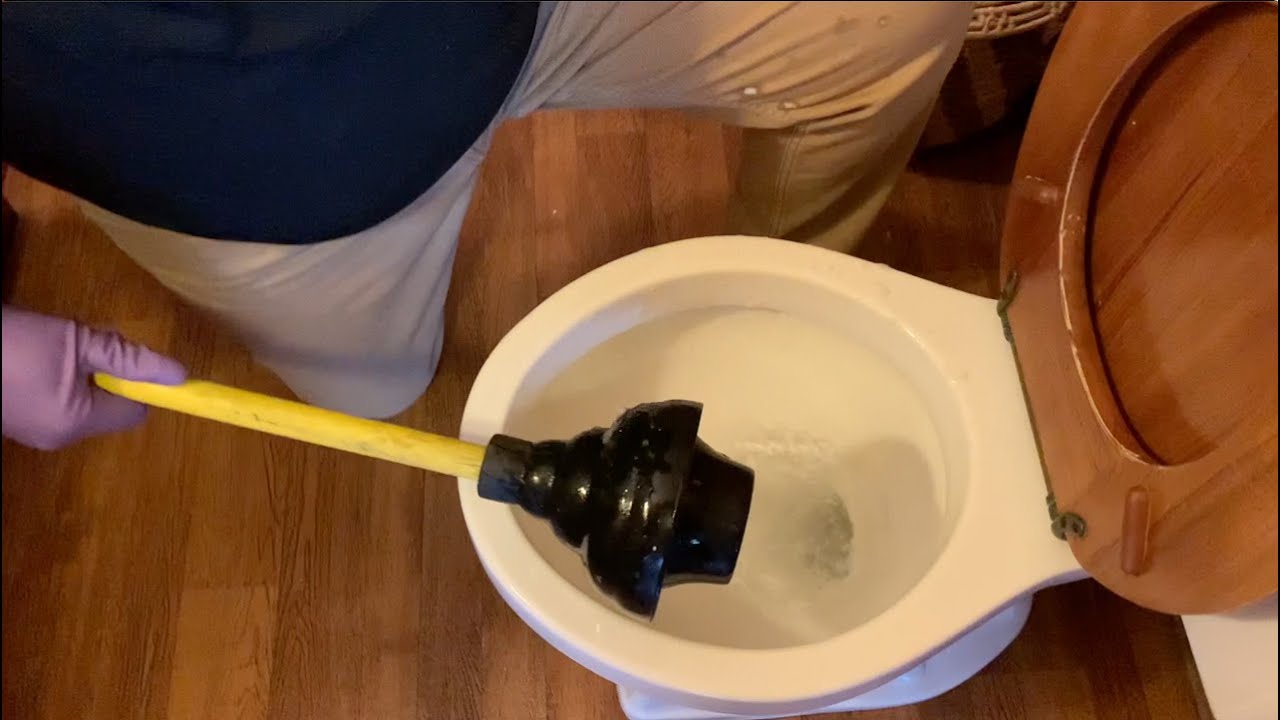
Avoiding drain blockages
The best way to prevent blockages is to not use the toilet as a waste bin. Only faeces, i.e. urine and feces, and toilet paper should be disposed of in the toilet. All other objects and liquids should be disposed of in the residual waste bin.
- Strictly prohibited substances include cooking oil and grease from deep fryers, which must never be flushed down the toilet. Oil and grease are not water-soluble and can clog the sewage pipes in the house. Huge amounts of dried grease and oil often accumulate in the drains, forming lumps that are usually as hard as concrete.
- You should also not dispose of food scraps in the toilet, as this can attract rats living in the drains. In rare extreme cases, rats can crawl up through the drain pipes in the house and enter the apartment via the toilet.
- Of course, you must not throw any hygiene products into the toilet. Unlike toilet paper, kitchen roll and some types of wet-strength paper tissues do not dissolve and can block the drain pipes.
- Hair often gets into the drain, especially in showers and sinks, but also in bathtubs. To prevent frequent clogging of drain pipes due to hair, you should use special hair traps. Drain strainers that do not float in water due to their relatively high weight are particularly recommended.