343
If your apples rot on the tree, there are many reasons for this. These can occur even if you take good care of your tree.
Apples rotting on the tree: fungi and pests can be the reason
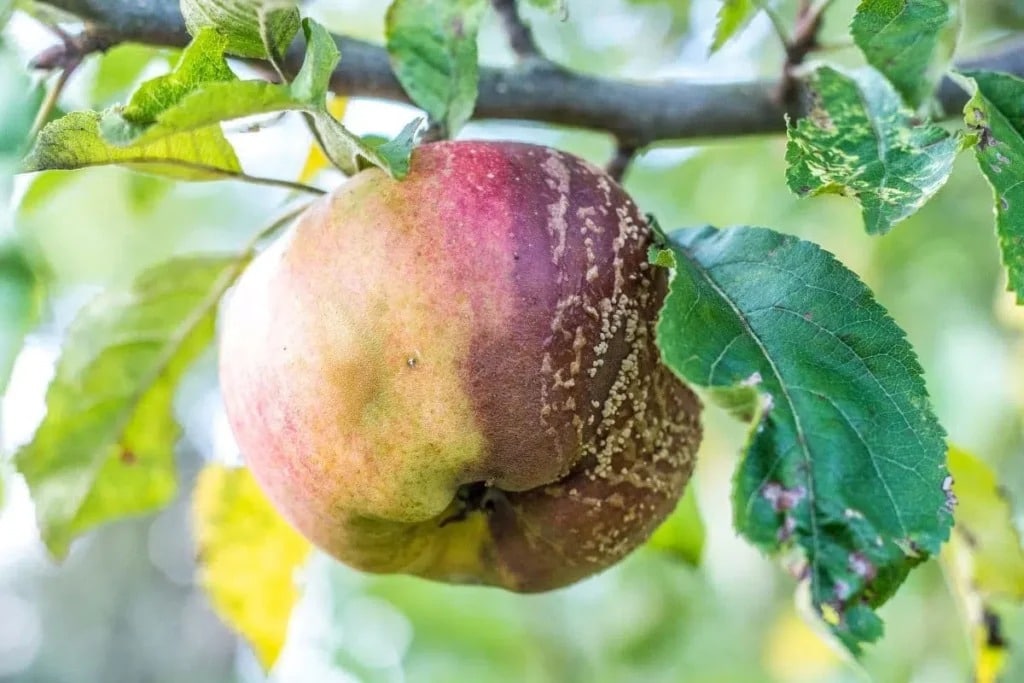
Rotting apples on the tree can be recognized by the brown spots, which are accompanied by grey-yellow and contiguous pads of fungi. Some rotten apples fall off, others dry out and remain hanging on the branch.
- Rotting fungi particularly attack apples that are not well ventilated. This happens above all when the foliage of the tree is too dense or the fruit grows too close together. In these cases, you should reduce the density by cutting off the fruit and leaves.
- Pests can also cause apples to rot. The apple sawfly and codling moth in particular lay their larvae in the fruit.
- To control the pests, you should shake your apple tree regularly and destroy the falling larvae.
- Wild fruit bushes near apple trees can increase the risk of pest infestation.
Wild fruit such as sloes or rowan berries serve as intermediate hosts for many pests.
How to combat monilia rot
A fungus that frequently attacks apple trees is Monilina fructigena, which leads to monilia rot. You should treat this disease as quickly as possible, otherwise you could lose your entire apple crop for years to come.
- To prevent the fungus from taking root in the first place, you should avoid damaging the fruit. This means that you also need to control pests.
- If the fungus has already infected your tree, you should remove and dispose of all infected areas. However, do not do this on the compost, as the fungus will only spread further.
- In winter remove the remaining infested branches and fruit and destroy them.
- Then check every tree in your garden to see if there is a fungal infestation.

Preventing and combating rot on apple trees
Not all apple varieties are equally susceptible to disease. If you want to plant a new apple tree, you should look for robust and resistant varieties.
- Topaz, Rebella, Florina and Santana are among the resistant varieties and are well suited for new planting.
- In order to prevent pests, balanced fertilization is crucial for the health of the tree. The most important nutrients include: Nitrogen, potassium, magnesium and trace elements. Organic fertilizers such as compost or manure improve the soil structure and ensure a sustainable supply of nutrients.
- Good soil care also contributes to plant health. Mulching with straw or grass clippings keeps moisture in the soil and prevents weed growth.
- Composting ensures a continuous supply of organic nutrients.
- Loosening the soil by hoeing or using earthworm cultures improves permeability and reduces waterlogging.
- If your tree is still struggling with pests, you can control them with organic products. Copper-based sprays or sulphur-based preparations are suitable, but should only be used in moderation to avoid soil contamination.
- In addition, it can be effective to use natural antagonists of the pests, such as parasitic wasps.
They parasitize the codling moth’s larvae and thus reduce its population. Pheromone traps attract male codling moths and thus prevent them from reproducing.