6
The amount of water you use when taking a shower naturally depends, amongst other things, on how long you shower for. However, a few other factors also play a part in determining the average water consumption whilst showering.
Showering: How many litres of water do you use?
The more water you use, the higher not only your water bills will be, but also your carbon dioxide emissions.
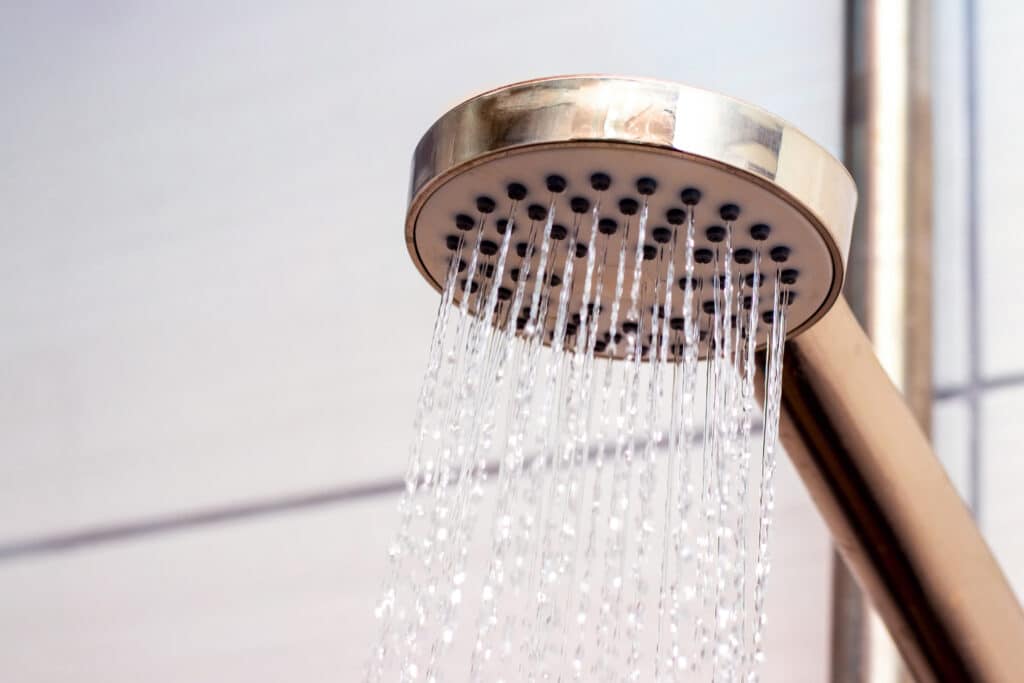
- As a general rule, standard shower heads have a water flow rate of 12 to 15 litres per minute. If you shower for around 10 minutes, this already amounts to water consumption of around 150 litres.
- The current price of water in Germany is 0.2 cents per litre. This results in water costs of around 30 cents for such a shower. As a rule, there are also additional costs for the use of hot water, which must be heated beforehand.
- The consumption – and, above all, the heating – of your shower water produces CO₂. Consequently, you can minimise your carbon footprint by taking shorter showers and using cold water.

Possible measures for saving water
With a few simple tips, you can save a lot of water. And that’s not only good news for your wallet, but also for the environment.
- One very helpful measure is to replace your standard shower head with a water-saving one. With an average flow rate of 6 to 7 litres, this saves around half the water, without compromising on comfort.
- It may be a small but rather unnecessary habit to leave the water running whilst lathering up. This process takes up a considerable proportion of your shower time, and you end up wasting a lot of water during this period.
- Another option is to treat your greywater in general. Greywater is the water produced as waste when washing your hands, washing up or showering, and is therefore only slightly contaminated. This is considerably more labour-intensive, as you need to install a filtration system, but it allows you to reduce your water consumption dramatically, which is also very beneficial for the environment.