1
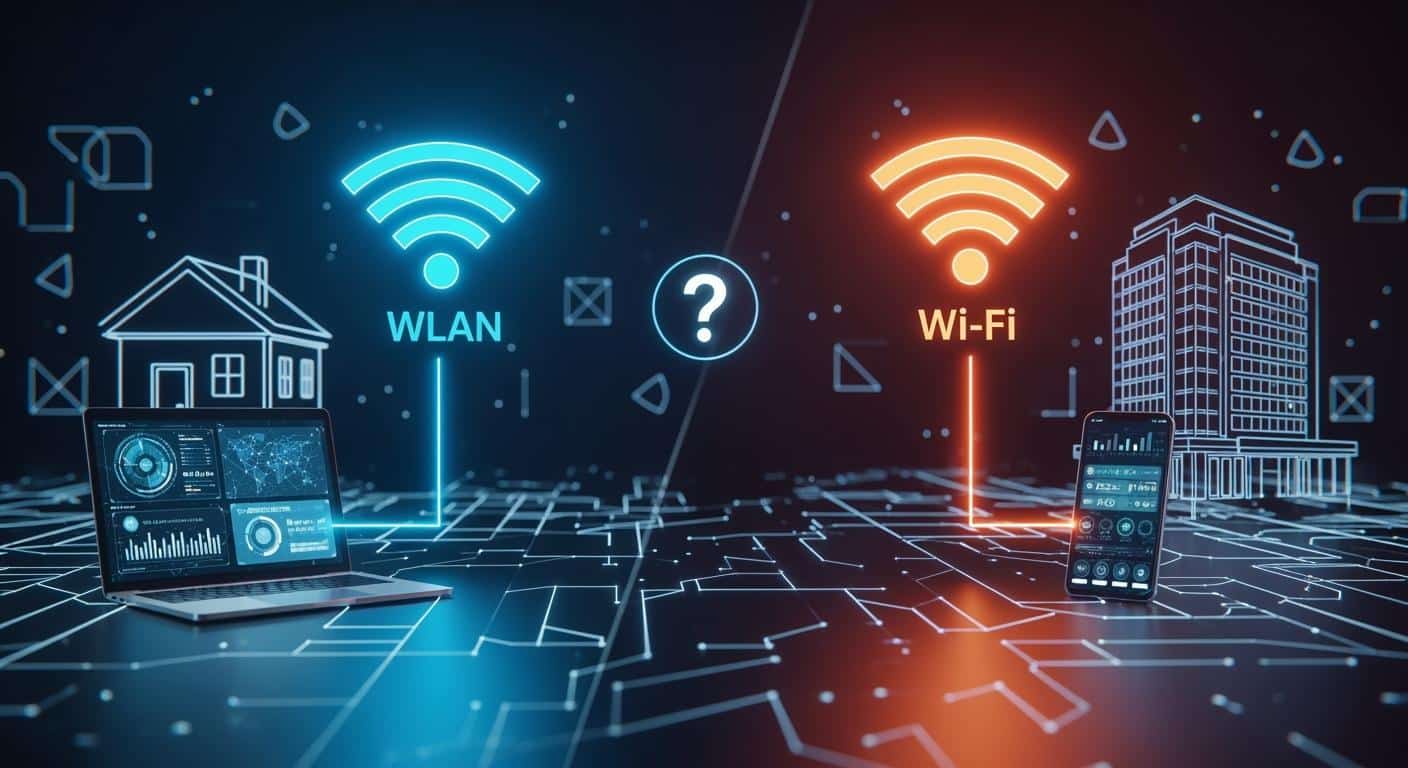
When you look into wireless networks, you’ll soon come across the terms WLAN and WWAN. We’ve put these two wireless standards head-to-head so you can see the differences at a glance.
WWAN and WLAN: What exactly are they?
- WLAN: The abbreviation stands for Wireless Local Area Network. It is a way of connecting mobile devices to the internet wirelessly. WLAN is now used in almost every household.
- WWAN: This abbreviation stands for Wireless Wide Area Network. It is a wide-area wireless network that is also used to connect mobile devices to the internet. The wired equivalent of WWAN is the WAN.
WWAN vs. Wi-Fi: The differences
- Access: A WLAN is often used privately; however, nowadays there are also an increasing number of public and, in some cases, free Wi-Fi hotspots. WWAN is used for GSM, UMTS and LTE, amongst other things. Access is only possible via a SIM card from a mobile network operator.
- Hardware: For private use, you always need a router to receive the internet signal from your provider and then transmit it wirelessly. A WWAN is operated by mobile network providers via mobile phone masts.
- Range: With a private Wi-Fi network, the range is often limited to 20 to 30 metres. Walls and other objects that block radio waves reduce the range, although this is usually not noticeable within your own four walls. The range can be increased using a repeater. With specialised hardware, a Wi-Fi network can also transmit signals over a distance of around 300 metres. With a WWAN, the situation is quite different: the large, high-powered mobile phone masts can often transmit signals over several kilometres.
- Networking: For private use, you are the only one using your Wi-Fi. In large companies, Wi-Fi networks are also extended over several hundred metres, enabling access across a wide area. With WWAN, all of a provider’s mobile phone masts work together in a vast network, often covering the whole country.