To protect your car as effectively as possible, drivers should get an oil change every one to two years. You can do this yourself or at a repair shop—in which case, you should expect to pay between 100 and 300 euros. Read on to find out why oil changes are so important, when they’re due, and exactly how the process works.
How often do I need to change the oil?
This varies depending on the engine and fuel type. Generally, you shouldn’t drive with the same oil for more than two years. As a rule of thumb, you can also keep the following intervals in mind:
- Gasoline engines: every 15,000–30,000 kilometers
- Diesel engines: every 10,000–20,000 kilometers
- Hybrids: every 10,000–15,000 kilometers
In your car’s owner’s manual, you will find the specific manufacturer’s specifications for the oil change interval. However, this varies from brand to brand and sometimes even from model to model, in some cases significantly.
In addition to the type of drivetrain, other factors also play a role. If you drive many short trips in the city, the engine often doesn’t warm up properly. This reduces the service life of the engine oil. Modern cars also often use the onboard electronics to indicate whether and when you should have an oil change.& nbsp;
However, if the oil light behind the steering wheel comes on, it’s already too late. Every kilometer driven after that can, in the worst case, cause significant damage to the engine.
The Costs: How Much Does an Oil Change Cost?
How much the oil change will cost you depends on whether you (can) do it yourself. If you do it yourself, you’ll pay between 50 and 90 euros for the oil, the corresponding oil filter, and the new gasket. The exact price depends, among other things, on whether you opt for brand-name products from Liqui Moly or Castrol.
However, most drivers take their car to a trusted repair shop for an oil change. This could be the dealership or manufacturer’s authorized service center. These tend to be somewhat more expensive than a branch of the major chains such as ATU, Euromaster, Pitstop, or Vergölst. Nevertheless, even at these garages, an oil change rarely costs less than 100 euros. Quite the contrary: depending on the vehicle, it can also cost 200 euros or more.& nbsp;
By the way: The Bugatti Veyron is certainly a contender for the most expensive oil change in the world. However, since the Italian sports car already costs more than 1.4 million euros to purchase, 21,000 euros for an oil change probably doesn’t make much of a difference.
Why do I need engine oil for my car?
Engine oil fulfills a very important function in internal combustion engines: It protects the engine from wear&/strong>. It does this in various ways:
- It cleans the engine of soot, ash, abrasion, and other residues.
- It lubricates moving parts.
- It cools components that heat up during operation.
- It protects against corrosion or rust through its lubricating film.
The more the car is driven and the engine is running, the more the oil wears out. Even if the car sits idle a lot, the oil loses its protective properties over time. Simply topping off the engine oil is not enough. You must regularly perform a complete engine oil change . Otherwise, you run the risk of damaging the engine and having to pay for expensive repairs. Harald Eder, an automotive expert in technical damage analysis at the expert organization DEKRA, warns:
A 2011 study concluded, for example, that a quarter of all cars on German roads did not have the correct oil level. 22 percent of all cars required an immediate oil change because the existing oil was no longer of sufficient quality.
Do electric cars also need engine oil?
Unlike combustion engines,electric carsdo not require traditional engine oil. This is because they function entirely differently. Gasoline and diesel engines burn fuel to generate mechanical energy. Electric cars convert electrical energy directly into torque, which is transmitted to the drivetrain. With electric cars, there is no need to change the engine oil at all, eliminating both maintenance and associated costs. However, even electric cars cannot do without oil entirely, so oil loss is also an issue for them.
What happens during an oil change?
An oil change involves replacing the old engine oil with fresh oil . Over time, it loses its protective and lubricating properties and must therefore be replaced regularly so that the engine can continue to run smoothly.
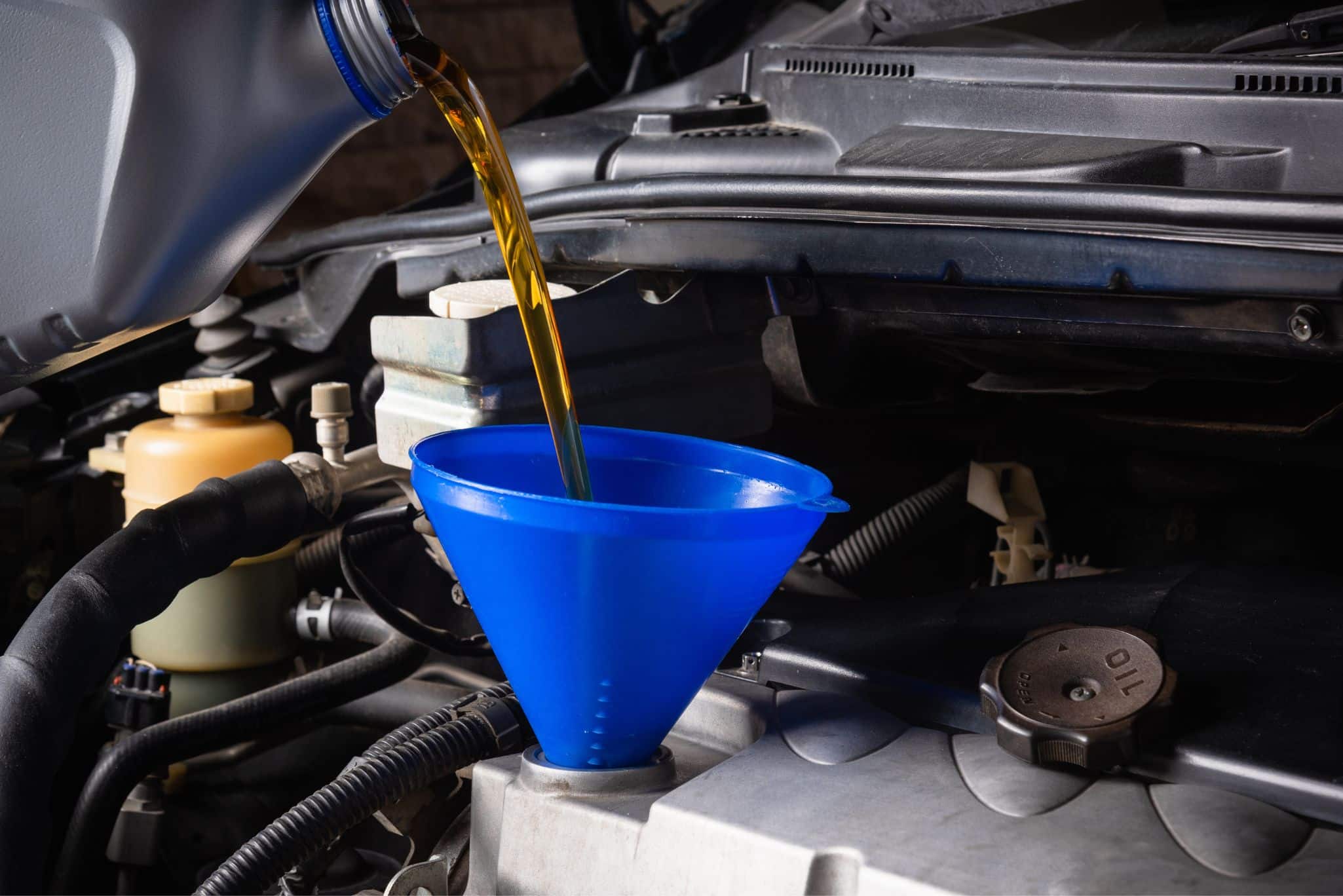
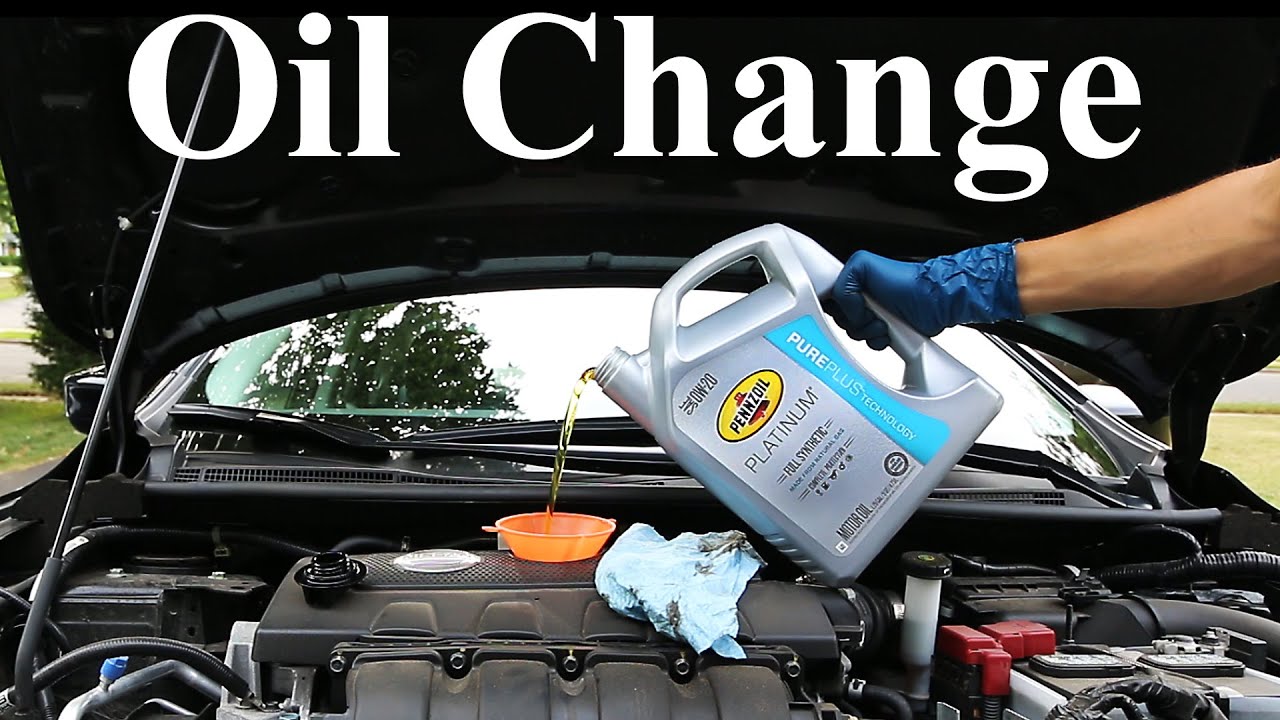
Typically, this involves loosening the oil drain plug on the underside of the vehicle, collecting the oil in a pan, and then disposing of it. Additionally, the old oil filter should be replaced.& nbsp;Repair shops often flush the engine as well to remove dirt and other residues. The new oil is then added through the filler neck in the engine compartment.
Do I always need a new oil filter as well?
Yes, the filter should also be replaced with every oil change. Dirt, metal abrasion, and fuel combustion residues accumulate in it. The longer you use the same filter, the more likely it is to become clogged. Although there are systems in the engine that then route the oil past it so that the lubricating film does not break down. However, the substances that the filter removes for good reason then end up back in the engine with the oil. Over time, this can lead to engine damage
Can I change the oil myself?
In principle, it is also possible to perform the oil change yourself. However, this is a time-consuming process. In addition to some mechanical skill, you’ll need quite a bit of equipment:
- appropriate tools
- a pan to catch the used oil and oil filter
- fresh engine oil
- a new oil filter
- new gasket
But the biggest problem is actually something else: You need a lift or a ramp that you can drive the car onto. To drain the oil, you need to be able to access the underside of your car from below. This is where the oil drain plug is located. Sometimes you may even need a special tool.
For this purpose, there are so-called open or self-help garages that also have lifts you can use. You usually have to make an appointment and pay a usage fee.
Can I buy the oil change supplies myself and have the oil changed at the shop?
In principle, this is possible. But before you go ahead and do this, you should check with your shop to see if they offer this service. In practice, many shops refuse to do this or charge a service or disposal fee of between five and 30 euros. There can be various reasons for this.
- First of all, garages are responsible for the entire service, including the materials used. If you bring in the wrong oil or oil of inferior quality , subsequent engine damage could occur, for which the garage would be held liable. To eliminate this risk, many shops generally refuse engine oil brought in by customers.
- Another argument: quality assurance. Even with brand-name oil that appears to be in its original packaging, there is no guarantee that it is a genuine product. There is a risk of counterfeits in online retail .
- In addition, customer-supplied materials disrupt the standardized workshop process, which results in additional labor time and organizational effort.
What oil do I need for my car?
The lower the number before the W, the better the engine oil flows at cold temperatures. This allows it to reach all critical areas more quickly in cold engines.
The number following the W indicates the oil’s lubricity at 100 degrees Celsius, the boiling point of water. The higher the value, the more stable and reliable the engine oil performs under heat, such as during long and fast drives on the highway.& nbsp;
Never confuse engine oil with transmission fluid
Very important: Never confuse engine oil with transmission fluid. The latter is thicker and protects the moving parts of the axles and the transmission. Using the wrong oil in the wrong place can cause serious damage.
Where can I find the right oil for my car?
Once you’ve figured out what type of engine oil you need, there are several ways to buy the right one.
- At the repair shop: The easiest option is probably to have the repair shop perform a complete oil change. This will also cover the cost of the oil, filter, and seal. Many repair shops carry a variety of brands. This allows you to choose whether to opt for a generic product and potentially save some money, or whether you’d prefer to go with a brand-name engine oil.
- In brick-and-mortar stores: In addition to garages, hardware stores, gas stations, and auto parts stores also carry motor oil. Here, too, you generally have the choice between products in various price ranges.
- In online shops: There are also numerous online shops that sell auto parts. These include not only specialized retailers but also well-known shopping giants like Amazon or eBay.
Where can I dispose of used oil properly and for free?
Anyone who sells oil is also obligated, to accept used oil for disposal. The easiest way is to return the used oil to the repair shop, hardware store, or gas station where you purchased it.
Return is only mandatory if you can present the receipt for the motor oil. If you can’t find the receipt, it’s usually not a big deal. Many retailers will accept used oil even without a receipt.
You can also dispose of your used oil at a recycling center. Return is free here as well, provided the quantities are typical for household use. Depending on the facility, the limit ranges from 5 to 20 liters.