313
Repelling wasps with copper is a commonly touted home remedy for getting these pests out of the garden. However, it doesn’t always work—and there’s no scientific proof that it does.
Repelling wasps with copper coins: Odor as a defense mechanism
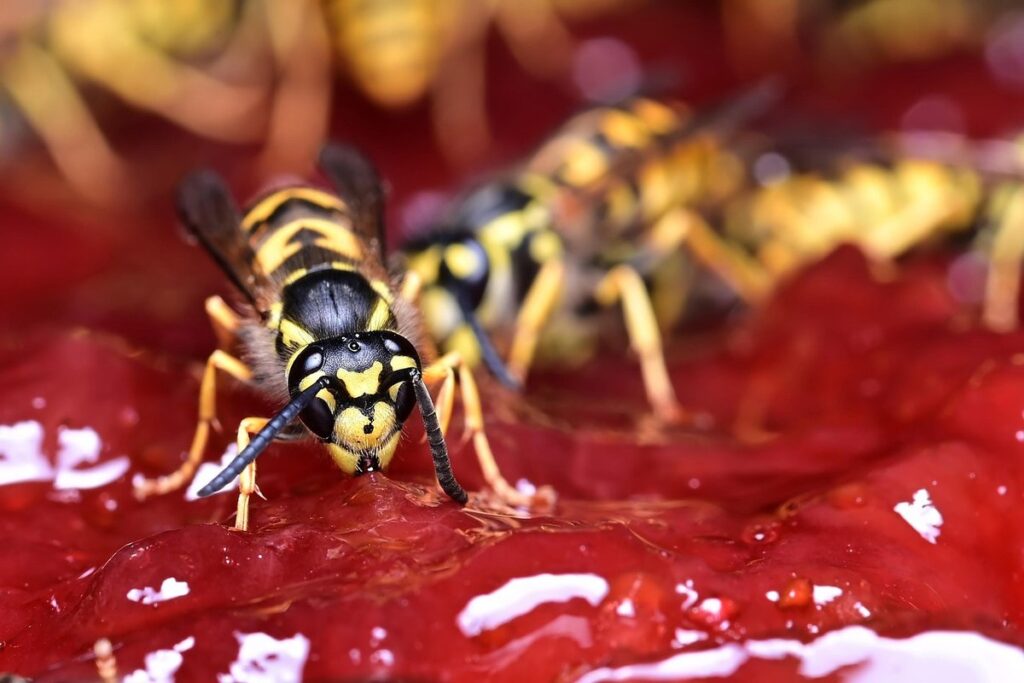
In the summer, it’s not just butterflies and bees that fly through the garden, but—much to the annoyance of many people—wasps as well. Unlike other insects, wasps like to help themselves to human food and linger on plates and glasses to gather food for their young. You can cover your glasses with lids.
- That’s why there are many methods and ideas for keeping wasps off balconies and patios. One of them is copper coins.
- Copper coins are said to keep wasps away. This is reportedly due to the vapors emitted by the copper. This creates a barrier for the insects that they do not want to cross.
- When heated, the coins release an odor that is unpleasant to wasps. The vapors are said to be particularly intense if you warm the coins in your hand first.
- The sun does the rest by heating up the copper coins. To repel wasps, simply scatter the coins on the table. Suitable coins include 1-cent, 2-cent, and 5-cent coins.
- However: The trick with copper coins has not been conclusively proven scientifically, and its effectiveness remains controversial. In practice, the fumes from the copper are usually not strong enough to effectively repel wasps.
The Copper Coin Trick: Here’s How It Works
Here’s how to do it:
- Gather 1-, 2-, and 5-cent coins from your wallet—since these coins are coated with copper to prevent rust.
- Then simply scatter the coins on the table where you’d like to enjoy your meal in peace. Place the coins directly in the sun to enhance the evaporation.
- Rubbing the coins together is said to enhance this effect, as it also generates heat.
- Note: If the food on the table is highly attractive, this method is unlikely to be effective.
The secret behind copper coins: Does it really work?
The effectiveness of this method is controversial. While some gardeners are enthusiastic about it, the coins seem to have no effect on others plagued by wasps.
- In fact, the heat generated is not sufficient to produce enough vapors. The copper would have to change its physical state—that is, liquefy—to produce such an intense odor that the wasps would flee.
- Nevertheless, the method is certainly worth trying. It is inexpensive, chemical-free, and harmless. It also does not harm the wasps. Despite being a major nuisance, these animals are protected by law—they play an important role in biodiversity in Germany and pollinate fruit trees, among other things. Therefore, you must not kill either bees or wasps.
- Tip: If the coins don’t help, you can try using water. Fill a spray bottle with water and spray it on the insects; they usually take off immediately. You should also keep in mind that the treats on the table often attract more wasps than the home remedies deter them. Sometimes, therefore, patience is the best solution: Let the wasps tear off a piece of cake or meat with their mandibles—most of the time, they’ll fly away with their prey all on their own.