323
A sagging or damaged headliner in your car is annoying. But with the right tips, you can fix it yourself.
How to Repair Your Headliner
With the right tools and a little skill, you can easily repair the headliner yourself without expensive repair shop costs. To do this, follow these steps:
- Tools and Supplies: The exact tools you’ll need for the repair depend on the extent of the damage. However, a heat-resistant, sturdy spray adhesive and needles for securing the fabric are always helpful. Cutting tools for the fabric and a putty knife or credit card for smoothing are also important.
- For extra-strong hold at corners and edges, you should also have a hot glue gun on hand. For more extensive damage, this can help secure the headliner properly again.
- Identify the causes and prepare: Most often, the car’s headliner starts to sag because the adhesive loosens over time, moisture penetrates, or the material simply ages. Before repairing it, you should thoroughly clean the headliner and then let it dry. This helps remove dust and moisture.
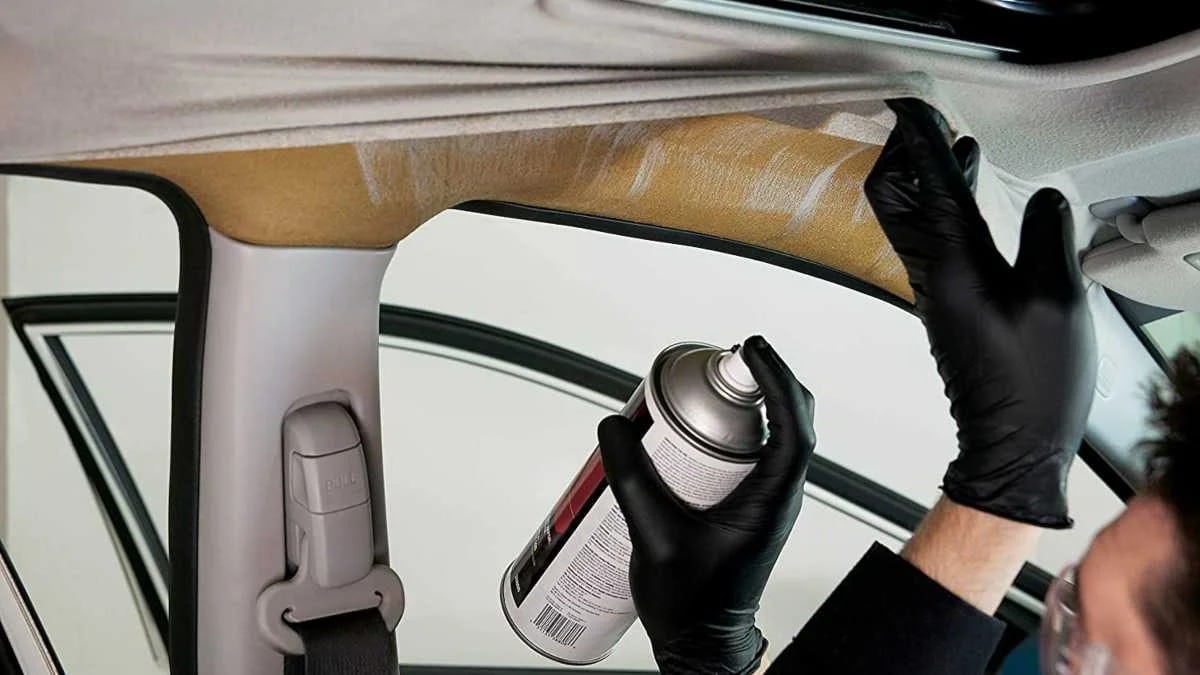
- Repairing minor damage: For smaller areas, a heat-resistant spray adhesive is often sufficient. Carefully spray the adhesive onto the loose material and then press it firmly into place. Keep in mind that the spray adhesive dries quickly, so you’ll need to work fast. Short pins or nails can also help reattach the fabric until the adhesive dries.
- Repairing large areas: If the damage is more extensive—such as the entire headliner sagging—it should be removed and completely reupholstered. This is best done using a special fabric for headliners and heat-resistant spray adhesive. To do this, carefully peel off the old fabric. Apply the spray adhesive evenly and press the new fabric down carefully, ensuring there are no wrinkles.

Preventive Tips
Once you’ve successfully repaired your headliner, these preventive tips will help you avoid further damage. By taking a few simple steps, you can gently protect your headliner as effectively as possible.
- A hot car or constant exposure to sunlight often causes the adhesive to age more quickly. This can be particularly problematic in the summer, when heat builds up inside the car. Therefore, use a sunshade whenever possible. This is especially recommended when parking outdoors for extended periods.
- Also, park your car in a garage or in the shade whenever possible. This reduces sun exposure and protects your car’s interior.
- Avoid high humidity inside the car, as moisture can cause the adhesive on the headliner to loosen. Regular ventilation or using the air conditioning can help regulate humidity. It is especially recommended to dry out the interior after driving in the rain or snow.
- At the first signs that the fabric is coming loose, you should reapply adhesive immediately. This allows you to take action before major repairs become necessary.