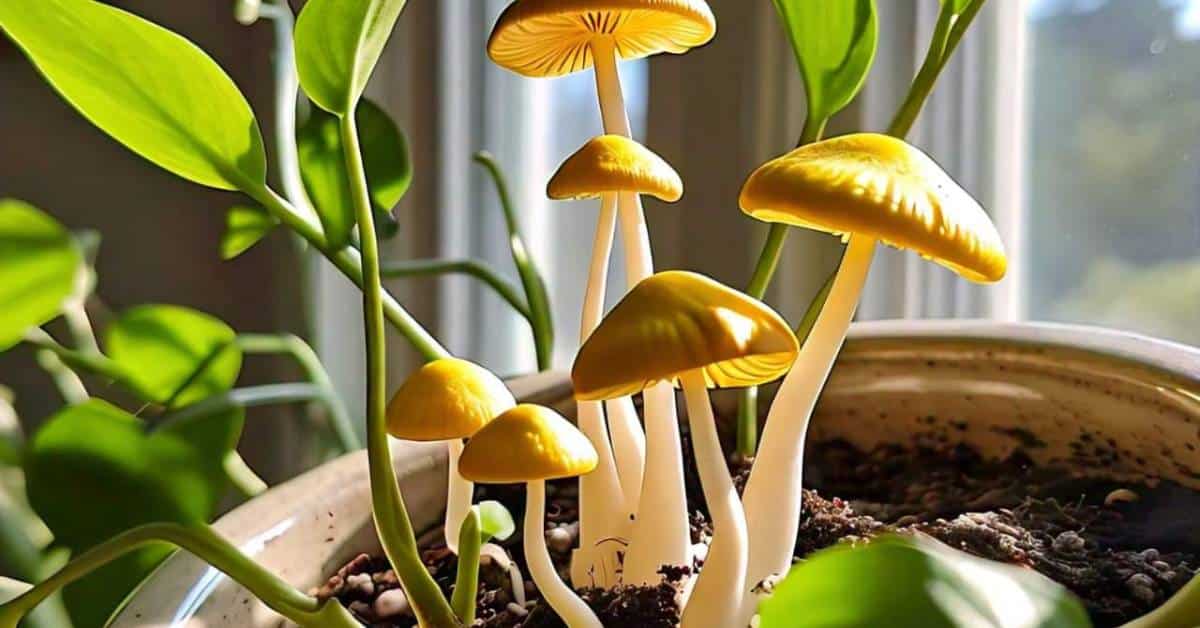
When small mushrooms suddenly sprout in a flower pot, the surprise is often great – and often accompanied by concern. Is it damage to the plant? Do you have to remove the fungi? And where do they even come from? In this guide, you will find out why fungi grow in flower pots, whether they are dangerous and what you can do about them.
Why do mushrooms grow in flower pots?
Fungi in flower pots are not a rare phenomenon and are often a sign that certain conditions in the soil are particularly favorable for their growth.
- High humidity: Mushrooms love moist, warm environments. If you water too often or if the plant in the pot is exposed to too much humidity in the room, fungi may also grow in the pot.
- Organic material in the soil: Bark mulch, compost or wood fibers provide ideal nutrients for fungi.
- Fungal spores in the substrate: Many types of fungi are naturally present in the soil and form fruiting bodies under suitable conditions.
- Favorable microclimate: Window sills above the heating or conservatories often offer the perfect combination of warmth and humidity.
Are fungi a problem in flower pots?
Fungi in flower pots do not usually harm your plants. The visible fungi – i.e. the fruiting bodies – are usually harmless and not a direct enemy of your plant. Most types of fungi decompose dead organic material and thus help to improve the soil. They rarely compete directly with the roots of the plant for nutrients.
- However, if the fungus spreads massively, it can become a problem and hinder the growth of your plants. In addition, there are types of fungi that form a water-repellent layer in the flower pot. As a result, the plant root can only reach a small amount of water and the supply of oxygen is insufficient;
- In addition, there are people who are allergic to fungal spores in the air. For these people, both white and yellow mushrooms should be removed to prevent damage to health.
- Yellow mushrooms should also be dealt with quickly if you have children.
The mushroom could be poisonous. It is also very tempting and could tempt the little ones to try it. You should not let it get that far.

Measures against fungi in flower pots
If you want to remove fungi permanently or prevent them from spreading, the following steps will help:
- Remove fruiting bodies: Pluck off the visible mushrooms and dispose of them in the household waste – not in the compost to prevent further spread.
- Adjust watering behavior: Only water when the top layer of soil is dry Avoid standing water in the planter. Place a drainage layer of expanded clay at the bottom of the pot to improve moisture regulation in the pot;
- Replace the soil: If the infestation is severe, it may be advisable to change the soil completely. Shake the soil off the root system and shorten the root ball if necessary. Clean the pot thoroughly with a brush and vinegar water;
- Rethink the location: A more airy, drier location can help to curb fungal growth.
- Fungicides only in exceptional cases: Chemical agents are usually unnecessary and should only be used in extreme cases and in a targeted manner – for example in the case of harmful mold fungi.