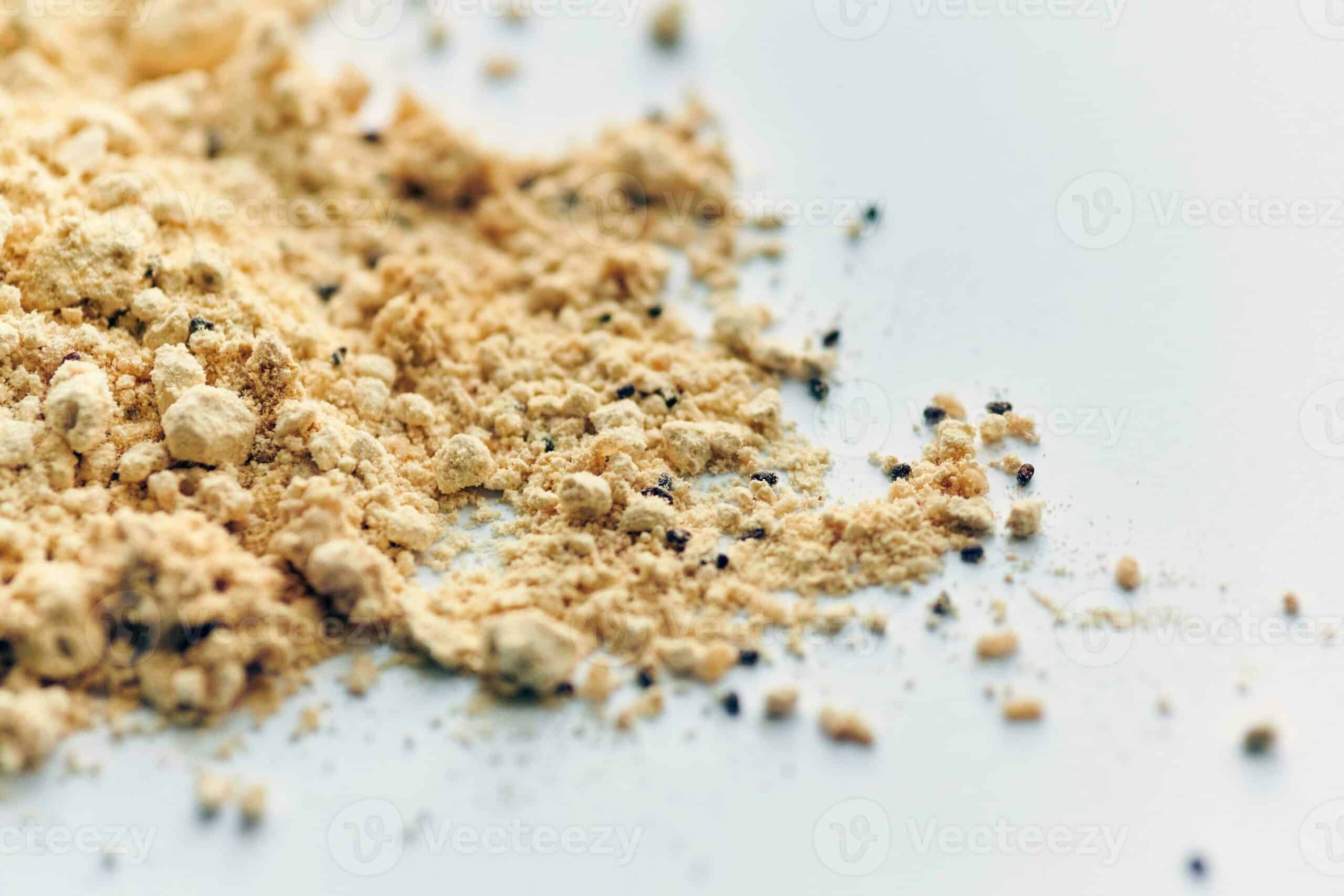
Black spots in flour indicate a pest infestation. As goods such as sugar, flour or rice are natural products, it is quite possible for small animals to colonize them. Here we show you what you can do and how to avoid the problem in future.
Black spots in flour: what’s behind them
The dark spots that often appear in starchy dry goods such as flour, sugar or rice can either be the pests themselves or their droppings. It is worth checking these products regularly. If there is an infestation, you should dispose of the goods.
- American rice flour beetle: This reddish-brown to black beetle species grows up to six millimetres long, the larvae up to ten millimetres. The beetle feeds on cereal products and often infests flour. It is suspected of producing substances that are harmful to human health. Infested flour should therefore be thrown away immediately in an airtight container;
- Australian dieback beetle, pea seed beetle, bread beetle: These rather medium to dark brown beetle species, which grow to around five millimetres in size, do not pose a health risk. However, the infested food becomes inedible and should therefore be disposed of in an airtight container. This will also prevent them from spreading further.
- Cereal flat beetle: The flat, grey-brown beetles are around three millimetres long and often appear as black dots in the flour. They feed on all dry and starchy foods and should be disposed of together with the affected products. Although they are not considered a health hazard, they are a hygiene problem.

How to avoid the pest problem in flour and co.
Food infested with pests should be disposed of properly immediately – regardless of the type of pest. There are also pests in flour, whose dark droppings give away the infestation. Here, too, you should make short work of it to avoid diseases and hygiene problems.
- If you notice black spots in the flour, you should seal the affected food airtight and ideally place it in the fridge or freezer for a day. Then dispose of the food without exception.
- To avoid such problems in the future, you should check dry foods such as flour, sugar, rice, muesli or dried fruit immediately after purchase and pack them in well-sealed jars or tins. In this way, pests can be detected as early as possible – many are brought in unnoticed at the time of purchase.
- Check and clean your pantry regularly. Wipe out the cupboards thoroughly with vinegar as soon as you notice any pests in them or in the food.
- It is best to stockpile as little as possible and, in particular, only buy sugar, rice and flour in quantities that you will use in the near future.