433
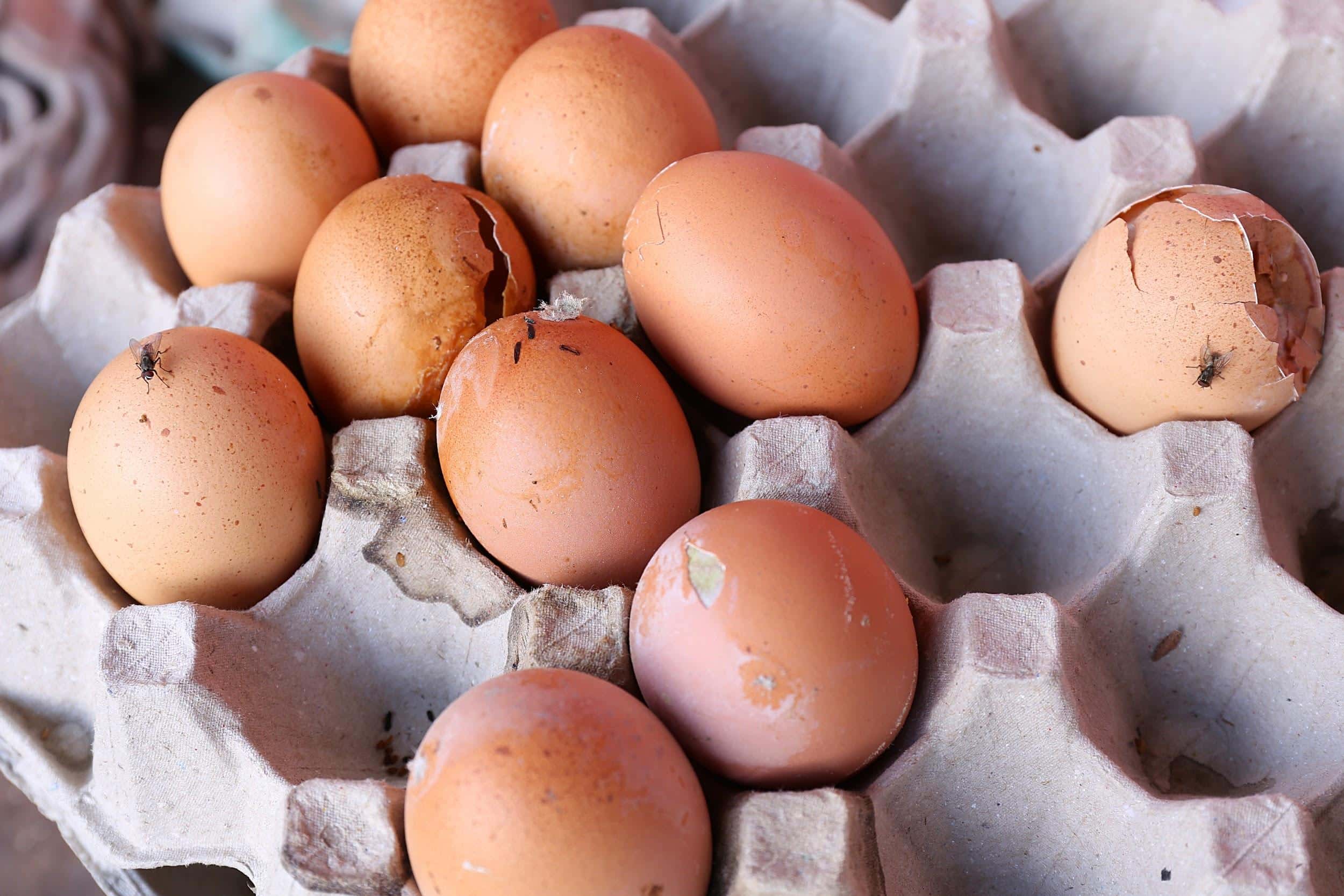
Whether fresh or cooked, recognizing rotten eggs is important if you don’t want to risk food poisoning. Fortunately, this is not difficult.
How to recognize rotten eggs
Identifying rotten eggs is not particularly difficult, especially with fresh eggs. At least not if you know a few tricks to identify older eggs.
- The most important tip: rely on your senses to recognize rotten eggs. If the egg smells rotten, it is usually also rotten. Unspoiled eggs have a neutral smell.
- The appearance also indicates when an egg is no longer edible. The older the egg, the flatter the yolk becomes. The egg white becomes thinner and melts when cracked. Fresh eggs, on the other hand, have a high-arched yolk and a two-part egg white.
- The water trick: Place the eggs in a bowl filled with cold water. Fresh eggs remain at the bottom.
Older eggs will first rise in the bowl and if they are over-aged, they will rise to the surface of the water. This is due to an enlarged air chamber in older eggs. The resulting buoyancy will eventually cause the egg to rise to the top. - You can also shake the egg. As the egg white becomes more liquid over time, older eggs make a gurgling sound when shaken. Fresh eggs do not make this sound.
- Just because eggs are older, however, does not mean that they are automatically rotten. Odorless eggs heated to at least 70 degrees can usually still be consumed without risking salmonella, according to the Baden-Württemberg regional council.

Detecting rotten eggs in boiled eggs
The tricks for fresh eggs only work to a limited extent with boiled eggs. Nevertheless, you can also check boiled eggs to see if they are still edible.
- As with fresh eggs, the smell plays a key role with boiled eggs: if the egg smells bad, it is usually also bad.
- If you eat a boiled egg that has a fibrous consistency you should dispose of it as soon as possible. If a boiled egg becomes fibrous, it is usually rotten.
- If you have boiled an egg and it has a crack , you should eat it as soon as possible. Eggs with cracked shells have a much shorter shelf life than eggs with intact shells.
- Also important: If possible, you should not quench boiled eggs with cold water. The difference in temperature can cause small cracks in the shell, which have a negative effect on the shelf life.
- According to the consumer advice center hard-boiled eggs keep for around two weeks in the refrigerator between two and six degrees Celsius. If you want to be on the safe side, you should consume eggs within this period.