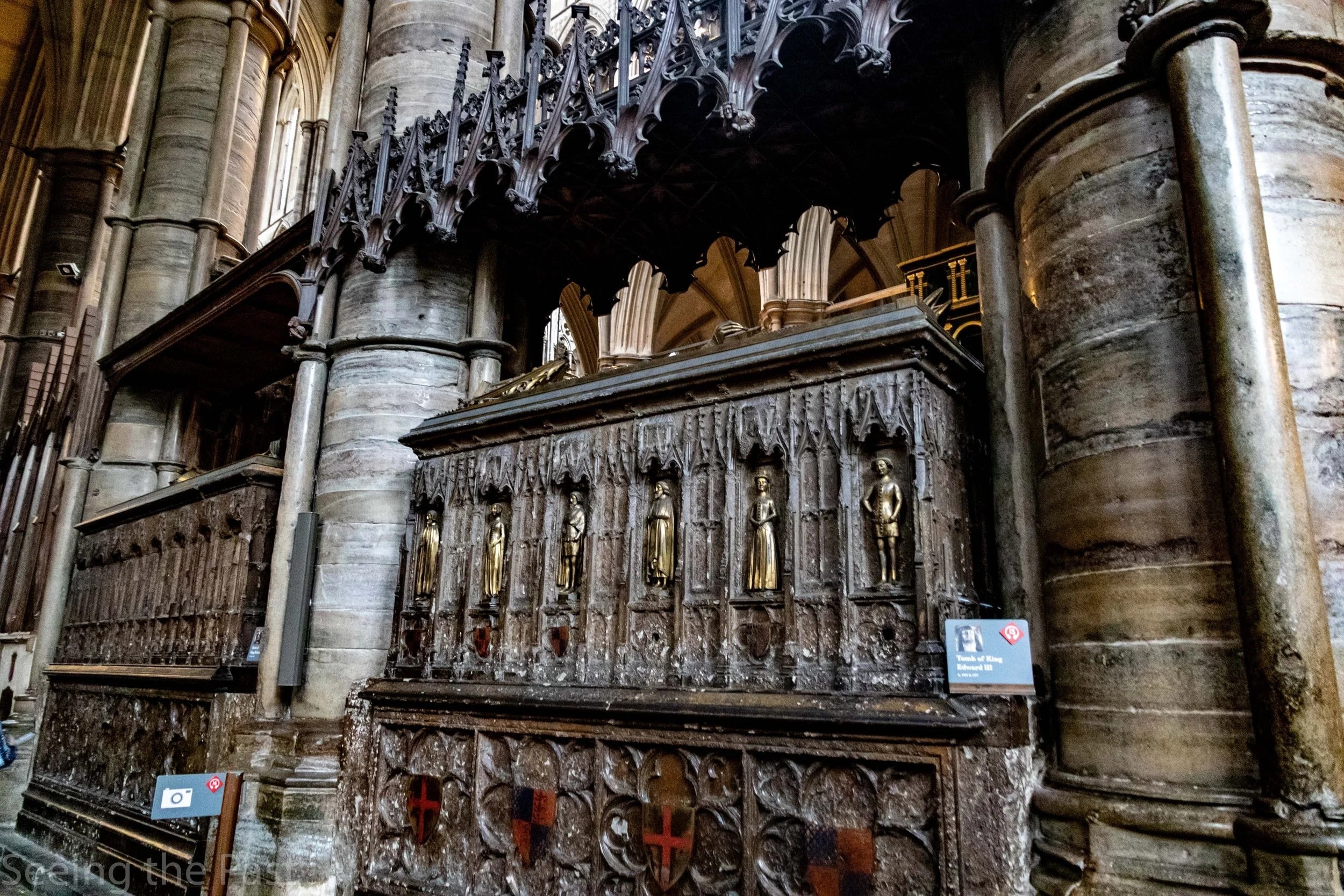
Some of the most famous figures in world history have found their final resting place in the tombs of London’s Westminster Abbey. Visitors can pay their respects to many of these famous figures there.
Royal Westminster Abbey Tombs
Until 1760, most kings and queens of England were buried in tombs at Westminster Abbey.
- For example, Queen Elizabeth I was buried here in 1603. She was also known as the “Virgin Queen” because she never married during her lifetime.
- Her cousin, Mary Stuart, Queen of Scots, was ultimately laid to rest in Westminster as well. However, this did not occur until several years after the death of Elizabeth I, who had Mary executed for attempting to depose her from the throne.
- George II was the last English king to be buried in Westminster Abbey.
Westminster Abbey as the final resting place of numerous scientists
In addition to the royal tombs, Westminster Abbey also houses the graves of other influential figures. Thus, this special place has also served as a burial site for individuals who significantly influenced scientific progress.
- The physicist and mathematician Sir Isaac Newton was buried in Westminster Abbey in 1727. He formulated the law of gravitation and is therefore commonly regarded as the “discoverer” of gravity.
- The founder of the theory of evolution, Charles Darwin, rests very close to Isaac Newton.
- In 2018, the ashes of astrophysicist Stephen Hawking were also interred at Westminster Abbey.
- In fact, only urn burials are now permitted there, as they take up less space than traditional burials.

In Memory of Great Poetry: Shakespeare and Co.
Westminster Abbey has a special section dedicated to deceased writers, known as “Poet’s Corner.” Those who are honored with a place here have left a lasting mark on the English world of poetry.
- Often mistaken for a grave, but in fact only a monument: Although a statue of William Shakespeare stands here, the famous Bard was actually buried in his birthplace, Stratford-upon-Avon, in 1616. He penned numerous sonnets and plays, including “Romeo and Juliet,” often described as the world’s most tragic love story.
- In total, over 100 writers are buried in this part of the Abbey or are commemorated with an inscription or similar. These include, among others, Charles Dickens and Jane Austen.
A war memorial in Westminster Abbey
A special feature is the tomb known as the “Tomb of the Unknown Warrior.”
- It stands in place of all fallen members of the British Army who could not be identified after their death.
- To honor them, items such as the bridal bouquets from royal weddings are laid here.