276
Many people are unaware that swans are migratory birds. This is undoubtedly partly because these waterfowl are present here in every season.
Swans – Migratory Birds with Some Unique Characteristics
Since the swan was introduced to Europe in the 16th century, this majestic waterbird has enjoyed great popularity here. The idea that these white beauties are migratory birds is hard to imagine, if only because of the animals’ size and weight.
- The largest of the various swan species is the mute swan, which is also the best known in our region. It owes its name to a clearly visible black bump located at the base of its beak.
- Even on the water, it is clear that swans—which, by the way, are classified as ducks —are not among the smallest animals. This waterbird is about 1.50 meters tall and typically weighs over ten kilograms.
- Given these dimensions, it is hard to imagine that swans can even take to the skies. Let alone that swans are capable of covering long distances, like many other migratory birds.
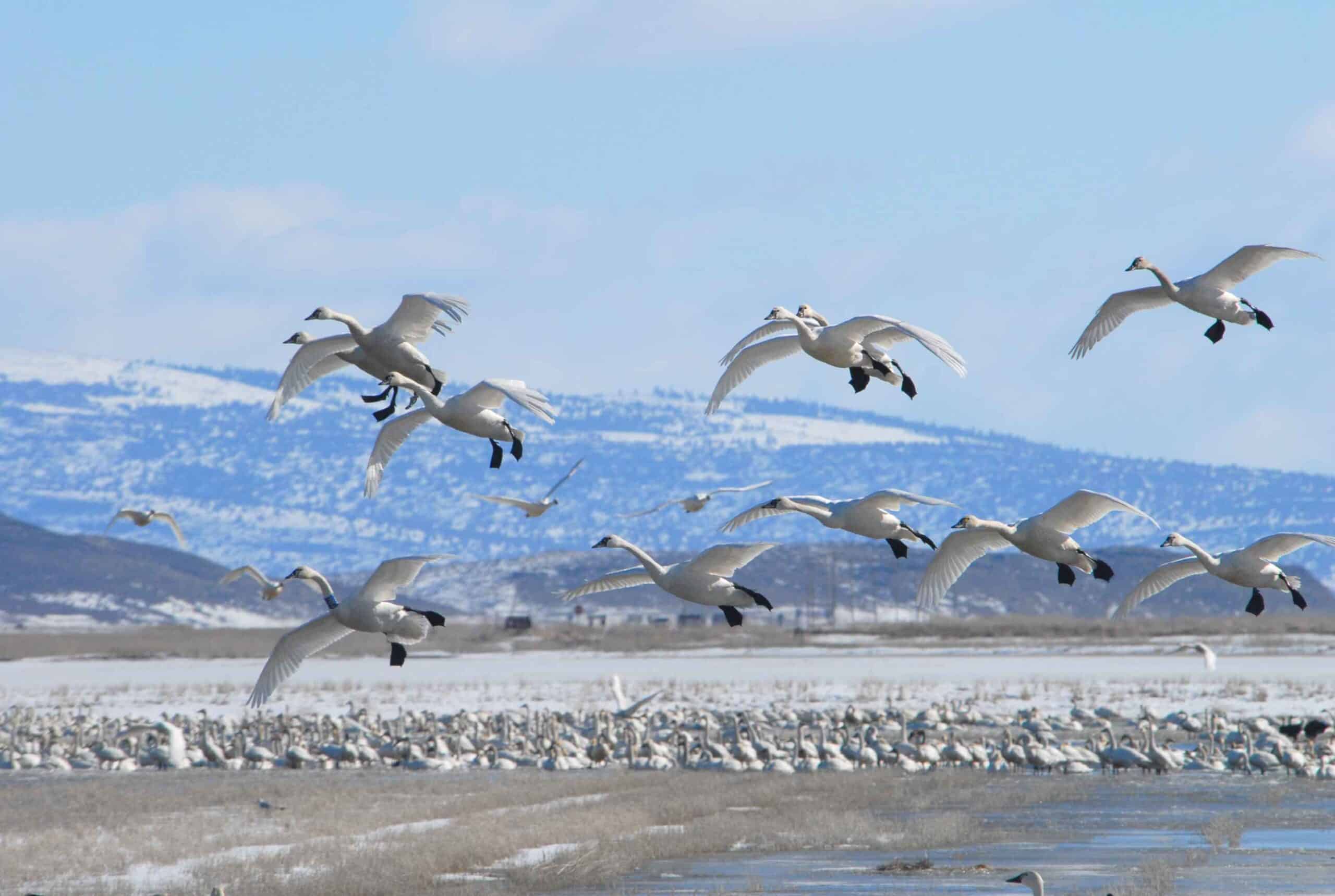
- But even if it seems almost impossible, it is true: Swans are not only the largest waterfowl, they are also among the heaviest birds capable of flight. This is particularly noticeable when swans take off and land.
- Neither a swan’s takeoff nor its landing is truly majestic. Due to its weight, the swan must first build up speed and run a short distance across the water before it is airborne.
- Because of its weight and heavy wingbeat, its performance in the air isn’t exactly elegant either. This is especially true when comparing swans to other aerial acrobats, which are, however, many times lighter.

Swans – some are regular migratory birds
Although the swan needs a short run-up before taking flight, it can then cover long distances with ease. However, even though the swan is a migratory bird, most European swans do not seem to feel a strong need for long journeys.
- Only the swans that live quite far north, such as in Iceland, set off for warmer climes before the cold snap hits. Many of these waterfowl, such as whooper swans, then spend the winter on our coasts. Some, however, travel significantly longer distances.
- Once a year, during the summer, our swans also disappear for a few weeks. The waterfowl head to the IJsselmeer. There they spend the molting season. As long as the molting lasts, the swans are unable to fly. For this reason, the animals settle in a very quiet and safe place during this time.
- Mute swans, by the way, live to be quite old, provided they are left in peace. This means that you should neither feed swans nor eat them yourself. Although the meat of a swan is inedible anyway. Under ideal conditions, swans can live up to 20 years.
- By feeding the animals needlessly, you are not only harming the swans but also the bodies of water where the birds live. Swans feed exclusively on plant-based food and not on stale bread or rolls.