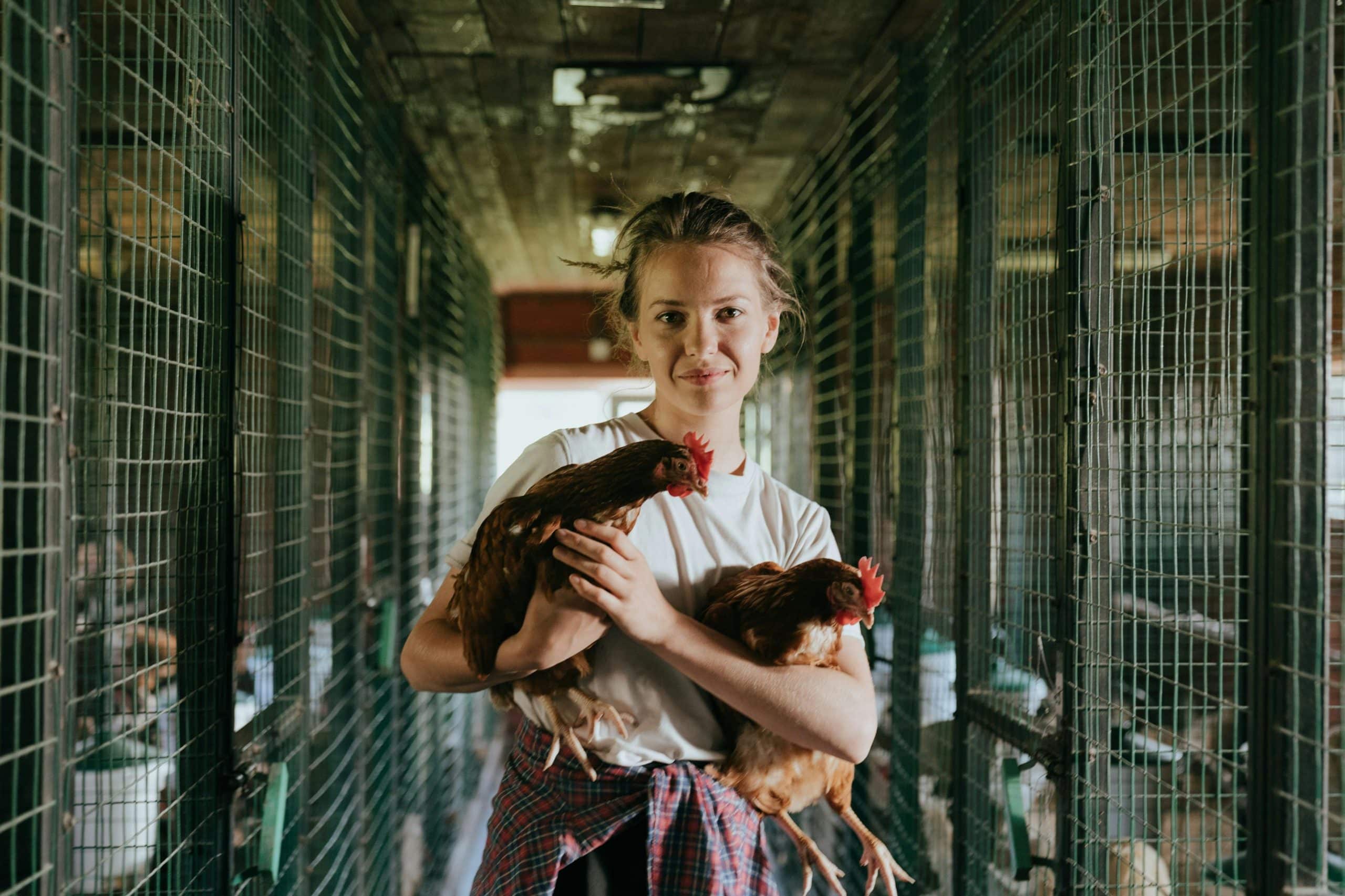
Chickens are relatively low-maintenance animals and can be kept easily in the backyard. However, beginners should keep a few things in mind beforehand to ensure that raising chickens doesn’t end in disaster. Here are some tips for happy chickens.
Raising Chickens for Beginners—What You Should Consider Before You Start
There are well over 100 chicken breeds in Europe alone, ranging from the Annaberg Crested Chickens to the tiny, fluffy Pearl Silk Chickens to the imposing Brahma chickens. Even just in terms of appearance, the birds can differ greatly.
- There are animal welfare organizations like “Rettet das Huhn” that seek loving homes for chickens from battery farms. The birds are often still very young when they’re “disposed of” and are very grateful for a life suited to their needs.
- If you live in the countryside or without immediate neighbors, you’ll have one less problem when it comes to preparing to raise chickens. Chickens, especially roosters, have a tendency to communicate in a way that’s clearly audible at times. This also applies to times that aren’t to everyone’s liking, such as very early in the morning.
- For this reason, talk to your neighbors about your plans in advance. It’s a good idea to play a recording of chicken sounds in the yard so your neighbors can get a rough idea of the noise level they can expect.
- By the way: If you’re considering raising quail, keep in mind that these wild birds aren’t necessarily any quieter than chickens. Once the issue of the chickens has been resolved to everyone’s satisfaction with your neighbors, there are still a few administrative steps to take.
- In any case, you must register your chickens. You can find out exactly which agency to contact either at your local veterinary office or at the Animal Disease Fund.
- If you’re not raising chickens commercially, registering the animals is usually free of charge. The sole purpose is to be able to reach all poultry owners quickly in the event of an outbreak. The same applies, by the way, if you keep bees.
- In the context of avian influenza, it is also mandatory to vaccinate your chickens against Newcastle disease. Your veterinarian will provide you with information on this, and you can also obtain the vaccine there.
- In addition to a large outdoor running area, chickens absolutely need a coop. If you cannot convert an existing outbuilding, you’ll need to build a chicken coop. Check with the building authority in advance to determine whether you need a building permit for the planned chicken coop.
- Tip: Occasionally, chicken owners use an old trailer as a chicken coop. The idea is far from as good as it might seem at first glance. After a very short time, the trailer becomes completely filthy because it’s nearly impossible to keep clean. Not to mention that a trailer is not a suitable home for chickens.
A Chicken Coop for Happy Chickens—Here’s How to Do It
When building or setting up the chicken coop, two aspects are key: The chickens want to feel comfortable, and you want to be able to clean the coop as easily and quickly as possible. Although chickens are relatively small, they still make a surprising amount of mess. For this reason, a water connection directly in or at least near the coop is very practical.
- You should clean the chicken coop very regularly, otherwise the dirt will be difficult to remove. In addition, this increases the risk of chicken mites taking hold. These unpleasant little creatures not only multiply at lightning speed, but they also like to settle on people.
- Cover the floor of the chicken coop with straw. Also, provide your chickens with plenty of perches and nesting boxes.
- Sturdy branches, for example, make good perches—just be sure to replace them regularly. A few centimeters below the perches, install removable plastic boards that can be easily cleaned outside with a pressure washer.
- Some chickens have no problem nesting in plastic tubs, such as mortar buckets, if you line them comfortably with enough straw. The advantage is that the plastic tubs can be cleaned very easily outside the coop.
- Over time, you’ll get to know the preferences of each individual chicken. If the chickens are comfortable, you’ll be rewarded with delicious eggs. The different colors of the eggs—in addition to white and brown eggs, there are also green eggs, for example—are not, however, an indicator of the chickens’ well-being.
Build Your Own Nesting Box—Here’s How
You can easily make the nesting boxes yourself. Basically, all you need is some particleboard.
- For the nesting box, you’ll need four boards for the sides and one for the roof. The bottom of the nesting box remains open. Place the box on the straw-covered floor.
- To clean the box and remove the eggs, simply lift it up. This is much easier than if you were to add a bottom to the nesting box.
- Don’t forget to provide the nest with one or two entrances. Also, make sure the birds don’t injure themselves on sharp edges, protruding wood splinters, or nails.
- Tip: If you place the nesting boxes against the walls, three side boards and the board for the roof are sufficient.
A nice outdoor pen—happy chickens
A large lawn is ideal for the chickens’ outdoor pen. Set aside two—or better yet, three—large sections of the lawn for the chickens. Chickens will level the lawn to the ground in a relatively short time. Therefore, the birds should only stay in the same spot for about two weeks.
- After that, move the chickens to a different outdoor pen so the lawn has enough time to recover. How often you rotate them depends on the size of the lawn areas and the number of chickens.
- You can enclose the lawn with a portable chicken fence that moves along with the chickens. Alternatively, you can permanently fence off the outdoor pens for the chickens. Depending on where you live, overhead protection may also be advisable.
- When setting up the fence, keep in mind that chickens are small, curious escape artists. Especially if they spot something interesting to eat on a neighbor’s property, your chickens will try everything to reach the object of their desire.
- By dusk at the latest, the runaways will return on their own. Chickens generally want to spend the night in the coop. So your chickens won’t get lost. What’s more critical in this context is how your neighbors will react if your chickens have raided their garden.
- To prevent your chickens from even being tempted to “pay a visit” to the neighborhood, make the outdoor run interesting. Install perches and a sandbox. A small “manure pile” is also always a hit.
- Scatter grains and fruit, such as apples, generously throughout the enclosure so the chickens are busy foraging. Don’t forget to set up at least one sturdy water trough.
- Trees and shrubs provide shade and protection from aerial predators. They also attract insects, which the chickens will enjoy. If the chickens don’t have access to the coop during the day, they’ll need a shelter to protect them from rain and hail.