422
Learn whether a bite from a goat bream is really dangerous and what precautions you should take.
How dangerous is a goat bream bite?
Encountering a whiting bream can leave some people wondering how dangerous its bite actually is. In this guide, we explain what the bite of this fish species is all about and what you should look out for.
- Whiting bream are known for their powerful jaws, which they use to crack hard-shelled prey. A bite can be painful and lead to bleeding wounds. It is important to remain calm in the event of a bite and to clean the wound thoroughly to avoid infection.
- Although the bite can be painful, it is not considered life-threatening. Health risks are mainly in the form of infection if the wound is not treated properly. In rare cases, allergic reactions may occur that require medical attention.
- White bream are generally shy animals that avoid humans. Bites usually occur when the fish feels threatened or feels it has to defend its fry. The risk of a bite is therefore low if the natural habitat is respected.
- To minimize the risk of a sea bream bite, care should be taken when swimming in affected waters. It is advisable to keep your distance from the fish and not make any sudden movements that could frighten them.
- Whiting bream (Diplodus sargus) bite mainly in coastal areas of the eastern Mediterranean, especially near Tel Aviv, Israel. These bites occur more frequently in summer months when the seawater warms up and the fish are under stress.
- The fish are attracted to old wounds, dead skin or varicose veins as they “taste” blood and skin particles.
- Injuries caused by are often punctiform, painful and bleed easily.
Behavior and characteristics of the white bream
A closer look at the behavior of the white bream helps to understand why bites can occasionally occur. Their behavioral patterns are crucial to avoiding such incidents.
- Whiting bream are territorial fish that can become more aggressive, especially during the breeding season. Their natural habitat includes rocky coastal areas where they find shelter and food.
- These fish feed mainly on mussels and crustaceans, which is due to their strong jaws.
Their diet has adapted them to crack hard shells, which is why their bite is so powerful. - White bream are diurnal hunters that often occur in groups. Their social behavior in shoals can lead them to protect each other, which reinforces their aggressive behavior towards intruders.
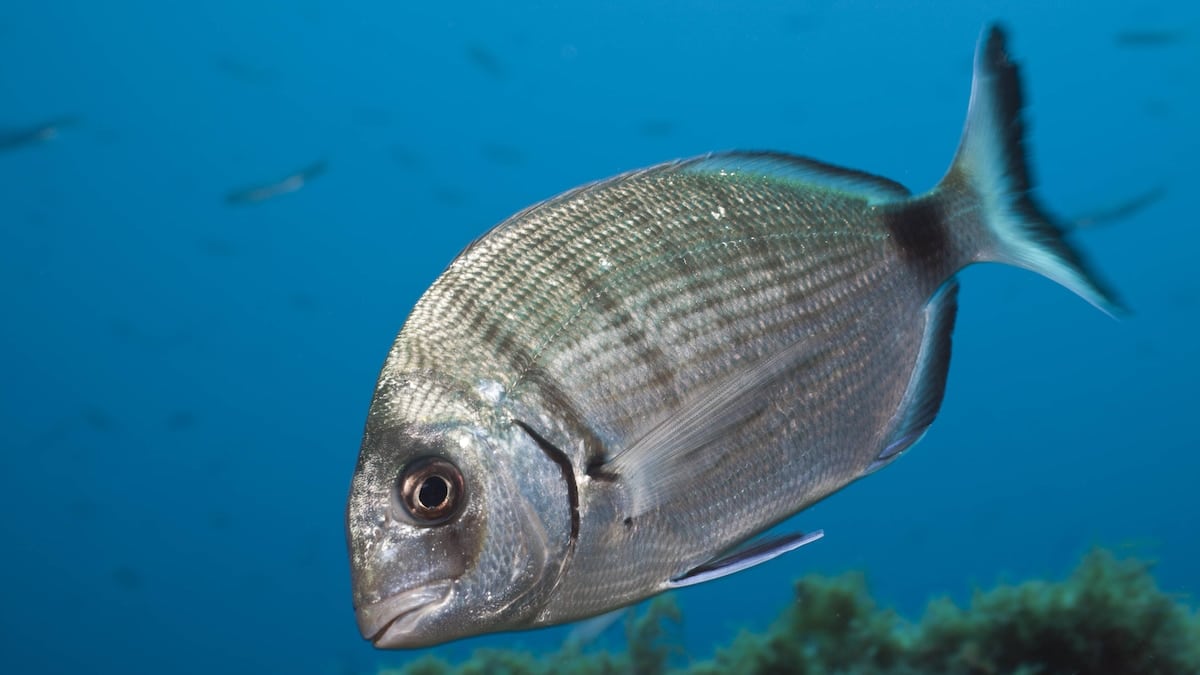
- Recognizing the goat bream is relatively easy due to their distinctive striped pattern. This camouflage helps them to hide in the rocky ground and protect themselves from predators.

What to do in the event of a goat bream bite
Proper treatment of a goat bream bite can be crucial in preventing complications. Here you can find out what to do in the event of a bite.
- In the event of a bite, the wound should be rinsed immediately under clean water to remove any foreign bodies. An antiseptic solution helps to reduce the risk of infection.
- After initial treatment, the wound should be covered with a sterile dressing. It is advisable to check the injury regularly for signs of infection such as redness or swelling.
- If the wound is bleeding heavily or is deep, a visit to the doctor is essential.
Medical help should also be sought immediately if there are signs of an allergic reaction such as breathing difficulties or a rash. - As a preventative measure, it is advisable to have a small first aid kit with you when traveling in regions where goat breeds are found. In addition to bandages, this should also contain disinfectant.
Safety precautions when dealing with goat breeds
Precautionary measures can help to avoid unpleasant encounters with whiting bream. Find out here about simple steps to take to stay safe in the water.
- Inform yourself about the local flora and fauna before a swimming trip. Look out for warning signs that could indicate the presence of sea bream.
- When snorkeling or diving in areas with sea bream, it is advisable to move calmly and steadily. Sudden movements can frighten the fish and lead to aggression.
- Swim preferably in places recommended by locals, as they often know better about safe zones. If you are unsure, ask local experts or guides for advice.
- If you encounter a sea bream, it is important to remain calm and swim slowly out of its range. Aggressive gestures or grabbing the fish should be avoided.