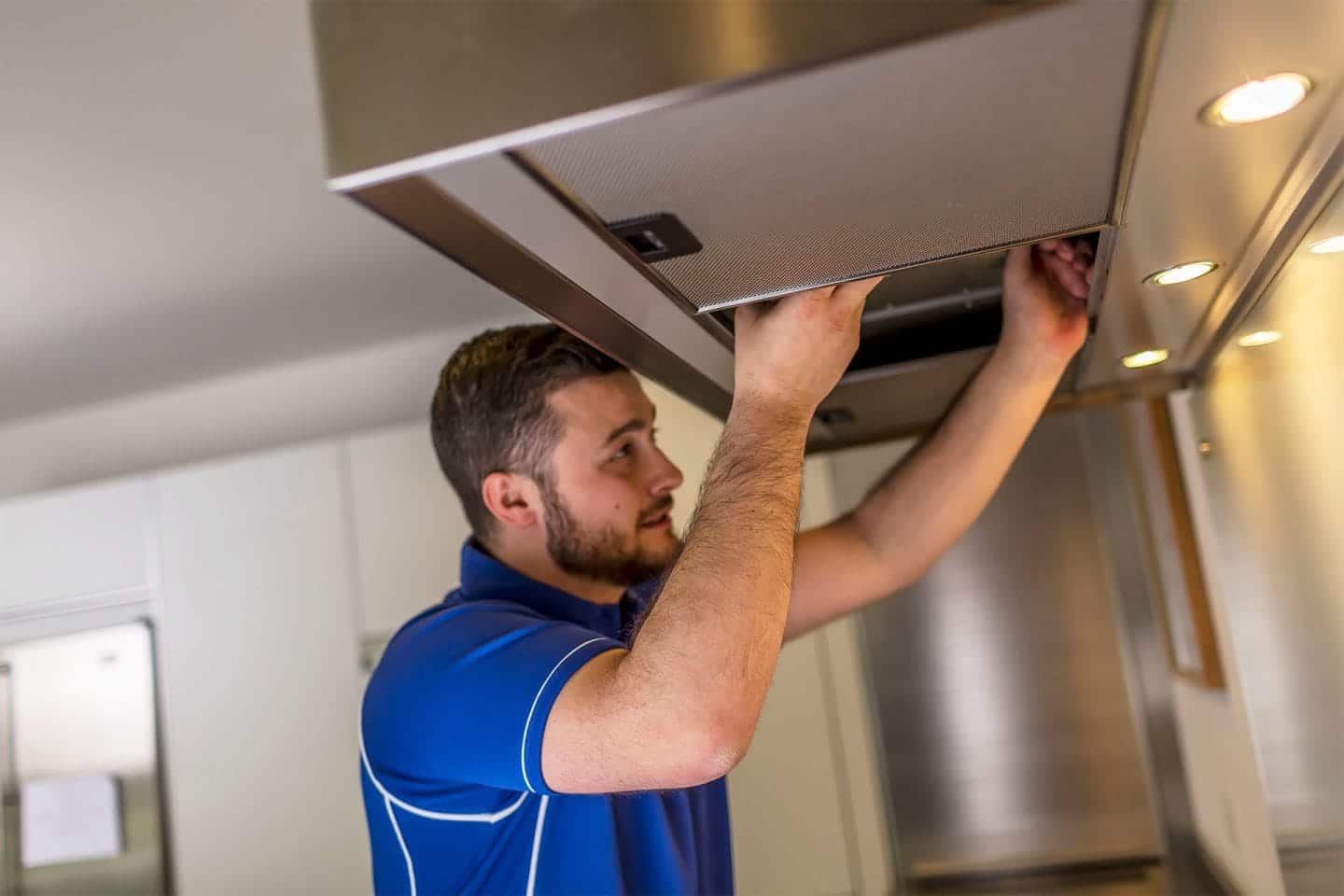
In this article, you’ll learn how to make your range hood quieter. We’ll explain the different types of range hoods and discuss what can cause annoying noises.
How to Make Your Range Hood Quieter: What Causes Annoying Noises
Range hoods are designed to reduce kitchen odors or vent them outside. Generally, there are two main types: under-cabinet hoods and wall-mounted hoods. Under-cabinet hoods are quite compact and can be installed under kitchen cabinets. They are smaller and therefore usually quieter than wall-mounted hoods, which are attached to the wall above the stove.
- In general, every range hood makes noise. However, there can be significant differences in volume. The level of noise depends on various factors. For example, if you run the range hood in exhaust mode, it is quieter than in recirculation mode. The reason: In exhaust mode, the air does not have to pass through an activated carbon filter. Additionally, there is no need for air to flow back into the room.
- The noise level of a range hood also depends on the model, the operating mode, or whether it has an activated carbon filter. Furthermore, the length, cross-section, and material of the air duct also influence the noise level.
- Loud noises can also occur if a part is defective or blocked. For example, if the check valve is worn out or clogged with grease, this can cause a rattling sound. The range hood’s fan can also produce loud noises—for instance, if the nut on the motor shaft has come loose.
- If the entire motor mount slips out of place, it will bang against the stainless steel housing during operation. If, on the other hand, the exhaust fan motor is damaged—for example, due to excessive moisture—this can result in a disturbing hum.

This helps reduce annoying noises
If your range hood is too loud, there are a few things you can do about it. If the hood is already installed, check to see if, for example, the valve at the hood’s outlet is properly secured. To dampen rattling, you can also apply some adhesive sealant here.
- Check whether the nut on the motor shaft has come loose or whether the motor mount is still in place. Often, simply tightening it or realigning it is enough.
If parts are worn out, replacement is often the only solution.
- If your range hood is simply a noisy model, you can install a silencer that mounts directly onto the fan outlet.
- It’s also advisable to inspect the duct for any obstructions or damage. If necessary, you should consider rerouting the duct. Alternatively, you can replace the old duct with one that offers less resistance.
- If the range hood has not yet been installed, you have the best chance of keeping the noise level as low as possible. The design of the air duct plays a key role here. It should be as short as possible. It’s best to use a smooth-walled round or flat duct with the largest possible cross-section.