229
Nude photography can be described using terms from the world of art. Nude photography is a genre of photography that can itself be divided into further categories.
Nude Photography: What Is It?
- Partial nude: Body parts are photographed (partially clothed) in close-ups. The focus here is primarily on the shape, structure, and depiction of the body.
- Semi-nude: This is a genre similar to partial nude. Often, these photos feature a body that is partially clothed or covered (mainly the primary sexual characteristics), while the rest is exposed.
- Full-nude: Full-nude refers to the depiction of the completely naked body. Here, too, there are many subgenres that form a broad spectrum of different photographic styles.
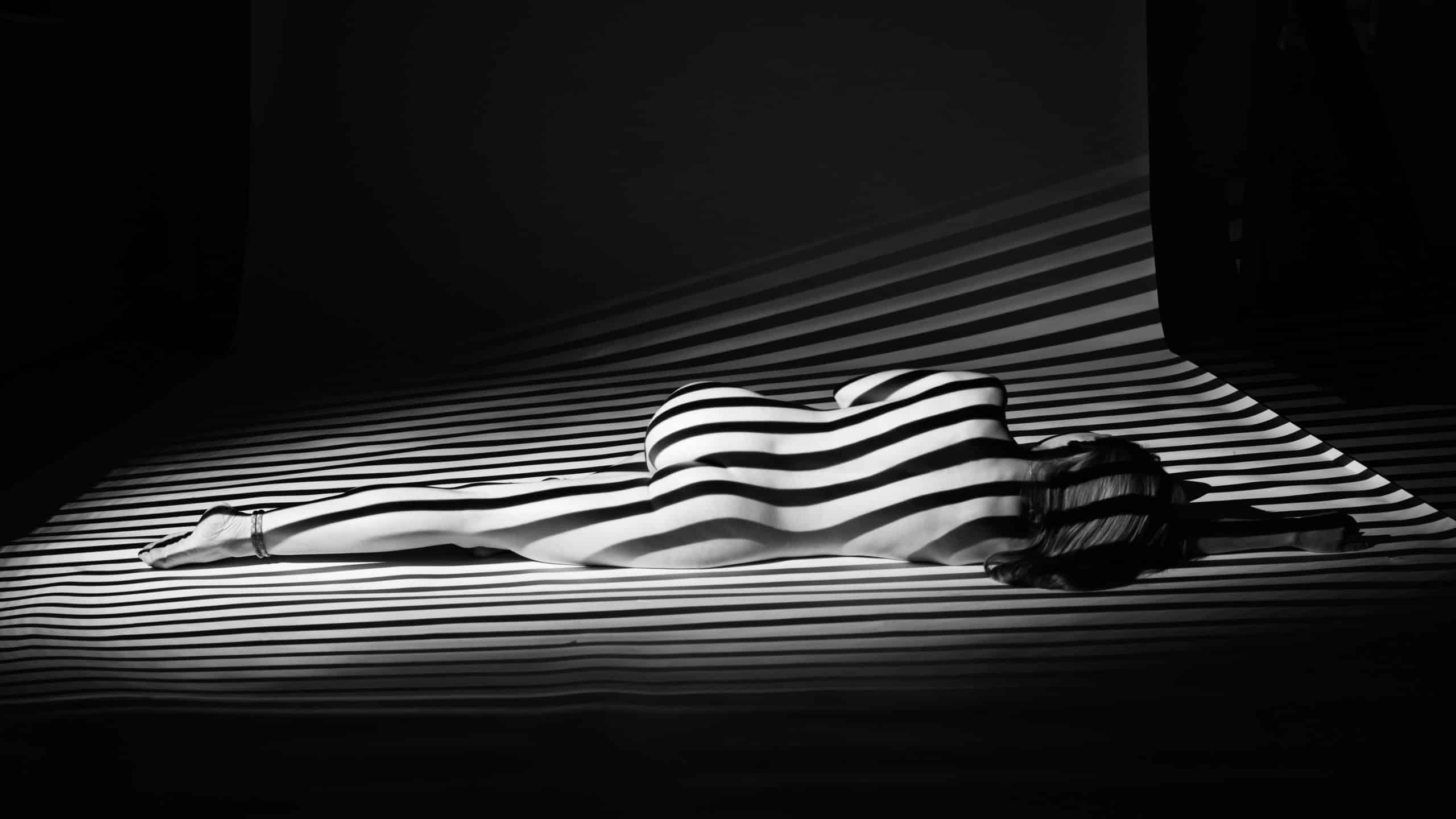
- These main genres can be divided into many further categories that are also familiar from other areas of photography. Low-key photography (high contrast and dark tones), in particular, is widely used here. High-key photography, on the other hand, creates soft, bright images with a light, airy atmosphere.
Nude Photography and Pornography: The Differences
While both nude photography and pornography are classified as erotic, the two should not be confused.
- Nude photography is less about arousing sexual desire in the viewer and more about the artistic portrayal of the scene.
- Conversely, it tends to be considered pornography when the sexual act is forcibly placed at the center of attention.
- Even though nude photography and pornography should be distinguished from one another, there is no clear-cut boundary between the two. Nude photography can sometimes be very revealing and provocative, so the line between them is blurred.

Tips for Nude Photography
Nude photography is an art form that combines aesthetics, technique, and emotion. To ensure your photos look expressive and professional, there are a few important aspects to keep in mind.
- Composition and Image Design: Use the rule of thirds to place the model harmoniously within the frame, and pay attention to the flow of lines to guide the viewer’s gaze. Experiment with perspectives—a slightly elevated camera position can look elegant, while a low-angle shot emphasizes strength and presence.
- Lighting: Natural light, such as from a window, provides soft and flattering illumination. Studio lighting with softboxes helps to highlight specific features and sculpt the body’s contours through light and shadow.
- Capturing Expression and Emotion: A relaxed atmosphere on set is important for building trust. Small details like the position of the hands or the direction of the gaze can greatly influence the image’s message. Experiment with poses that convey both dynamism and gentleness.
- Technical Basics: A full-frame camera offers optimal image quality and cropping options. A fast 50mm or 85mm lens is ideal for maintaining natural proportions. Shoot with a wide aperture (e.g., f/1.8 to f/2.8) to create a soft bokeh. A low ISO setting prevents image noise and ensures fine details.