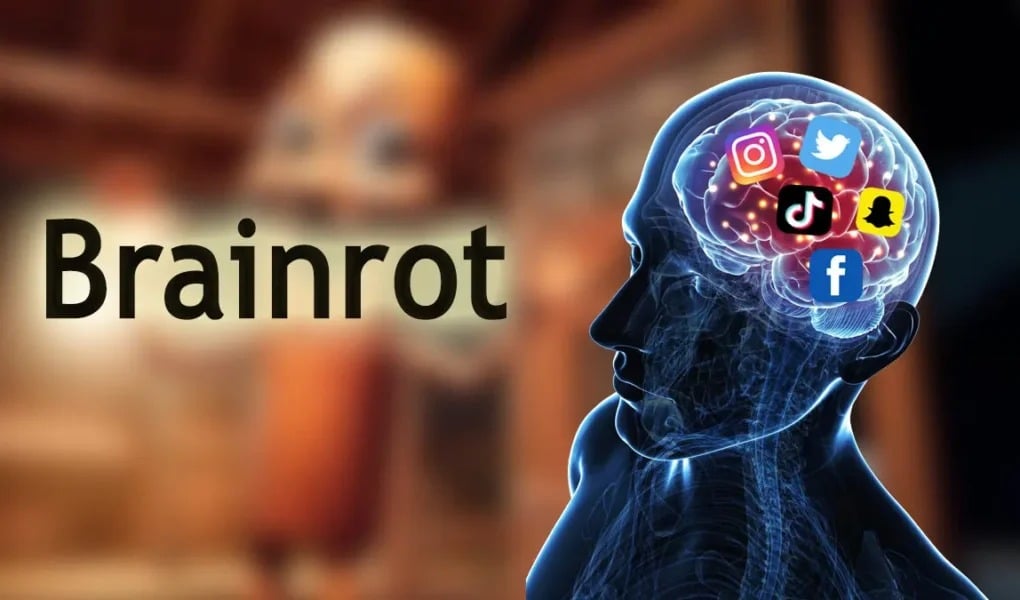
The term “brainrot” is used on TikTok. It describes foolish opinions, thoughts, and simplistic language. The German translation is “Hirnfäule.”
What Brainrot Is and How It Happens
Brainrot describes a state in which excessive screen time or time spent in specific online communities leads to a change in users’ behavior. Therefore, you should be able to recognize brainrot content on platforms like TikTok and know how to avoid being influenced by brainrot opinions yourself.
- Brainrot means that the way someone speaks and thinks is difficult for outsiders to understand. It’s a casual term used on TikTok to shake people out of their complacency when they spend too much time online or in specific online communities. It often refers to content that seems completely unrealistic. Essentially, it’s an informal insult for people who spend too much time online.
- Brainrot can also indicate mental sluggishness and lethargy. Both are caused by excessive screen time . A general feeling of slowness, poor planning skills, and impaired decision-making ability are symptoms that may occur. In fact, studies suggest that excessive screen time can even lead to a reduction in gray matter in the brain.
- Whenever you think a user has lost touch with reality, you can use “brainrot” to point this out. Suppose you see a TikTok clip calling for donations to fund “fan therapy” sessions. The campaign is justified by the premature cancellation of a certain series. The fundraiser is intended to provide fans with emotional support during this difficult time.
- In this example, it would certainly be appropriate to respond with the “brainrot” tag. By doing so, you signal to the person that they are too trapped in their own internet bubble to recognize reality. After all, the cancellation of a TV show isn’t really comparable to a serious traumatic event that would require therapy. That’s why asking for money for it seems irrational.
- You can also use “brainrot” to let someone know how incomprehensible their content is. Occasionally, users are deeply immersed in their own online world. They then fail to realize how incomprehensible their jargon, topics, or even their way of thinking are to the average person. In such a case, the comment “brainrot” may help raise the user’s awareness.

Brainrot – Causes and Effects
Brainrot refers to the changes in behavior and thinking that can result from excessive consumption of online content. The causes of this phenomenon often lie in excessive screen time and immersion in specific internet subcultures. The effects range from reduced media literacy to negative impacts on mental health.
- Many social media platforms are addictive. They reward your engagement with “likes” and encourage you to scroll endlessly. But while you’re on social media, you’re not engaging in healthier activities such as physical or mental exercise. Internet addictions can also manifest in other ways, such as when you try to swipe through the pages of a book while reading instead of turning them.
- If you become too preoccupied with online topics, you often can’t keep up with the rapid evolution of the internet. People who suffer from “brainrot” often possess detailed and in-depth knowledge of niche online phenomena such as slang, memes, obscure dramas, or discourses that are rarely discussed in everyday life. Some people champion outlandish beliefs they’ve picked up online and attach excessive importance to them.
- The online world operates on the principle of the attention economy. Websites such as social media platforms make money by monopolizing your attention. However, since many websites compete for this attention, users frequently switch back and forth between them or consume short pieces of content that captivate them. This not only impairs attention span but also memory retention.
- A lack of critical thinking skills or media literacy is a widespread problem. Media literacy refers to the ability to read and interpret information and works of art. “Brainrot” is said to impair critical thinking, as users are less inclined to verify facts or think deeply about the information and stories presented to them.
- Doomscrolling describes the endless scrolling through social media and news feeds to catch every new piece of negative news and see others’ opinions on it. This habit is addictive and tends to have negative effects on mental health, which can lead to stress and depression. Doomscrolling is frustrating because there is often little one can do about the negative news.
- Excessive use of the internet, especially social media, can significantly undermine self-esteem. In the online world, there is constant competition for likes and followers, and great importance is placed on looking perfect. Any other outcome can lead to feelings of inferiority. If you feel uncomfortable or worse after spending time online, this could be a sign of “brainrot.”
- People who are seen as overly argumentative or arrogant in real life tend to exhibit aggressive behavior online—or so the saying goes. This accusation often goes hand in hand with the description “chronically online,” which applies to people who are so deeply rooted in the online world that they can no longer break free from it.