286
USB OTG is a valuable extension of the USB standard that makes mobile devices more versatile and offers you more possibilities in everyday life.
USB OTG: How It Works and Its Benefits
USB On-The-Go (OTG) is an extension of the USB standard that allows mobile devices such as smartphones and tablets to communicate directly with other USB devices without requiring a computer as an intermediary. This technology opens up numerous applications and increases the flexibility of using USB accessories.
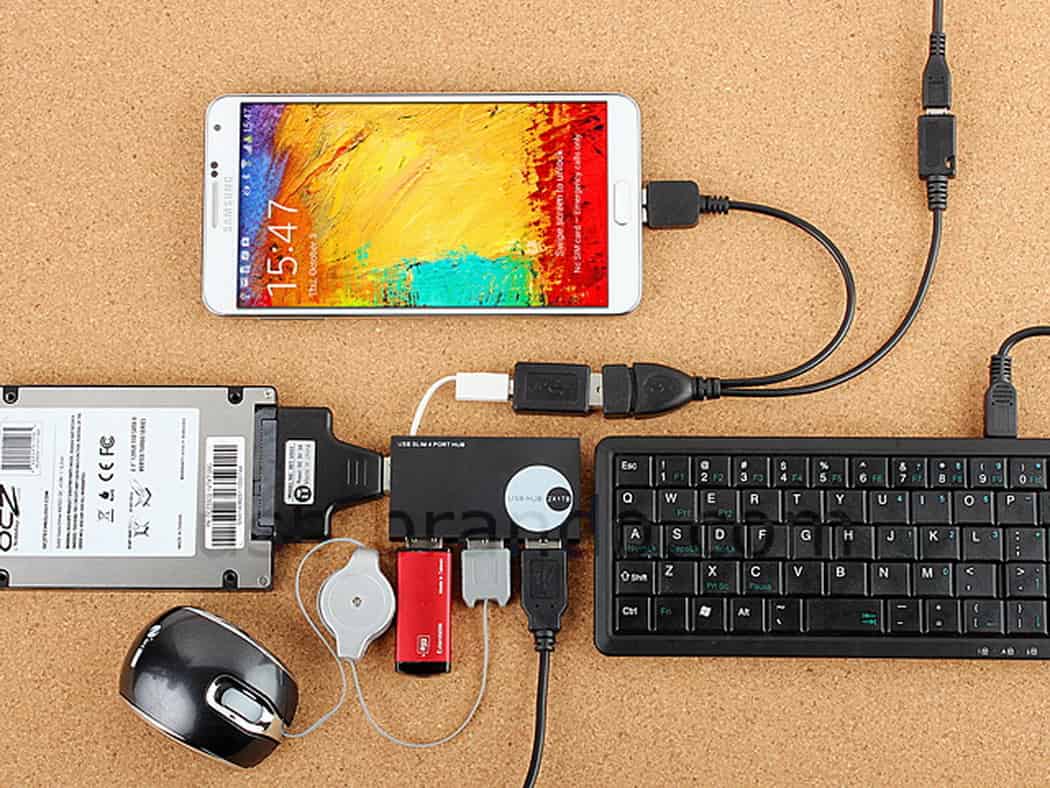
- The classic USB standard typically defines a clear division of roles: a computer (host) controls a peripheral device (client). However, USB OTG allows mobile devices to act as hosts themselves. This means you can, for example, connect an external keyboard, a mouse, a USB flash drive, or even a MIDI keyboard directly to your smartphone.
- A key advantage of USB OTG is its ease of use: All you need is an OTG adapter or a compatible OTG cable to connect various devices. This is particularly convenient for users who are on the go and don’t want to carry a full set of computer equipment.
Applications and Compatibility of USB OTG
USB OTG has a wide range of applications. For example, you can:
- transfer files directly from a USB flash drive to your smartphone or tablet,
- connect external hard drives,
- use game controllers for an enhanced gaming experience,
- control a camera or printer,
- connect MIDI instruments to music apps.
- However, not all devices support USB OTG. To find out if your smartphone or tablet is compatible, you can either check your device’s technical specifications or use a special app from the Play Store that tests for OTG capability.

Adoption and Modern Standards
USB OTG is now widely used and supported by most modern Android smartphones and tablets.
- Apple devices, on the other hand, rely on their own implementation, which only enables similar functionality on newer iPads with a USB-C port. USB-C, in particular, has further simplified the use of OTG, as the connector is reversible and often requires no additional adapters.
- With the increasing prevalence of USB-C, there are special OTG adapters that make older USB-A ports compatible with USB-C devices.
Such adapters are particularly useful for users who want to connect older peripherals to modern smartphones or tablets.