180
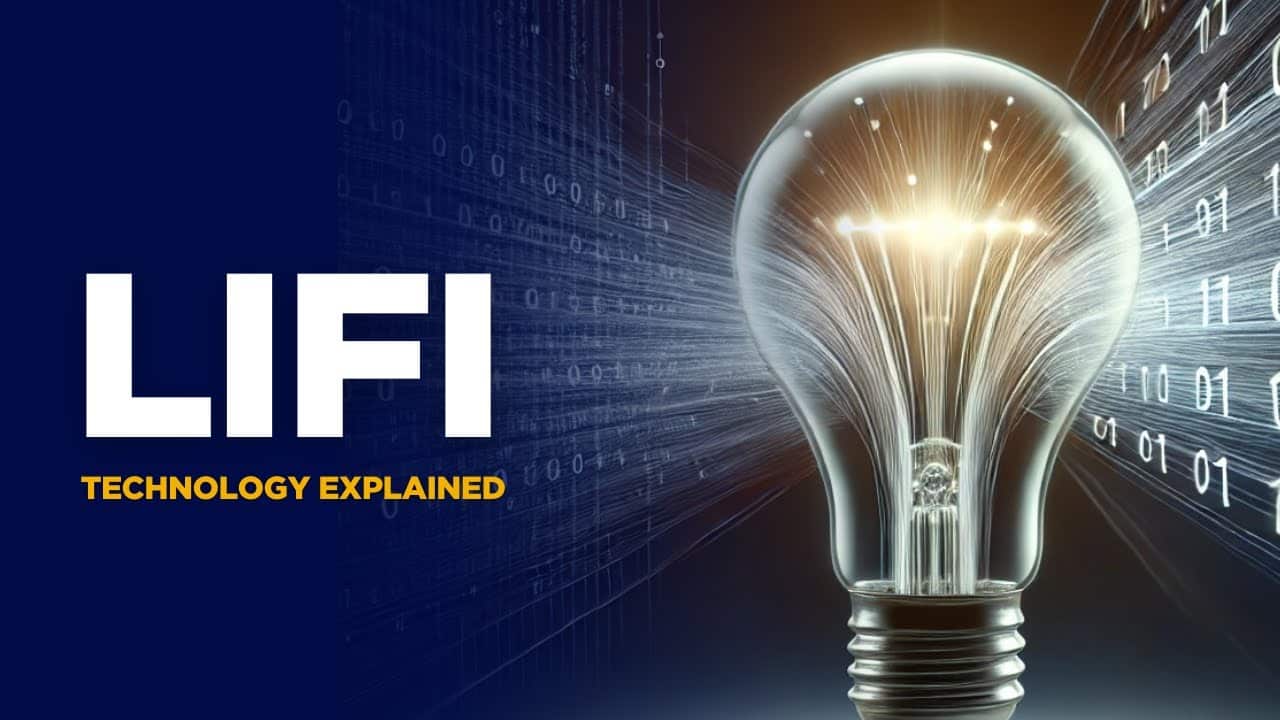
LiFi technology enables Internet access through a special light bulb. Thanks to light signals, LiFi is up to 100 times faster than Wi-Fi.
LiFi Technology: How the Internet Light Works
The abbreviation LiFi stands for Light Fidelity and means transmission via light.
- This is also how LiFi works, as data is transmitted via light signals.
- The specially designed LEDs in the light bulb are constantly turned on and off in rapid succession to generate a light signal.
- This flickering is invisible to the human eye. So to you, it appears as though the light is on all the time.
- The emitted light signals are detected by a sensor and converted into electrical pulses within the device.
Light Fidelity in Everyday Life: The Pros and Cons
Although the technology already works in the lab, it lacks practicality for everyday use:
- One disadvantage is that the light signals can be blocked by other objects located between the light source and the receiver.
- It is also difficult to establish an infrastructure for this technology, since Wi-Fi can be used without any problems in everyday life and current technology relies on Wi-Fi accordingly.
- A major advantage of LiFi over Wi-Fi is its speed: data transfer is expected to be 100 times faster. A 16-fold increase in speed has already been achieved under laboratory conditions, and other prototypes have reached the speed of a gigabit network running over cable.
- LiFi is thus intended to make data transfers more efficient and, above all, more secure.
- One idea so far for integrating LiFi into everyday life is to use LiFi to supplement conventional Wi-Fi.

LiFi: More About the Inventor
LiFi was invented by Harald Haas, a professor at the University of Edinburgh.
- In 2011, Haas gave a TED Talk in which he introduced the concept of LiFi. Haas demonstrated how data can be transmitted via light signals.
- Harald Haas is a pioneer in the field of LiFi technology and has filed numerous patents in this area.
- He is also a co-founder of the company pureLiFi, which specializes in the development and commercialization of LiFi technology.
Light Fidelity: More information about the technology
In addition to the advantages already mentioned, LiFi also offers the following features:
- Security: Since LiFi is based on light, it is harder to intercept or hack than conventional wireless technologies. This makes it a more secure option for wireless communication.
- Relief for the radio frequency spectrum: Since LiFi uses light to transmit data, it can relieve pressure on the overloaded radio frequency spectrum. This is particularly important at a time when more and more devices are connected wirelessly.
- Energy Efficiency: LiFi utilizes existing lighting infrastructure, leading to more efficient energy use. It can also help reduce the energy consumption of devices, since they do not need to be constantly connected to Wi-Fi signals.
- Use in Special Environments: LiFi can be used in environments where radio waves cause interference or are hazardous, such as in hospitals or airplanes.
- Internet of Things (IoT): LiFi can play a key role in connecting IoT devices. Thanks to fast and secure data transmission, IoT devices can communicate with each other more efficiently, thereby fully realizing the potential of the IoT.
- The Future of Wireless Communication: LiFi has the potential to revolutionize the way we communicate wirelessly. It can play a key role in areas such as smart cities, Industry 4.0, and connected mobility.