285
There are several ways you can treat cavities on your own. For a long time, a visit to the dentist involving drilling and fillings was considered the only way to remove cavities. However, even small holes can be sealed using your own methods and home remedies.
Treating and removing cavities yourself – using home remedies
If you want to treat cavities yourself, you need to fight the bacteria and remineralize the tooth.
- Salt is a proven home remedy for tooth decay. Add a generous amount of salt to lukewarm water. Once the salt has dissolved, rinse your mouth thoroughly with the solution for 10 minutes. Then spit out the solution.
- Also garlic has antibacterial properties. Pour hot water over a crushed garlic clove . Once the water has cooled, rinse your mouth vigorously with the solution for a few minutes. If you like garlic, you can of course simply chew a garlic clove.
- You can also make a paste from a crushed garlic clove and salt and apply it to the affected tooth. After letting it sit for an hour, rinse your mouth.
- Instead of garlic, you can also make the paste with licorice root and use it. Not everyone likes the taste of garlic, and licorice root also has strong antibacterial properties—making it an effective home remedy for tooth decay.
- Oil pulling is a widely used method of oral hygiene and is often employed to treat tooth decay at home. Take a tablespoon of olive or coconut oil into your mouth and swish it vigorously between your teeth for 20 minutes. This effectively removes harmful bacteria. Spit out the oil after the treatment.
- A very old home remedy is the nutmeg. Its ingredients stop bacterial growth. Mix ground nutmeg with clove oil and apply the paste to the affected tooth several times a day. The clove oil also has a pain-relieving effect.
Tooth Decay – How to Relieve Pain
If pain occurs, you don’t have to reach for a painkiller right away. Some home remedies work quickly and effectively.
- Clove oil is a proven remedy for toothaches. Apply the oil to the affected area several times a day.
- If you don’t have clove oil at home, chew a clove with the tooth that hurts. This also provides relief from toothaches.
- Rinsing your mouth with sage tea soothes the aching tooth.
- In general, cooling helps with all kinds of pain, including toothaches. An ice pack on the cheek can sometimes work wonders.
- However, the general rule is: A visit to the dentist is preferable to self-treatment. This applies not only when the pain is severe or persists for a long time. The sooner you treat tooth decay, the better you can prevent more serious damage, including tooth loss.

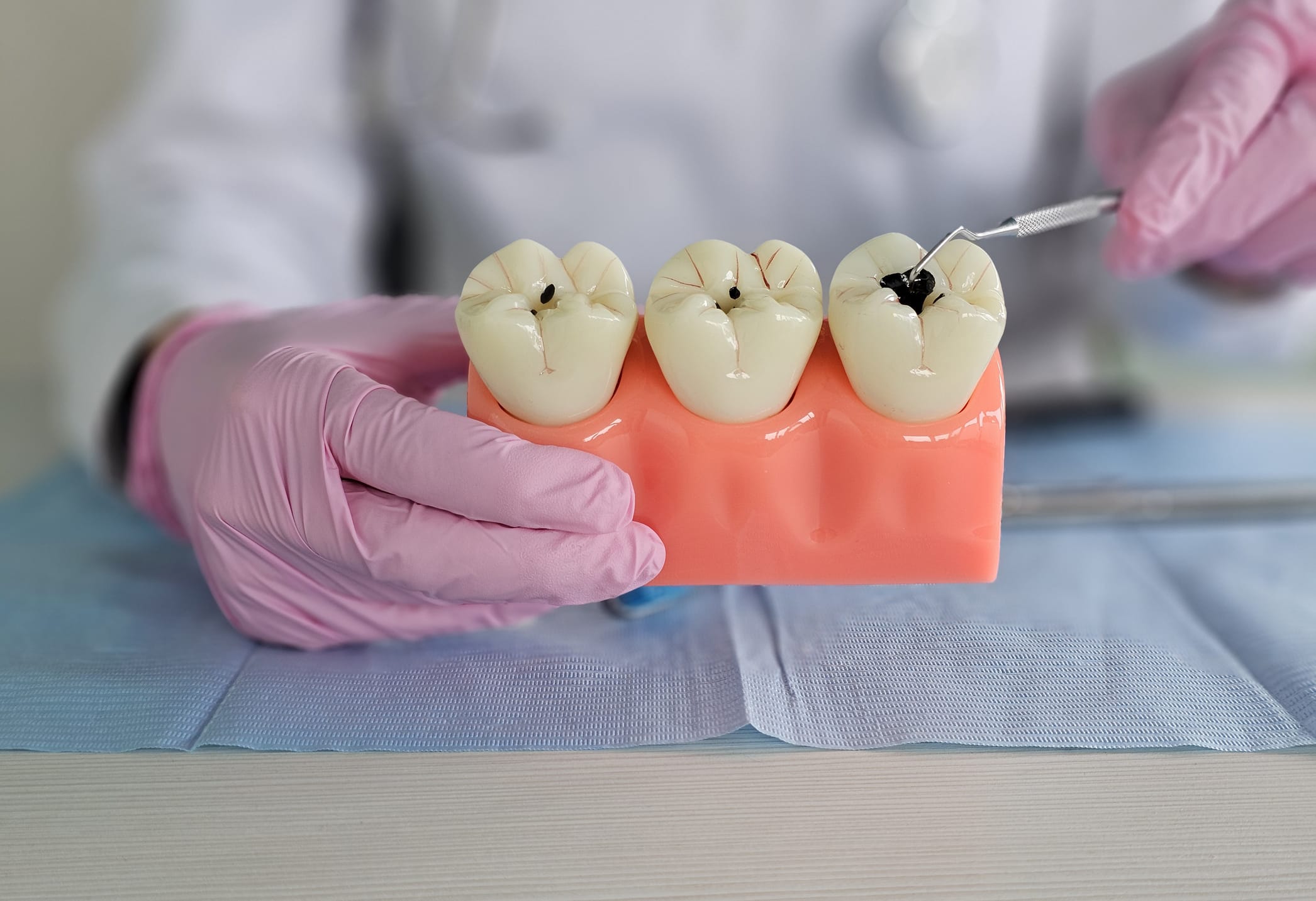
What is Tooth Decay? A Simple Explanation
Our mouths are full of bacteria, some of which are bad for our teeth.
- Tooth decay bacteria (Streptococcus mutans) live on the surface of the teeth. They feed on food particles. In the process, they release acids that eventually lead to cavities in the teeth.
- As long as only the hard enamel is affected, you won’t notice the cavity yet. As soon as the dentin beneath the enamel is affected, you’ll feel pain.
- If you do not treat tooth decay yourself or have a dentist perform the treatment, the cavity will grow and eventually reach the tooth’s nerve. The tooth will then become very sensitive and painful.