4
The differences between Deutsche Bahn’s high-speed trains, the ICE and the IC, are not entirely clear to many people. Here, we show you how to recognise the different trains and in what ways they differ.
ICE and IC: Here are the differences between the high-speed trains
Deutsche Bahn’s high-speed trains differ not only in appearance but also in other respects.
- The Intercity Express, or ICE for short, is much faster than its older sibling, the IC, which is known as the Intercity. The ICE reaches speeds of up to 300 km/h, whilst the IC reaches 200 km/h.
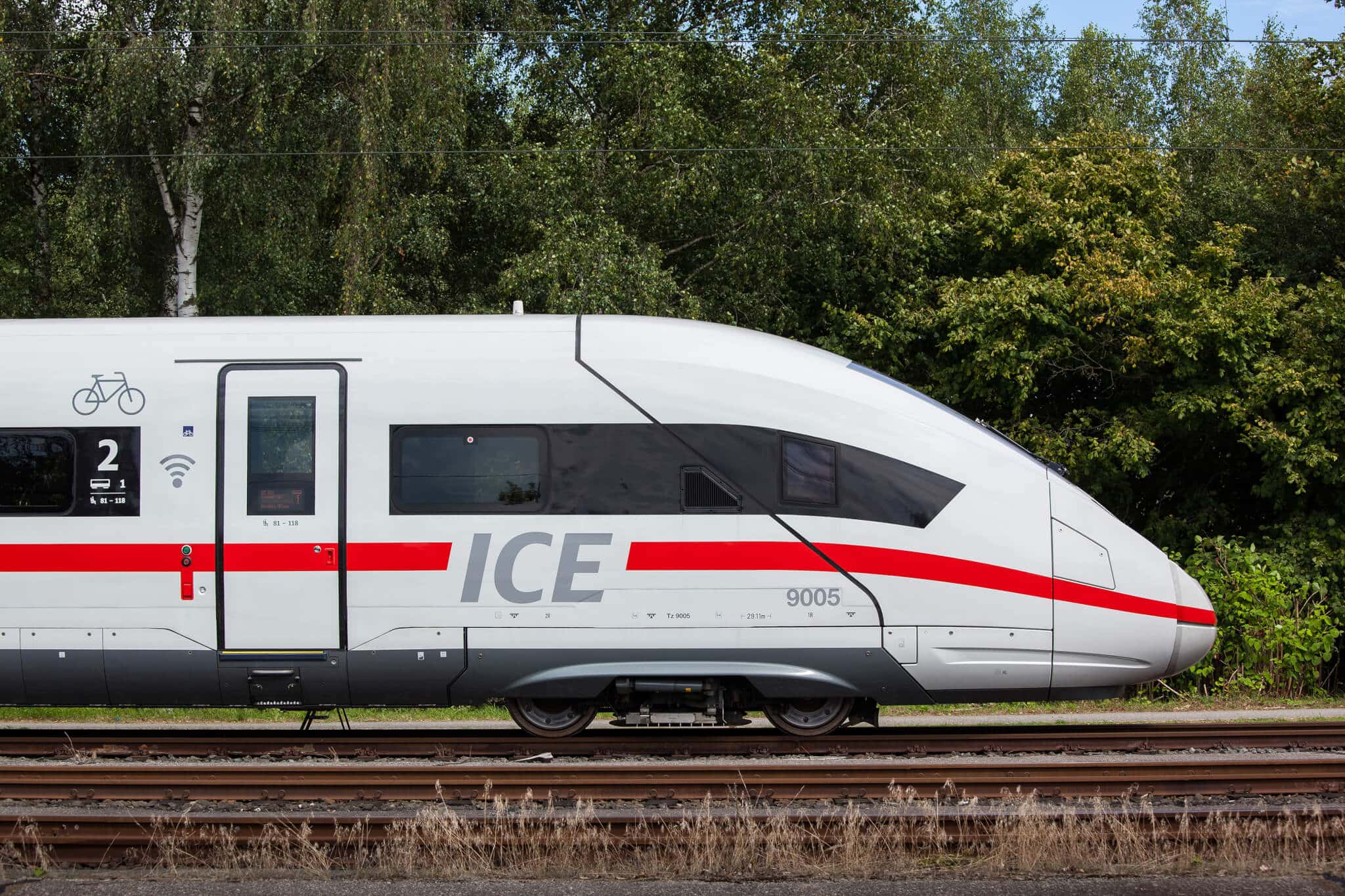
- You can recognise the trains simply by their shape. The ICE has a pointed nose and consists of a complete train set.
- In contrast, you know it is an IC if the carriages are variable and the train has one or more locomotives.
- ICE tickets are more expensive than those for ICs, as the trains are also considerably more comfortable and faster.
- ICEs, for example, offer a wider choice in the on-board restaurant and, since 2017, a Wi-Fi connection and a portal through which you can watch films.
- Due to their speed, ICEs use the high-speed routes such as Hanover–Würzburg and others. The IC serves major towns and cities outside these routes. For example, this train also calls at towns and cities such as Karlsruhe.
- The IC has been in service since 1971. Back then, the train only had first class and, as a result, offered a high level of comfort. Second-class accommodation was not introduced until 1979.
- At that time, it was still a novelty that these trains ran every hour. They were also the first block trains, comprising first class, the dining car and then second class.
- The ICE has only been in service since 1991. Since then, there have been various models of this train, each with a different level of comfort and speed. These are still in service today.