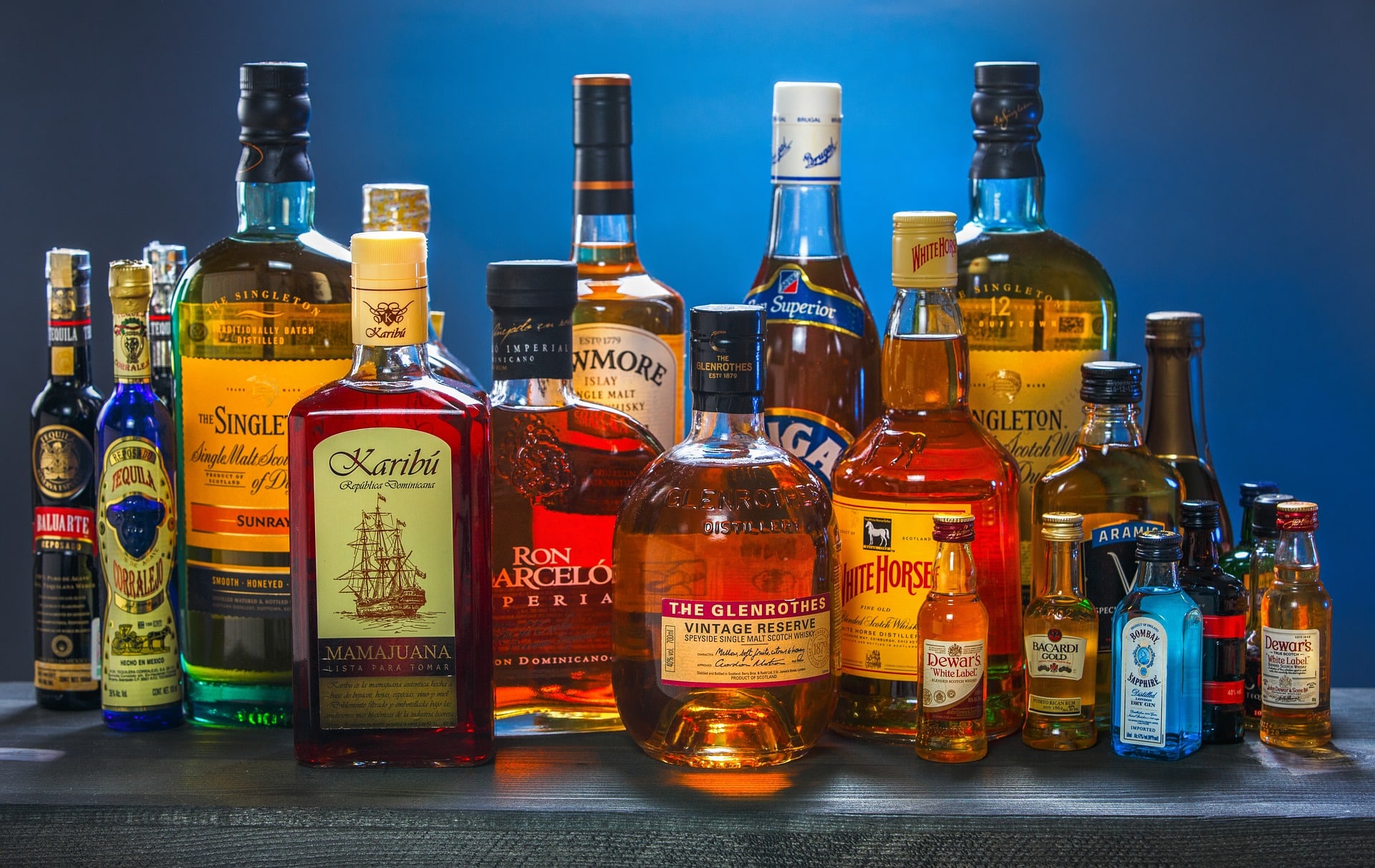
Alcohol is enjoyed on all kinds of occasions and is an integral part of almost any celebration. In this article, we’ll show you whether alcohol can also be used as a disinfectant.
Hand Sanitizer Made from Whiskey and Rum—Effective or Not?
Who hasn’t seen those tough-as-nails movie heroes who, after the most intense shootouts, pull the bullet out themselves, clean the wound with alcohol, and then stitch it up on their own? Of course, only after taking a hearty swig from the bottle. No wonder so many people assume that alcoholic beverages are also suitable as disinfectants. Find out here what’s behind this myth.
- Whether it’s whiskey, vodka, or rum, in the vast majority of cases, these beverages contain too low a percentage of alcohol. Spirits intended for consumption rarely exceed 40 percent.
- To be truly effective as a disinfectant, however, the alcohol content must be at least 60 percent. 70 to 80 percent would be even better. There are, however, some manufacturers who produce and sell beverages with this alcohol content.
- You can indeed make hand sanitizer from such high-proof alcohol. To do this, mix a spirit with at least 60 percent alcohol in a 1:3 ratio with aloe vera gel. The mixture must first sit for three days before use.
- Please note, however, that this homemade hand sanitizer is by no means a substitute for regular handwashing. It is intended only for emergencies, such as when you cannot wash your hands while on the go.
Industrial alcohol is significantly more effective
Ethanol, which you can buy at a pharmacy, is significantly more effective than drinking alcohol, for example. Isopropanol has a similarly good effect. Both contain over 90 percent by volume and are also particularly pure. With the following recipe, you’ll always have disinfectant wipes on hand when you’re out and about.
- You’ll need disposable washcloths, 800 ml of ethanol from the pharmacy, and 200 ml of sterile water. To prepare the water, you can, for example, boil it and then let it cool completely.
- Work with a window open or, even better, outdoors. Ethanol is highly flammable. It’s absolutely essential to ensure there are no open flames or flying sparks nearby.
- Carefully mix the ethanol with the water in a sufficiently large container, then soak the washcloths in the solution. Store the washcloths in an airtight, sealable container. Food-grade containers are best suited for this purpose.

The WHO also has a recipe
For areas without running water or other emergencies, the World Health Organization has provided a recipe that you can mix at home. However, it is essential that you work only outdoors or in a very well-ventilated area and stay away from ignition sources.
- For one liter, you’ll need either 830 ml of ethanol or 750 ml of isopropanol. You’ll also need 42 ml of hydrogen peroxide, 15 ml of glycerin, and sterile water. All ingredients are available at a pharmacy. You can make the sterile water yourself by boiling water.
- Pour the industrial alcohol into a sufficiently large container, then stir in the hydrogen peroxide and glycerin. Next, top off the mixture with the appropriate amount of water to make a total of one liter.
- Store the mixture in a spray bottle, for example. This way, you can use it as a surface disinfectant. In emergencies, you can also use the mixture to disinfect your hands, though it is not particularly gentle on the skin.
- Label the bottle clearly and be sure to keep it out of reach of children and pets. Under no circumstances should the contents be consumed.
Alcohol for Internal Use
Rumors keep circulating that drinking alcohol has a germ-killing effect and that consuming spirits can protect you from viruses. However, this is a misconception that, under certain circumstances, can even have the opposite effect.
- Alcohol does kill viruses and germs. But as already mentioned, the alcohol content in beverages is usually too low to have any significant effect anyway.
- On top of that, when consumed, alcohol generally does not end up where it is supposed to take effect. This is because it passes through the esophagus into the stomach, leaving the respiratory tract—which is susceptible to viruses—completely unaffected.
- People who are sick should generally avoid alcohol. This is because drinking whiskey, vodka, and rum weakens the body’s natural defenses and the immune system. So anyone who drinks alcohol not only risks getting sick more quickly but also recovering more slowly.