Whether it’s limescale, grease, or unpleasant odors, acetic acid is considered an affordable and versatile household remedy. Used correctly, it can help with many household problems—from cleaning to pest control.
Using Acetic Acid: What’s behind it and what you should watch out for
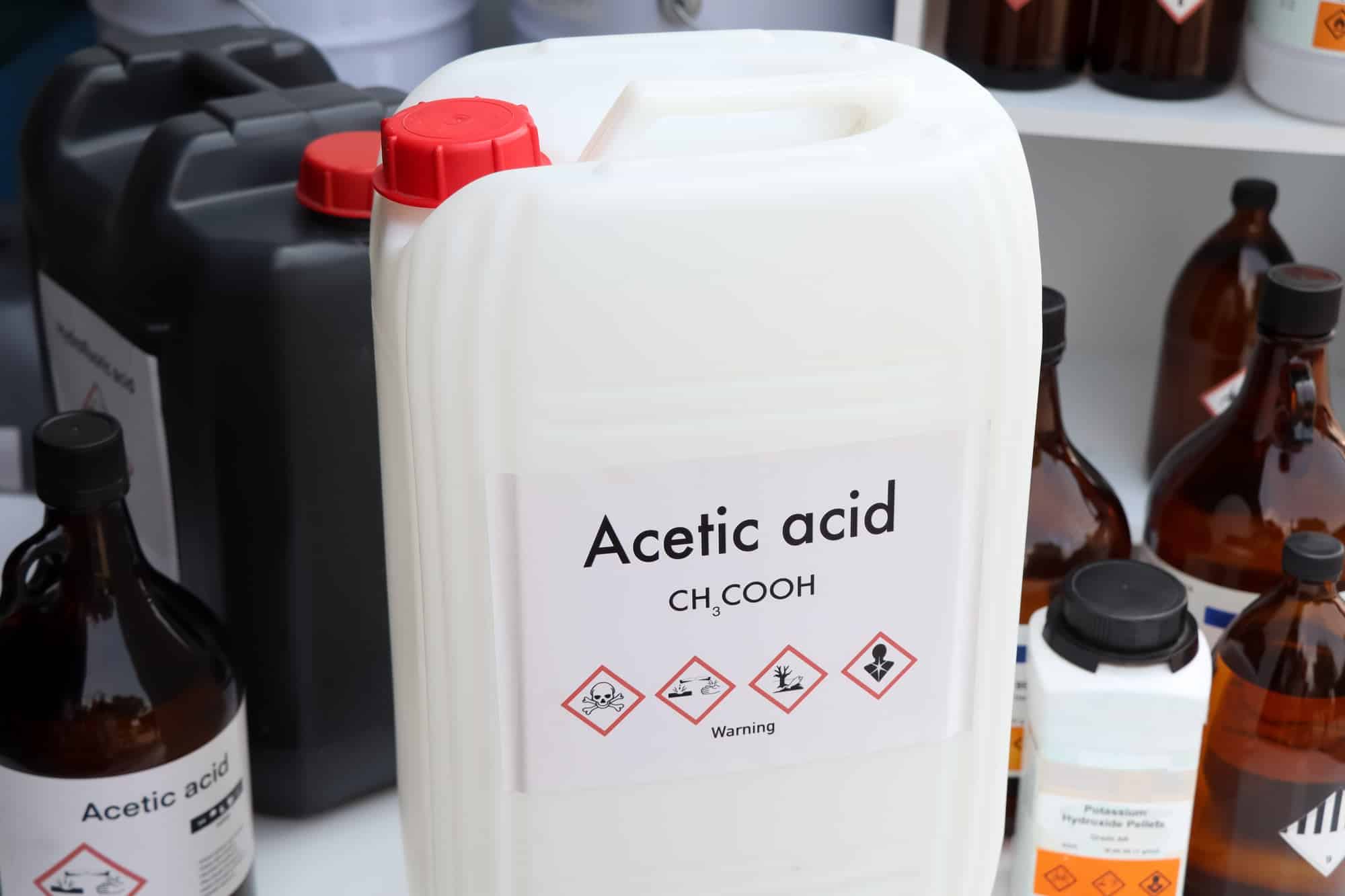
Acetic acid is one of the most important organic acids and one of the oldest substances produced by humans. It is formed through acetic fermentation, a process that was already known in ancient Egypt. The simplest way is to leave wine open: this causes acetic acid to form. Today, acetic acid is produced exclusively industrially through fermentation (acetic acid bacteria, usually Acetobacter). If you work with acetic acid and use it in the household, for example, you should definitely be aware that it can be dangerous. Among other things, because it is corrosive—and can therefore irritate your eyes, skin, and mucous membranes.
- Therefore, always wear protective gloves when working with acetic acid, even when using diluted acetic acid.
- For safety, you should also wear safety goggles. They are a must when handling concentrated acetic acid.
- You should ensure that the room where you use acetic acid is well-ventilated. If you inhale acetic acid vapors for an extended period, it could even lead to pulmonary edema in severe cases. This is particularly possible with very high vapor concentrations.
- You should also avoid open flames, sparks, or hot surfaces, as the vapors can become explosive when mixed with air.
- If splashes of acetic acid get into your eyes , rinse them with plenty of water. In the worst case, you should see a doctor.
Vinegar, vinegar essence, and acetic acid: What’s the difference?
There are various substances that contain acetic acid. Depending on its concentration, it has different names.
- Table vinegar available in stores contains about five to six percent acetic acid. Rice vinegar contains even less, about three to four percent.
- Vinegar essence, used as a household remedy, is more concentrated and contains between 15 and 25 percent acetic acid.
- Acetic acid itself can have a concentration of 30 to 50 percent (“technical acetic acid”), 40 to 80 percent (“raw acetic acid”), or even up to 100 percent (glacial acetic acid).
- The terms mentioned may vary, as they are not standardized.
Acetic acid as a cleaning agent: How to use it
- Acetic acid has antibacterial properties and can be used as an all-purpose cleaner . To do so, simply dilute it with water and, if desired—for a better scent—add a few drops of essential oil .
- Use diluted acetic acid (one part 50% acid to eight parts water) for cleaning kitchen countertops, cutting boards, the inside of cabinets or the microwave, and as a drain cleaner. For stubborn clogs, you may also want to add baking soda.
- You can also clean wooden floors, laminate, and hardwood with diluted acetic acid. Water with a few drops of acetic acid is also suitable for your dull carpets: Use a brush to work the solution into the carpets. Be careful, however, not to get them too wet. The carpet will get damp, though, so it’s best to open the window so the carpet can dry thoroughly.
- As a window or mirror cleaner use it by mixing a few drops of acetic acid into your cleaning water. This ensures streak-free windows and mirrors.
- You can even clean braces with it: Add a few drops of acetic acid to a large glass of water. Place the braces in the water and remove them after no more than four to five minutes. Then rinse them thoroughly with water.
- To remove silicone residue, mix one part acetic acid with four parts lukewarm water. Treat the silicone residue with a sponge or cloth and let the solution sit. After eight to ten minutes, the silicone residue should soften, and you can easily remove it.
- Many all-purpose cleaners contain acetic acid due to its antibacterial properties. The acid helps eliminate germs and bacteria on surfaces and ensures a thorough cleaning.

Acetic acid against limescale, rust, grease, stains, odors, and mold
Acetic acid is a powerful remedy against stubborn dirt, odors, and sometimes even mold.
- In the kitchen, you can use diluted acetic acid to remove limescale from the stainless steel sink. You can also use it in the bathroom to remove limescale stains, for example from the shower walls or the toilet. Acetic acid also serves as a descaler for dishwashers, washing machines, or coffee makers. It also removes urine scale.
- Use diluted acetic acid against grease or rust, for example, to clean the oven. But don’t forget to rinse it thoroughly with plenty of water afterward and leave it open so no fumes remain inside.
- With diluted acetic acid, you can quickly remove stains from textiles (clothing, carpets, etc.). You can also use it to remove deodorant stains. Diluted acetic acid (one part acetic acid to eight parts water) also helps against nicotine residue on surfaces or on the skin.
- Whether it’s cigarette smoke, onion and garlic odors, strong-smelling food, or other smells: Place a bowl of diluted acetic acid in the room, and it will eliminate the odors. The same applies to your car: If, for example, it smells strongly of cigarette smoke, simply leave a bowl of diluted acetic acid in the car overnight (with the windows closed).
- If you have small spots of mold on walls or tiles , you can remove them with diluted acetic acid. However, never use it on natural stone tiles, and to be safe, first test it on a small, hidden area to see if the material reacts to the acetic acid. If the mold spots cover a large area, you should not attempt to remove them on your own. It is best to consult a specialist.
- However, experts sometimes view its effectiveness against mold as limited because, while acetic acid kills fungi on tiles and inorganic materials, it does not have a long-term effect on absorbent materials (wallpaper, plaster, etc.) – in these cases, the mold often grows back.
Fighting insects with acetic acid and other uses
You can get rid of insects even without environmentally harmful chemicals. Furthermore, the possible uses of acetic acid are virtually unlimited.
- With vinegar or diluted acetic acid, you can make a fruit fly trap or even control ants.
- Instead of fabric softener you can use vinegar for your clothes. Vinegar is also suitable for dyeing Easter eggs.
- You can wash fruits and vegetables that have been treated with chemicals using a mixture of diluted acetic acid, lemon juice, and baking soda.
- Vinegar or acetic acid is often recommended for weed control, but this is not always the right approach.
How acetic acid is used in industry
Acetic acid is not only versatile in the household but also plays a significant role in industrial production. The acid is used in various industries and contributes to a wide range of processes and products.
- Acetic acid is frequently used in the food industry for preservation. It acts as a natural preservative that extends the shelf life of canned fruits and vegetables by inhibiting the growth of microorganisms. It is used, for example, in pickles and pickled vegetables.
- Acetic acid is used in the manufacture of cosmetic products . It is used as a pH regulator in shampoos, conditioners, creams, and lotions to ensure stability. It is also used in some hair care products to enhance the hair’s natural shine and cleanse the scalp.
- In the textile industry acetic acid is used as a mordant to improve fabric dye uptake. It helps fix colors evenly and intensely onto textiles. In leather processing, acetic acid is used for cleaning and removing lime deposits that form during tanning. It helps make the leather supple and durable.
- Acetic acid plays a role in the production of varnishes and paints, particularly as a solvent and for the production of acetate compounds. These compounds are crucial for film formation and the adhesion of paints to various surfaces.
- In the pharmaceutical industry acetic acid is used to synthesize various medications. It is a starting material for the production of acetylsalicylic acid (aspirin) and other pharmacologically active ingredients. Its antimicrobial properties also make it an important component in some medical preparations.