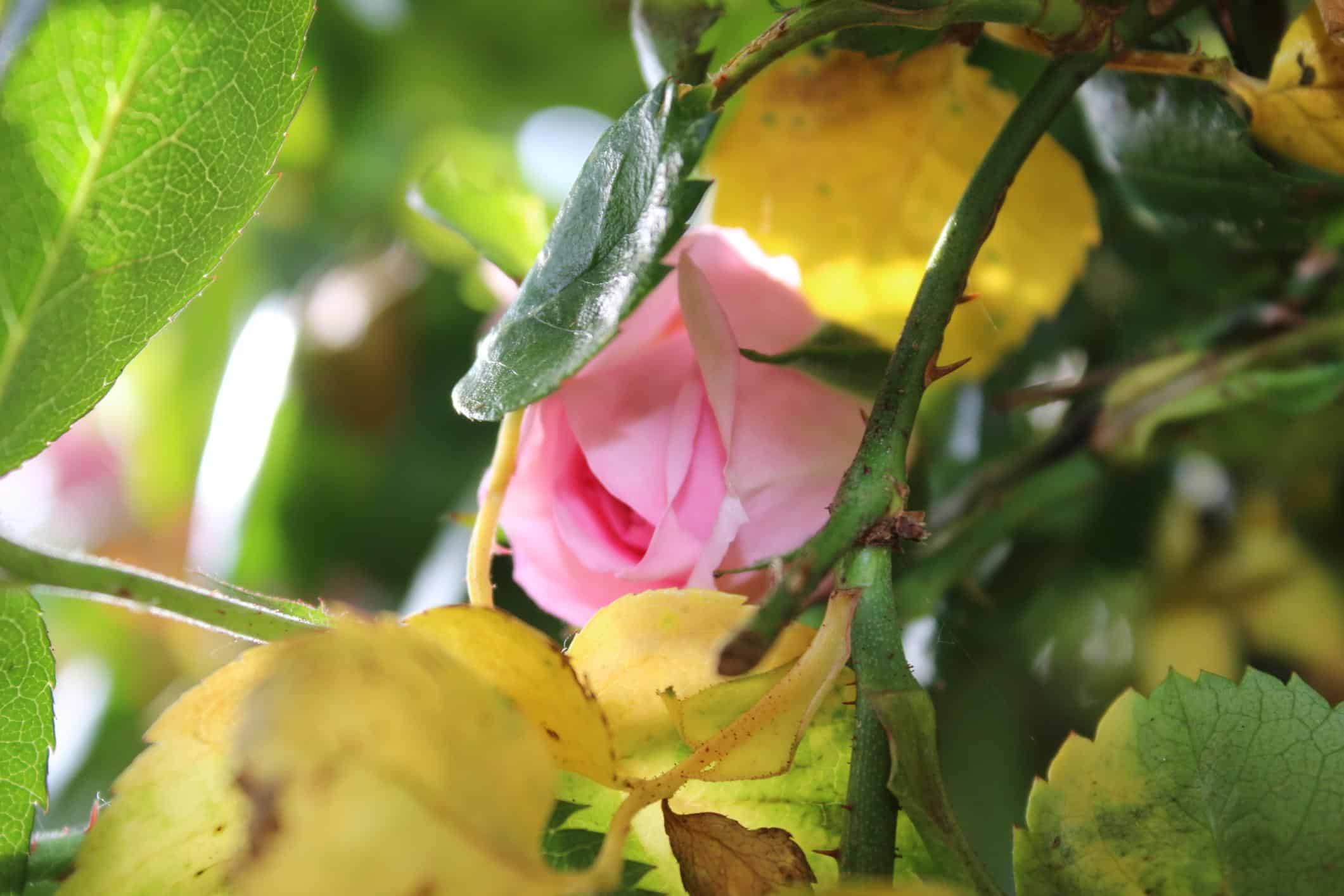
Pest infestation, nutrient deficiency, or waterlogging? When rose leaves turn yellow, there’s often more to it than meets the eye. Here are four causes you should be aware of.
Yellow leaves on roses are more than just a cosmetic issue. They indicate that the plant is under stress or suffering from deficiencies—ranging from pest infestations and nutrient deficiencies to diseases or improper watering. To save your rose, you should identify the cause as early as possible.
1. Pests Suck the Sap from Rose Leaves
Aphids and spider mites are among the most common pests on roses. They draw sap from the leaves, disrupting chlorophyll production—which leads to yellowing.
Here’s how to help your roses: A homemade soap solution can help: Mix about 150–300 g of soft soap with 10 liters of water and spray the affected areas. Alternatively, a stinging nettle decoction works well: Steep two handfuls of chopped stinging nettles in 2 liters of water, let it steep for 24 hours, and then spray it on.
2. Nutrient deficiency is often the cause of yellow rose leaves
Roses need several minerals to grow healthily. If any of these are missing, yellow leaves will appear, with symptoms varying depending on the specific deficiency:
- Potassium deficiency: brown spots
- Nitrogen deficiency: completely yellow leaves
- Iron deficiency: yellow tips, green leaf edges
- Magnesium deficiency: yellow leaf veins
- Phosphorus deficiency: pale leaves, stunted growth
What to do now: A special rose fertilizer provides your plant with all the essential nutrients it needs. However, be sure to check for pests first—over-fertilization can further weaken roses.

3. Diseases: Powdery Mildew and Black Spot
Fungal diseases such as powdery mildew or black spot weaken the rose and cause yellow leaves with dark spots. The leaves often die prematurely.
Prevention is key: Avoid nitrogen-rich fertilizers, as they increase susceptibility. Potassium-rich fertilizers strengthen the cell structure and make the plant more resilient.
4. Too Much Water Harms Roses
Watering too frequently or incorrectly can also cause rose leaves to turn yellow, especially if the soil becomes waterlogged. The root zone then receives too little oxygen, and the plant reacts with symptoms of stress.
Water roses sparingly and only when the soil is dry. Ensure the soil is well-drained and check potted roses for standing water. In cases of severe waterlogging, repotting into fresh potting mix is often the only solution.