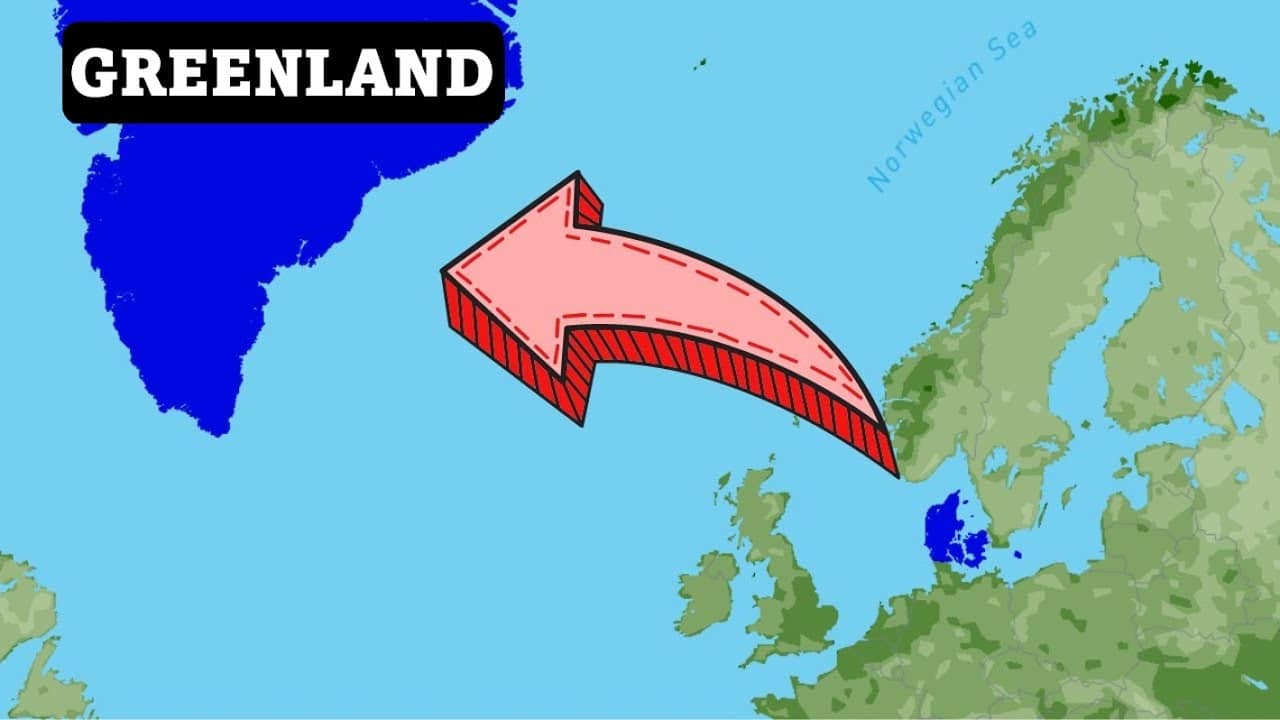
Why is Greenland part of Denmark? Here is the historical origin
The first connection between Europe and Greenland was established by the Vikings around the 10th century.
- Erik the Red is considered one of the first European explorers to settle in Greenland. This early settlement laid the foundation for later Danish claims to the island.
- In the 18th century, Denmark began to consolidate its control over Greenland, particularly after its rediscovery by Hans Egede in 1721. Egede established a mission that led to Danish colonization, as missionaries and traders followed.
- In 1814, Greenland officially became part of the Kingdom of Denmark-Norway through the Treaty of Kiel. When Norway separated from Denmark, the territory of Greenland remained under Danish administration, laying the foundation for today’s political relationship.
- During the 19th and 20th centuries, Greenland remained a Danish territory, although there were various phases of the autonomy movement. These movements were often influenced by international developments, such as the growing interest in the Arctic region.
Political Development: How Greenland Belongs to Denmark Today
In the 20th century, Greenland underwent several changes in its political status. From a Danish colony, it gradually developed into an autonomous part of the Kingdom of Denmark. This development was shaped by internal and external political forces.
- After World War II, a phase of modernization and integration of Greenland into the Danish state began. In 1953, Greenland was transformed from a colony into an integral part of Denmark, granting its inhabitants full citizenship.
- In the 1970s, the movement for greater autonomy gained momentum. In 1979, the Home Rule Act granted Greenland extensive self-governing rights, although Denmark retained responsibility for foreign policy and defense.
- In 2008, Greenlanders voted in a referendum for even greater autonomy, which was implemented in 2009. This Self-Government Act enabled Greenland to take control of many internal affairs, while Denmark retained authority over key areas.
- Despite growing autonomy, the question of full independence remains a topic of discussion. Some groups in Greenland are pushing for complete sovereignty, but economic dependencies and geopolitical concerns play a decisive role in these discussions.

Economic Factors: The Role of the Economy in the Relationship
The relationship between Greenland and the European monarchy of Denmark is shaped not only by politics but also by economics. Greenland is rich in natural resources, which present both challenges and opportunities for both sides. These economic factors significantly influence the political dynamics.
- Greenland possesses significant natural resources, including fish stocks, minerals, and potential oil and gas reserves. These resources are of great interest to both regions and influence the relationship between Greenland and Denmark.
- The Danish government provides financial support to Greenland through annual grants, which constitute a significant portion of the Greenlandic budget. This financial support gives Denmark considerable influence over Greenlandic politics and the economy.
- Greenland is working to diversify its economy and become less dependent on Denmark. This is reflected in efforts to develop new industries and attract international investment, particularly in mining.
- Climate change has a significant impact on Greenland’s economy and its natural resources. The melting of the ice could open up access to previously inaccessible resources, creating new economic opportunities but also environmental challenges.
Cultural Exchange: How Culture Shapes the Relationship Between Greenland and Denmark
Cultural ties play an equally important role in the relationship between Greenland and Denmark. These ties are complex and encompass both similarities and differences that shape the social and cultural landscape of both regions.
- The Danish language and educational systems are strongly represented in Greenland. Danish is used as an official language alongside Greenlandic, which underscores the close cultural connection. Educational institutions often follow the Danish model.
- However, there are also efforts to preserve and promote Greenlandic culture and language. This is evident in initiatives to strengthen Inuit traditions and languages, which are central to Greenland’s cultural identity.
- Cultural events and exchange programs between Greenland and Denmark foster mutual understanding and cooperation. Artists, musicians, and writers from both regions contribute to a rich cultural dialogue.