370
Moving a telephone socket makes sense after moving house or redesigning your home. Flush-mounted sockets are more complex, but more inconspicuous. Surface-mounted sockets are quick and easy to install.
Moving a flush-mounted telephone socket
Phone sockets and other connections are already prepared as flush-mounted sockets when the house is built. It is possible to relocate these sockets later on.
- You will need a drill with drill bit, a hammer and chisel to cut out the flush-mounted box. After that, you will need at least plaster and filler, as well as material for wallpapering.
- For the cable routing, it is best to borrow a wall chaser from a DIY store.
- Consider carefully where the new telephone socket should be located. Think about audibility, accessibility and possible power supply as well as a place to put notes.
- Drill the recesses for the socket with a drill bit on your drill.
Then chisel them out with a hammer and chisel and fit the box. - Pre-cut the cut-outs for the cables with the router and then chisel them free. The cable comes either from the old telephone connection, from the entry point of the distribution box or from your splitter or router.
- Cables to the flush-mounted box are routed at right angles if possible. Horizontal cable routing takes place near the ceiling. Use vertical routing where there are obstacles and directly above or below the socket.
- Fix the telephone cables with small cable clamps or a thin flexible conduit.
- Fill the box and wallpaper over it as soon as the filler has dried.

Installing a surface-mounted telephone socket
Much easier to relocate telephone connections with a surface-mounted box.
- To relocate your telephone connection, you need a surface-mounted telephone socket with dowels, a telephone line that is as thin and inconspicuous as possible and cable duct or cable clamps, and possibly a few WAGO clamps.
- First, secure the new socket to the wall with wall plugs.
- Use a cable duct or clamps to route the telephone line from the starting point to the new socket.
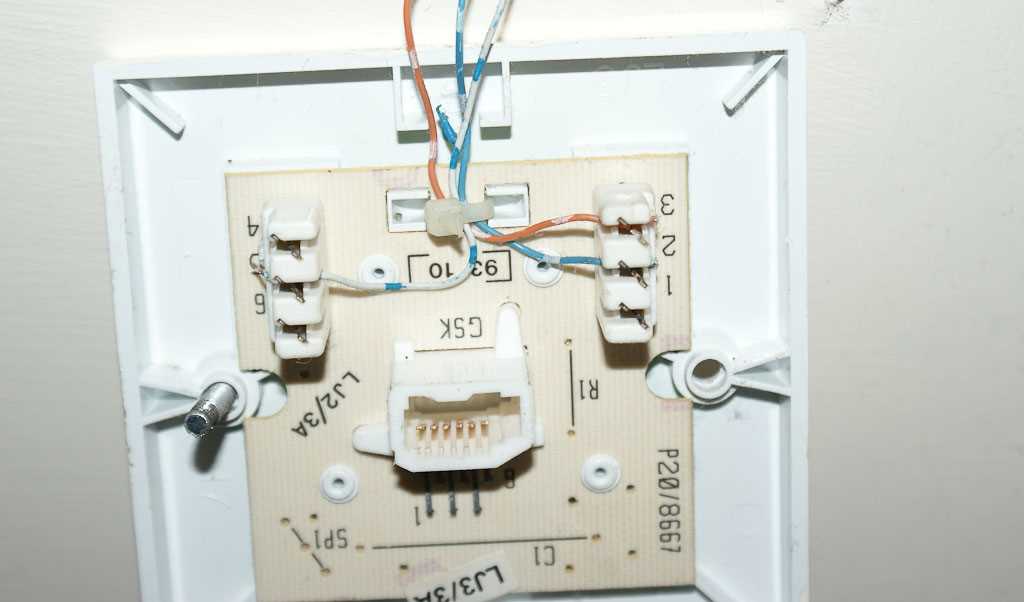
- The packaging indicates where the two lines are to be connected in the TAE socket. On the other side, connect the supply line using either WAGO terminals or a telephone plug.